Cruising Past Seventy: The Inner Journeys: Washington
Showing posts with label Washington. Show all posts

Tuesday, July 23, 2024

Travel Mishaps and How to Deal with Them


Travel mishaps are unfortunate accidents. They are pimples in the otherwise clear complexion of a fine travel day. I’m not talking about those incidents that make us scared enough to rethink how we travel. I am talking about simple occurrences that can be prevented but didn’t or couldn’t. Travelers are often in unfamiliar places so mishaps can happen to us more often. How we deal with them matters.

Buried in Snow

Early in our RVing career, we had to return to Washington from Florida for my citizenship interview with the US CIS. We weren’t supposed to be in the north in November, but we had to. We parked our RV at the Thunderbird RV and Camping Resort in Monroe, beside a river so my husband could do some fishing. But when a snowstorm arrived, we got trapped inside our RV.     

With very little propane left, our lone energy source for the heater and stove, we confined ourselves to microwaveable meals. Since management could not risk their pipes freezing, we were forced to scrimp on the little water we had left in the freshwater tank.  But we didn’t get glued to the TV and Internet. Instead, we enjoyed the new living arrangements. My husband ran errands and walked through the snow. I was a good girl scout, following instructions, for a change.

Stranded on the Interstate

flat tire on I-71
Later we had a scarier one. Driving down Interstate 71 from Cincinnati, Ohio to Louisville, Kentucky, the right front tire of the RV blew out. It had eight tires, two in front and six at the rear in two axles. It was such a loud noise, unfamiliar to my ears, and I got scared. Bill managed to steer our 20,000-pound rig off the road. He remained calm and called Good Sam.

Then he found the Rummikub game and we played a few games, letting me win so I could forget my fear. But we had to wait inside the RV on a hot afternoon, without air conditioning. Help finally arrived and the tire was replaced. The rescue truck accompanied us to Louisville because he said many of our tires needed changing. It was midnight when we arrived at their shop. We were tired but, as usual, my husband was that same old boy scout I had married!

Lost in Helsinki

Hotel Ava and Institute
And that is why, in Helsinki, I panicked when I thought I lost him.   After the failed hostel experiment in Oslo, we chose the Hotel Ava, a very affordable option because it was attached to a Hotel Management Institute that provided most of the staff. The only problem was it was twenty minutes away from the city center. A Helsinki card was our solution, It paid for museums, tours, and cruises, as well as all public transport. It was a nice feeling to go ‘home’ at the end of the day.

On our last day, we finished packing early. We waited in the lobby with our bags, ready for the 3 pm public bus to the airport. We had time so my husband left for the nearby pharmacy just around the corner. But by 2:30 pm, he had not come back. I was upset that the receptionist did not give him a map of how to get there and back. I was in full panic mode, imagining all sorts of things that could have happened to him.  At 2:55 pm, he came in, got his bags, and instructed me to follow him to the bus stop. I ran all the way, lugging my carry-on through the cobbled streets, unmindful if it got damaged. Mr. calm, cool, and collected.

More planning is needed to prevent these mishaps. And how we deal with them when they happen that matters. My husband showed me how. He says, “They are just that, mishaps, not tragedies!” The right perspective.


Tuesday, August 1, 2023

TRAVEL AWAITS: 11 Unique Roadside Attractions Along American Highways


This article was originally published in Travel Awaits on March 12, 2023

Roadside America calls them “attractions and oddities.” To me, they are welcome distractions from the humdrum of the roads we travel. I am not talking about those that we include in our bucket lists; I mean those that we don’t seek. They just pop up unannounced. Sometimes we enjoy them from the comfort of our vehicle. Other times, we just need to get out and walk a bit. For a few others, we see a sign and follow for a short distance.  

Every summer when we visit family and friends in their homes (and to escape the Phoenix heat), they have made our trips much richer. Here are the 11 we remember best. I have written about seven others elsewhere in Travel Awaits.

1.    1. Lucy the Elephant.


The first one we came across is dubbed the oldest roadside attraction in America; we saw her early in our RVing days. Built in 1881,
Lucy the Elephant stands six stories high on the road alongside the beach in Josephine Harron Park in Margate, New Jersey near Atlantic City. Originally called the Elephant Bazaar, she later became a tavern. Now she’s a National Historical Landmark.She inspired us to watch out for more.

Pro-Tip:  Be sure to take the guided tour to explore her interior.

2.   2.    World's Largest Praying Hands


We also took day trips from Pittsburg to Branson, Missouri, passing through Joplin. Just outside of the town, we came across the
Praying Hands Memorial. It’s 32 ft tall and built on top of a 40 ft man-made hill. Created by a local artist in 1972, the words “Hands in prayer. World in peace.” are written on a concrete slab base.

Pro-Tip: On a previous trip, we also saw the 60-ft. world’s largest praying hands at Oral Roberts University in Tulsa, Oklahoma.

3. The Ampersand Sculpture

Stopping at a convenience store, part of the chain called Kum & Go, on Joplin’s Rangeline Road, we found the Ampersand Sculpture, not that big (8x7 ft), but quite colorful. The company’s core values are on one side; the other side contains things about Joplin’s history: mining, Route 66, Bonnie and Clyde, and the many symbols of Joplin’s “strength and hope.”

Pro-Tip: Joplin is known for its citizen-led rebuilding after the devastation from the  May 2011 tornado.

5.  4. Cadillac Ranch (see headline photo)

After Oklahoma, we passed through Amarillo, Texas where we discovered what road travelers have been raving about since 1974: a Cadillac Ranch with ten Cadillacs buried nose-down in a field at the same angle as the Pyramids of Giza. It’s free and you can find it on the south access road of I-40 east of the Arnot Road exit and is open 24/7. 

Pro-Tip: Bring a small canister of paint so you can follow the custom and leave your own mark.

7.    5. The Arco Number Hill


Along US 20, on our way out of Boise, Idaho where my husband’s son lives on the way to Calgary, Alberta where my daughter lives, you will be surprised to find a hill dotted with white numbers. Since 1920, the town’s high school graduating class paints its year of graduation on
Number Hill, We should have also explored Arco, Idaho, dubbed the Atomic City!

Pro-Tip: Start looking as soon as you leave the Craters of the Moon National Monument.

8.    6. The Charcoal Ovens in Nevada


Once we took an alternate route going home to Arizona from Boise through Las Vegas. On US 93, at the small mining town of Ward in Ely, Nevada (population, 4,202), a sign pointed to “Charcoal Ovens.” We followed the signs on a six-mile, well-maintained dirt road to six beehive-shaped, large ovens (30 ft high, 27 ft in diameter with walls 2 ft thick at the base). Built in 1876, each one held about 35 cords of wood, each 4 ft high, 4 ft wide, and 8 ft long, producing 1,750 bushels of charcoal for two silver smelters in town. It is now the
Ward Chocolate Ovens State Historic Park.

Pro-Tip. From the dirt road, it is just 100 yards to walk to the ovens.

9.    7. The Wild Horses Monument


From Boise to Seattle, Washington (where my daughter used to live), as you go north on I-90, you will be able to spot the
Wild Horses Monument. It’s a spectacular sculpture of 15 life-size galloping wild horses on a cliff overlooking the Columbia Gorge, just after Highway 243 becomes I-90.  As you pass the sign to the town of Vantage on the left, keep looking up to see the Dave Govedare masterpiece.

Pro-Tip: You can view it up close by taking a 0.2-mile hike up the hill.

8,  Forever Marilyn

On the road to my sister’s former in Lancaster, California, we were surprised to find that the famous Marilyn Monroe statue had been transferred to Palm Springs from Chicago, Illinois where we had first seen her. We found out then that the 26-foot statue was moved to a new location every year (from Palm Springs it went to New Jersey, Australia, and Connecticut).

Pro-Tip: In 2021, Forever Marilyn returned to Palm Springs as a permanent fixture on Museum Way, just east of the Palm Springs Art Museum.

1 9. Painted Pipes

When my sister moved to Alaska, we took a road trip north to Fairbanks and came across a colorful building air vent on a downtown street corner. A store owner we asked told us there were 13 of them (out of 23 in the city). Our afternoon turned into a treasure hunt. They were part of the Fairbanks’ “Paint the Pipes” project and serve as fresh air intakes for a utilidor (utility corridor) that runs under the streets.

Pro-Tip: Now there are only 12 because the one called “Marilyn in Bunny Boots” has become just a pink pipe.

1 10.  World’s Largest Tire

One of my daughters lives in Canada. Once on a drive back down, we found the World’s Largest Tire, a Uniroyal weighing 12 tons and standing 80 feet tall on I-94 between Highways 39 and 2 in Detroit, Michigan. It first served as a Ferris wheel in the 1964-65 New York World’s Fair, then transferred to its current location at Allen Park in 1966. 

Pro-Tip. It is on I-94 near the Metro Detroit Airport.

1 11.  Tovrea Castle 


I have to tell you about Phoenix’s best roadside attraction. No one who drives on Arizona State Route 202 will miss it.
Tovrea Castle is a four-story, 5,000 sq. ft. architectural masterpiece that looks like a wedding cake. It holds 100+ years of Arizona history and is Arizona’s only castle.

Pro-Tip: There is a long wait to explore this gem. I have joined ticket lotteries but have not managed to win one yet.   

There you have it! To all the roadside attractions we have loved before and to all the ones we will someday have the pleasure of seeing: Thank you for enhancing the roads we travel.

FOR THOSE ON MOBILE, THE SHARE BUTTONS APPEAR WHEN YOU CLICK WEB VERSION AT THE VERY END AFTER COMMENTS.

PREVIOUS POST

Why This Luxurious Sedona Resort Is Perfect for Long Weekends


Friday, January 28, 2022

TRAVEL AWAITS: THE SECRETS OF THE MANHATTAN PROJECT


The complete article was published in Travel Awaits in September 2020

The Manhattan Project produced Little Boy and Fat Man, the first and only atomic bombs ever dropped, destroying the Japanese cities of Hiroshima and Nagasaki, respectively, killing more than 200,000 people. It put an end to WWII which had already killed 1.2 million Americans at the time.

It has become the model for large-scale, highly technical, hazardous wartime projects that have to be carried out in utmost secrecy. It was led by the U.S. with support from the UK (which initiated the original Tube Alloys project) and Canada. 

Because we were RVing across North America, in the span of three years, we saw the sites that contributed to its successful outcome: Oak Ridge, Tennessee; Hanford Reach, Washington; and Los Alamos, New Mexico. They comprise the Manhattan Project National Historical Park, created in 2015.

Oak Ridge Production Facility

Oak Ridge, Tennessee

We saw the full extent of the facilities at an overlook up a hill near the town. The total footprint at the time it was operational was 43-hectares, with five million square feet of working space on four floors. 

The Manhattan Project developed two types of atomic bombs: a simple gun-type fission weapon using enriched uranium, and a more complex implosion-type atomic bomb using plutonium. This Oak Ridge site, codenamed “Site X,” produced the enriched uranium using three enrichment methods.

We also toured the historic part of town and the visitor center. We learned about how the whole town buzzed with activity during the time. We also watched the documentary film The Secret City. Everyone was sworn to secrecy by Public Proclamation Number Two declaring no entry without military permission. The Oak Ridge population expanded well beyond the initial plans and peaked at 75,000 in May 1945. 

Hanford Reach National Monument

Hanford Reach, Washington

Just two months later, we were in Washington, waiting for my Seattle appointment in connection with my application for citizenship, and made it to the Hanford Reach National Monument, created in 2000. It had been untouched by development or agriculture since 1943 because of the Manhattan Project activities conducted there. As a matter of fact, it has been considered an involuntary park like Chernobyl.

This national monument preserves the seven reactors built to produce plutonium for the more complex implosion bomb. The site was chosen because the location had to be as far as possible from Oak Ridge. Codenamed “Site W,” by July 1944, some 1,200 buildings had been erected and nearly 51,000 people were living in the construction camp. It contains the B Reactor National Historic Landmark, the reactor that produced the plutonium for Fat Man. 

Bathtub Row in Low Alamos

Los Alamos, New Mexico

Two years later, when we were exploring the Bandelier National Monument in New Mexico, we found out that the Manhattan Project in Los Alamos was just 20 minutes away. So we took a little detour to explore the third unit. It was the central design and production facility, codenamed “Site Y.” Again, it was decided that this integral facility should be in a remote but midway between  Oak Ridge and Hanford Reach. 

The team of scientists who worked here, which included Enrico Fermi and was led by Robert Oppenheimer, built both atom bombs. We delighted in seeing the cottages on Bathtub Row where they lived, the only homes in the facility with bathtubs. The Bradbury Science Museum tells the whole story and houses what remains of the two bombs.

The Two Bombs

Testing and detonation was done at Trinity Site, southwest of Albuquerque, at New Mexico’s Alamogordo Bombing and Gunnery Range. Today, visits to the site are sponsored by the Alamogordo Chamber of Commerce on the first Saturdays of April and October. The rest of the year, it is closed because it lies within a missile impact zone.


Today, there are 17 laboratoies in the forefront of scientific research and development, some of which are conducted nowhere else in the world. The Los Alamos National Laboratory that designed and finally assembled the bombs still operates as part of the network. The U.S. has continued to be at the forefront of science to meet the challenges of the world.

FOR THOSE ON MOBILE, SHARE BUTTONS APPEAR WHEN YOU CLICK WEB VERSION AT THE VERY END AFTER COMMENTS.

PREVIOUS POST


Friday, December 17, 2021

TRAVEL AWAITS: How To Visit 6 Lovely Volcanoes In The Cascades


                      The complete article was published in Travel Awaits in June 2020

When we lived in Seattle, we were blessed with the beauty of one of these volcanoes, Mount Rainier, whenever she appeared from behind the clouds. Seventeen other volcanoes form the 700-mile-long Cascade Volcanic Arc, from the southern tip of Canada’s British Columbia through Washington, Oregon, and the northern part of California, many of them still active.

1. Mount Baker


If you’re going south from Vancouver, Canada, you will encounter Mount Baker first. It rises 10,781 feet high, the youngest (no more than 140,000 years old) of them all. "It is also second-most heavily glaciated after Mount Rainier and the second-most thermally active after Mount Saint Helens. t is also one of the snowiest places in the world, setting the world record for snowfall in a single season at the Mount Baker Ski Area in 1999."

2. Mount Rainier


"Mount Rainier is the Cascade Volcanic Arc’s leader in beauty and risk. An active volcano (the last eruption was in 1894) it is the most glaciated peak and most prominent mountain in the contiguous U.S. It is also the tallest in the Cascades at 14,411 feet. The area around it is so beautiful that it has been preserved as the Mount Rainier National Park. But it is also considered one of the most dangerous volcanoes in the world, listed on the Decade Volcano list because of its large amount of glacial ice that could produce massive lahars that would threaten a lot of life and property, especially considering the city of Seattle is just 59 miles southeast of its peak."

3. Mount Saint Helens (headline photo)

"Mount Saint Helens is just 50 miles northeast of Portland, Oregon, and 96 miles south of Seattle. It is the most active volcano in the Cascades Volcanic Arc, most known for its major eruption — the deadliest and most economically destructive volcanic event in U.S. history — on May 18, 1980. In fact, it reduced the elevation of the mountain’s summit by more than 1,000 feet, leaving a mile-wide horseshoe-shaped crater." In 1983, the Mount Saint Helens National Volcanic Monument was opened to preserve the volcano and allow for the scientific study of the aftermath of the eruption. 

4. Mount Hood And The Three Sisters


"Mount Hood is located about 50 miles east-southeast of Portland. It is one of the loftiest mountains in the nation, offering the only year-round lift-served skiing in North America. Standing 11,240 feet high, it is the highest point in Oregon and the fourth-highest in the Cascade Range. The volcano is considered the most likely to erupt in Oregon. The odds of an eruption in the next 30 years are estimated at between 3 and 7 percent, making it what scientists call “potentially active.”

5. Mount Shasta


Once we stayed overnight in the town of Redding, California, which is quite near Mt. Shasta. "It is always such a beautiful presence whenever we pass by, with and without the glaciations, going up to or down from Seattle. It is a potentially active volcano at the southern end of the Cascade Range in northern California with an elevation of 14,179 feet, second only to Mount Rainier in height. But it is the biggest in the Cascade Volcanic Arc, with an estimated volume of 85 cubic miles."

6. Mount Lassen


"Lassen Peak, commonly referred to as Mount Lassen, is the southernmost active volcano in the Cascade Range. It reaches an elevation of 10,457 feet. It is also different in that it isn’t a stratovolcano like the others but a lava dome. In fact, it is the largest lava dome in the world. On May 22, 1915, a powerful explosive eruption devastated nearby areas and a series of eruptions (that actually lasted from 1914 to 1917) spread volcanic debris 280 miles to the east. Lassen Peak and Mount Saint Helens were the only two volcanoes in the contiguous United States to erupt during the 20th century." It 
was named the Lassen Volcanic National Park after the eruptions, preserving 100,000 acres for observation and study.  

These six lovely volcanoes of the Cascades have always made our drives through the Pacific Northwest such a pleasurable experience. Having stayed around some of them, our Interstate 5 drives have always come to life more than other highways.

FOR THOSE ON MOBILE, SHARE BUTTONS APPEAR WHEN YOU CLICK WEB VERSION AT THE VERY END AFTER COMMENTS.

PREVIOUS POST

Friday, December 3, 2021

TRAVEL AWAITS: 8 Surprising Stops from Wyoming To Washington


                                The complete article was published in Travel Awaits

I wrote about ten scenic stops we enjoyed in Kansas, Nebraska, and Colorado from my sister-in-law’s home to that of my husband’s daughter. Here, are eight other stops we found as we continued westward to his son's in Boise, Idaho, and my daughter's in Seattle.

1. Fossil Butte National Monument, Wyoming


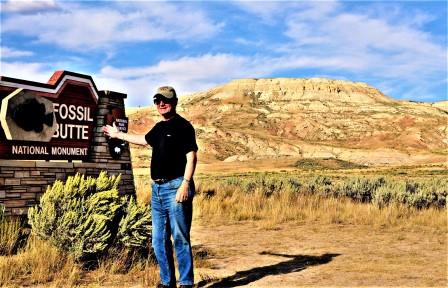
This little-known national park may be the least visitednot even 20,000 annual visitorslocated 15 miles west of Kemmerer, Wyoming. It's not generally known that it is actually the world’s best collection of fossils from the Eocene Epoch (56 to 34 million years ago), the warm period that produced the very first animals. The Visitor Center alone has over 80 samples, each one incredibly intact, not pieces that need to be assembled. "There are whole fish, crocodiles, turtles, palm fronds, and more from the epoch. In fact, there are trails that will lead you to fossils still intact on the ground, plus some that are still in the process of being excavated."

2. JCPenney Mother Store, Wyoming


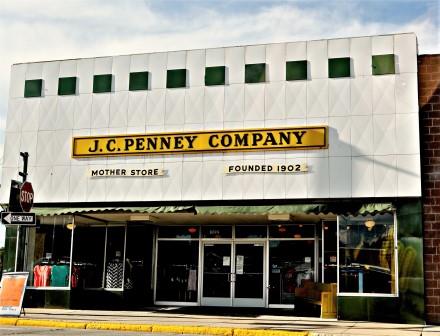
On the way back to our campground. we chanced upon the JCPenney Mother Store and Museum. "On a corner of the main street of the small town of Kemmerer, Wyoming, which has a population of under 3,000, it was the first outlet of the department store giant — which today has about 600 stores in 49 states and Puerto Rico — built there in 1902." The tiny home of James Cash Penney, the founder, is just down the road.

3. Lava Hot Springs, Idaho

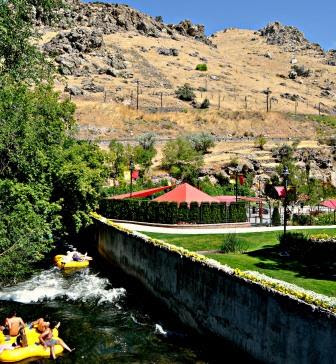
This is a small town only two hours from Kemmerer on I-30, population  less than 500. Because of its numerous hot springs that are quite good for bathing and the mildly turbulent river running through part of the town that is perfect for tubing, Lava Springs is a popular weekend resort in Idaho and Utah.

4. Boise, Idaho


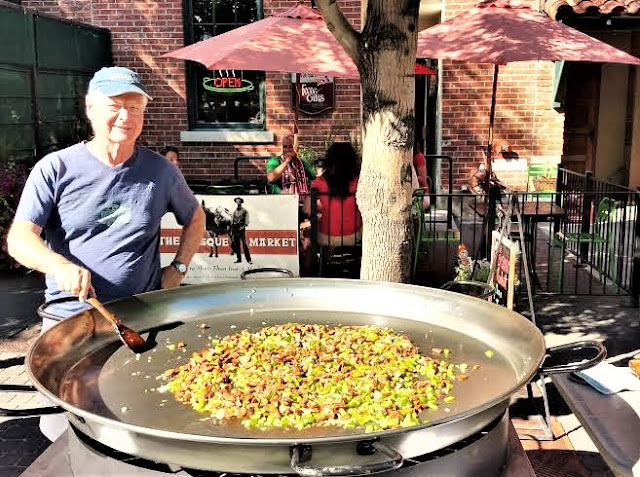
It was only four hours from Lava Springs to Boise on I-86. It is the largest city and the capital of the state with a population of over 200,000. "My husband’s son is married to a member of Boise’s Basque community. Numbering about 15,000, it is the second-largest such community in the U.S. after Bakersfield, California. It is also the fifth-largest in the world behind Mexico, Argentina, Chile, and the original Basque Country in Spain and France. Downtown Boise features a vibrant section known as the Basque Block where we got the chance to stir the paella cooking in pans of four feet in diameter."

5. John Day Fossil Beds National Monument

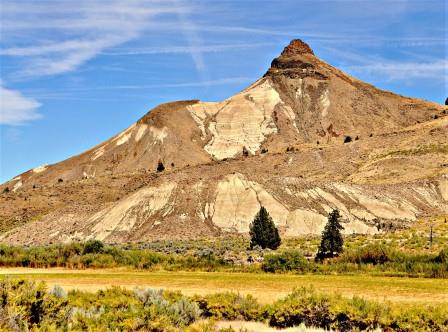
We usually go through the Yakima Valley to get to Seattle from Boise. But during this trip, we continued west through Oregon to pass by a national monument we were curious to see. It took us four hours from Boise on I-26 to reach the John Day Fossil Beds National Monument, composed of three geographically separate units:

At the Sheep Rock Unit is near the town of Kimberly, Oregon, and is composed of the James Cant Ranch Historic District, the Thomas Condon Paleontology Center, Cathedral Rock, and both the park headquarters and visitor center. "It is home to fossilized plants and mammals that lived there between the late Eocene, about 45 million years ago, and the late Miocene, about 5 million years ago, later than those found around Fossil Butte National Monument."


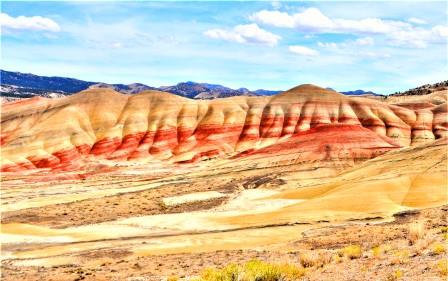
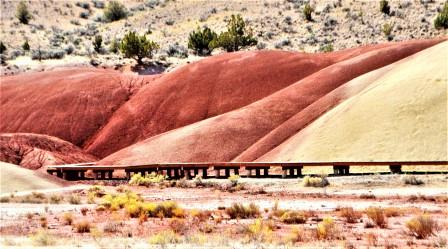
The Painted Hills Unit is halfway between the other two units, nine miles northwest of the town of Mitchell, Oregon. The hills are artworks of nature. They looked so fragile and I was afraid they might soon disappear. We enjoyed them so much because we could get up close to them. Besides, there was hardly a soul around. Wondering why this unit was not more famous. Unfortunately, we ran out of time to visit Clarno.

6. Bruce and Brandon Lee Gravesite, Washington


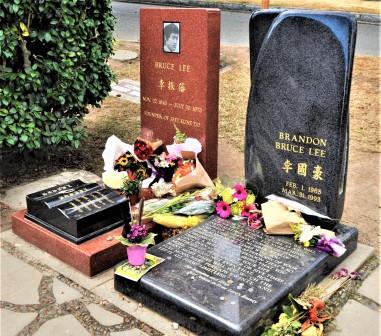
After a night in Mitchell, Oregon, we reached Seattle in another er six hours on I-90. But first, we visited Bruce Lee’s gravesite in the Capitol Hill neighborhood. After all, it has become a national and global pilgrimage site. Halfway up a hill in Lake View Cemetery,  his space is distinctly marked by evergreen shrubs, the final resting place of the legendary Chinese American martial artist and film star and his son, Brandon, lies.


7. The Gum Wall, Washington

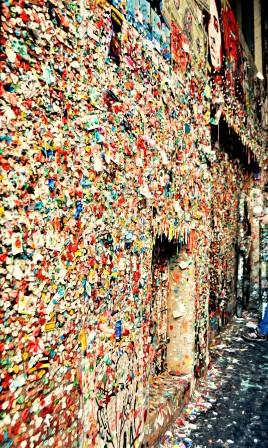
From there, we went to Pike Place Market because right under it, in Post Alley, is the Gum Wall. It is "made of brick but is covered in, yes, used chewing gum. In fact, parts of the wall are covered several inches thick, 15 feet high, for about 50 feet. The tradition began around 1993 when patrons of the Market Theater Box Office nearby stuck gum to the wall. Theater workers diligently scraped the gum away twice but eventually gave up around 1999 when they kept coming back." 

8. The Fremont Troll

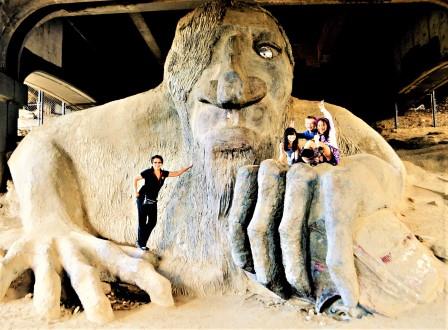
The last of our short visits was the colossal statue called the Fremont Troll. It can be found under the north end of the George Washington Memorial Bridge in Seattle’s Fremont neighborhood. "The troll is clutching an actual Volkswagen Beetle as if it has just swiped it from the roadway above...In fact, his right eye is a hubcap. Prior to the Troll, the area was becoming a dumping ground and a haven for drug dealers. In 1990, the Fremont Arts Council launched an art competition to rehabilitate it. Four local sculptors, who borrowed the idea from the Norwegian fairy tale Three Billy Goats Gruff, won!"


We continue to change our routes so we may discover more of these remarkable landmarks.

FOR THOSE ON MOBILE, SHARE BUTTONS APPEAR WHEN YOU CLICK WEB VERSION AT THE VERY END AFTER COMMENTS.

PREVIOUS POST


Friday, November 19, 2021

TRAVEL AWAITS: 5 Quaint Stops from Washington to Oregon to California

Iredale Wreck
                            

                                     The complete article was published in Travel Awaits

There were many stops we made during our drive down from Canada onto Mexico but these are what I cannot forget. From Washington to Oregon to California, these small towns may not be as well-known but they should be!

1. Blaine, Washington

Outdoor Sculpture Collection, Western Washington University

Blaine (population under 6,000), is the first US town you will encounter after crossing the US-Canada border. We drove to the Beachwood RV Resort and immediately found 
a 10-minute walk through the beautiful Birch Bay State Park that led to Birch Bay behind the general store. The bay is a popular spot for crabbing and clamming and, since we were there in fall, the park was particularly spectacular. Big and artsy birch driftwoods adorned the beach and close by was a whole community of vacation homes. This brought us to plenty of recreational opportunities: kayak, bike, and golf rentals plus a large mini-golf course.

"Just 30 minutes from the campground is the city of Bellingham. Although the city is smaller than the neighboring metropolitan areas of Seattle or Vancouver, there are many attractions that are popular among residents and visitors alike. Cliffside views of the San Juan Islands and the glaciers of Mt. Baker can be seen from the city. But it was the campus of Western Washington University, with its Outdoor Sculpture Collection, created by 36 contemporary artists, that gave us one great afternoon."

2. Seaside, Oregon

Bridge to Nowhere, Astoria Bridge


The next town was Seaside (population under 7,000) which grew out of the last stop of the Lewis and Clark Expedition. We treated ourselves to a week at Club Wyndham’s WorldMark Seaside, one of the state’s best waterfront locations. It just so happened that the American Kitefliers Association’s Annual Kite Festival was going on. "The beach and sky were littered with giant colorful kites dancing to the hum of the ocean and the songs of the winds." 
We strolled on the Seaside Promenade up to the famous Seaside Turnaround, shopped at the Carousel Mall and the Seaside Outlet Mall, and dined at a boardwalk restaurant with great beach views.

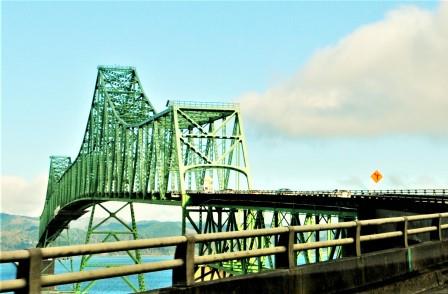
A few quick day trips completed our stay. The first was to Astoria, just 30 minutes away, which led us to the 4.1-mile-long Astoria-Megler Bridge, the longest continuous truss bridge in North America, that photographs as a “bridge to nowhere” from the southern approach. Next was Fort Stevens between Astoria and Seaside, built near the end of the American Civil War which features the Iredale Wreck (headline photo) on its beachhead. And the last was the famous Cannon Beach, known for the 235-foot-high Haystack Rock, often accessible at low tide, part of the Oregon Islands National Wildlife Refuge together with the two rocks called The Needles.
3. Red Bluff, California


From Seaside we took the RV to Red Bluff (population under 15,000) and parked our RV at a campground there. We stayed overnight to visit the Lassen Volcanic National Park whose dominant feature is  Lassen Peak. "At a little under 11,000 feet high, it is the largest plug dome volcano in the world and the southernmost in the Cascade Range. The national park is one of the few areas in the world where all four types of volcanoes — plug dome, shield, cinder cone, and strato — can be found in one place...(and) the ar
ea is still active with boiling mud pots, stinking fumaroles, and churning hot springs."

4. San Simeon, California

Next, we took a short detour to the town of San Simeon (population under 500), to see the Hearst Castle and the elephant seals.

The Hearst Castle is a National Historic Landmark (and a California Historical Landmark) depicting the decadent lifestyle of the rich and famous. William Randolph Hearst, the publishing magnate, developed his media empire and built the castle. He called it “a museum of the best things that I can secure.” When he died in 1951, the family gave the castle to the state of California.

elephant seal rookery

The Elephant Seals Vista Point was just eight minutes away. The beach is the largest elephant seal rookery on the West Coast, located just south of the Piedras Blancas Lighthouse. These animals
 are large oceangoing seals hunted to the brink of extinction by the end of the 19th century. But numbers have since recovered, and the northern species have chosen the Pacific Coast of the U.S., Canada, and Mexico for mating. 

5. Dana Point, California

Dana Point Harbor

From San Simeon, we went toward San Diego, where we again treated ourselves to a week's vacation at Diamond Resort International’s Riviera Shores, on the Pacific Coast Highway. 
Dana Point (population 34,000), has one of the few harbors along the Orange County coast with ready access via State Route 1. Named after Richard Henry Dana, Jr., author of Two Years Before the Mast which described the area and neighboring San Juan Capistrano as “the only romantic spot on the coast,” Dana Point has been designated a California Historical Landmark with miles of walkways and specialty shops, tasting rooms, and waterfront restaurants and taverns around a 2,500-boat and yacht marina.

And we did not miss visiting Mission Capistrano, founded in 1776 by the Franciscan Order. It features "the oldest building in California still in use, Serra’s Chapel, built-in 1782. But the Mission is perhaps best known for the annual 'Return of the Swallows,' a celebration of the swallows’ migration that’s observed every March 19 and has become a favorite subject of renowned artists. Mission Capistrano has been immortalized in books and films more than any other mission because of this event."

FOR THOSE ON MOBILE, SHARE BUTTONS APPEAR WHEN YOU CLICK WEB VERSION AT THE VERY END AFTER COMMENTS.

PREVIOUS POST