Cruising Past Seventy: The Inner Journeys: ancient ruins
Showing posts with label ancient ruins. Show all posts

Friday, April 24, 2020

6 Mexican Towns that Offer Magical Experiences


*Travel is not advised at this time but we hope this will help you plan for future travels when we already can.*

We featured two Pueblos Magico, Sayulita and San Sebastian del Oeste, in one of my latest posts, "5 Day Trips You Ought to Do in Puerto Vallarta". A Pueblo Magico is a small Mexican town that gives you a magical experience “by reason of natural beauty, cultural richness, traditions, folklore, historical relevance, cuisine, arts & crafts, and hospitality.” This time, let me introduce you to four others that we have visited, completing our total of six out of the 121 that have been conferred such a designation by the Mexican Secretariat of Tourism.

Teotihuacan 

mural at the Jaguar Palace

Snake Palace
When we RVed through Mexico and reached the town of Teotihuacan 25 miles northeast of Mexico City, it was not yet a Pueblo Magico. I do not know why it was named only in 2015. Until today, it is the most magical experience I have had in the country. A UNESCO World Heritage Site, it is Mexico’s most visited archaeological site. Covering about 32 square miles of restored monuments, it gives more than four million visitors a year the chance to relive pre-Columbus America.

Teotihuacan is home to the most architecturally significant Mesoamerican pyramids. At its peak, its population is estimated to be at 125,000, making it the sixth-largest city in the world during its time. Apart from the pyramids—the Pyramid of the Sun and the Pyramid of the Moon—the town is also anthropologically significant for its complex multi-floor residential compounds, the Avenue of the Dead, and the well-preserved murals especially in the Palace of the Jaguars and the Quetzalpapalotl palace. Established around 100 BCE, the city continuously built monuments until about 250 CE but they were systematically burned around 550 CE.

Todos Santos
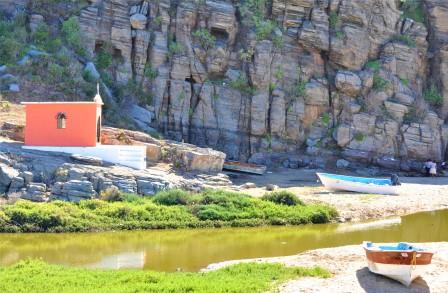
a small chapel at the fishing village in Todos Santos

It was when we went to Los Cabos when we heard of Mexico’s Pueblo Magico program and that there was one near where we were, just an hour by way of Highway 19. It is also an hour away from La Paz, the capital of Baja California Sur. Todos Santos is a small coastal town on the Pacific coast side of the Baja California Peninsula just on the foothills of the Sierra de la Laguna Mountains. It has a population of just more than 6.000.

the Plaza at Todos Santos

The town evokes a lot of history. The Misión Santa Rosa de las Palmas was founded by father Jaime Bravo in 1723 and is located across the street from the very lovely small town plaza. The last battle of the Mexican-American War was fought in the Skirmishes of Todos Santos in 1848. The town thrived as the Baja sugarcane capital with eight sugar mills at one time. But when the spring dried up in 1950, the last mill closed in 1965. In 1981, the spring came back to life and, when the Government built Highway 19 soon after, tourism activity increased, the rich farmlands were revived, and there was a boom in real estate development. The Hotel California is a favorite stop because of the name associated with the song made famous by the Eagles. The town was named a "Pueblo Mágico" in 2006.

El Rosario

the new Parish of the Virgen del Rosario

the Ruins
We discovered El Rosario when we started to stay in Mazatlan, Sinaloa for three months every winter. Because we drive down to Mazatlan, it was easy for us to explore the towns around it. This one lies only about 31 miles south of the city. The town was once the richest town in Southwest Mexico because of silver mining operations that began in 1655.

One of the main attractions of this town is the Parish of the Virgen del Rosario. The original eighteenth-century church suffered serious damage due to the mining operations close by. The inhabitants of the town built a new one and placed there the valuable original altarpiece made in gold leaf from the time El Rosario had the richest mining veins in the country. The stones of the destroyed old church building were also transferred, piece by piece, to a new site for the Ruins. The Museum of the famous Mexican singer, Lola Beltrán is just across the street. The original site of the church had been flooded and has become the Laguna del Iguanero where iguanas and turtles coexist. The town was named a Pueblo Magico in 2012.

Magdalena de Kino

Father Kino's Crypt

We discovered Magdalena de Kino driving back to Arizona from Mazatlan. We were just using it as a jump-off point to cross the border back into the US. But when we went for a walk, after an early dinner at our boutique hotel, we discovered a Plaza with great charm and history. It was an unexpected bonus.

the Plaza at Magdaleno de Kino

The following three edifices occupy the Plaza where there is a romantic horse-drawn carriage that can take you around. There is the Temple of Santa María Magdalena, with an image of San Francisco Xavier, an important historical figure for both Sonora and the neighboring U.S. state of Arizona. Then there is the Grave of Father Kino, who died in the year 1711 and is interred in a crypt near the mission he founded. The monument was constructed in 1966 after the discovery of his remains. Lastly, there is the Father Kino Museum where objects of the indigenous cultures of the region are exhibited.    

The six Pueblo Magicos gave us varied magical experiences. Actually, there are two other Pueblos Magico we were supposed to visit but which we had to forego because we had to hurry home at the peak of the coronavirus scare. One was Compostela on the road between Puerto Vallarta and Mazatlan. The other, Cosala, is near Mazatlan.  We signed up for tours that we eventually had to cancel. There are also two near the El Cid Resorts of Cozumel and Cancun where we can also stay in winter: Tulum and Isla Mujeres. So soon there will be four additional Pueblos Magicos that I will write about.

FOR THOSE ON MOBILE, SHARE BUTTONS APPEAR WHEN YOU CLICK WEB VERSION AT THE VERY END AFTER COMMENTS.

PREVIOUS POST

Thursday, June 6, 2019

10 Discoveries You Will Love in the High Desert of the Colorado Rockies

Cliff Palace in Mesa Verde NP

The Rocky Mountains is a significant feature of the North American landscape. The The Canadian Rockies and the four Canadian national parks are some of its most popular attractions. But the discoveries we made around the high desert plateau of the Colorado Rockies should really be as popular, especially since a significant part of Native American culture complement its outstanding rock formations.

Mesa Verde National Park

We spent a week in this largely undiscovered area en route to the Denver High School graduation of Bill’s granddaughter Cassie. About an hour west from where we stayed is beautiful Durango, Colorado, a city of about 17,000 people at 6,500 feet in elevation.  Another fifty minutes west is the Mesa Verde National Park, a UNESCO World Heritage Site. It sits very near the Four Corners, the intersection of the states of Utah, New Mexico, Colorado, and Arizona at elevations of 7,000-8,500 feet.

an Ancestral Pueblo in Mesa Verde NP

One day we took the self-guided tour of Mesa Verde, the largest archeological preserve of the Ancestral Pueblo people who made it their home for over 700 years, from 600 to 1300 CE. There are over 5,000 known archeological sites and well-preserved 600 cliff dwellings, including Cliff Palace, the largest in North America. The Park is easy to go through with over fifty miles of roads and many more trails. It is to me, the best national park of this type in the country. And it is just ninety miles from and “aligned” to the earlier ancestral Puebloan settlement of fifteen large buildings that comprise the Chaco Culture National Historical Park, also a UNESCO World Heritage Site which we visited in 2012.

aerial view of Durango, Colorado

The next day we asked the Durango Visitor Center to map out a plan for our city day trip. A few blocks around E 3rd Avenue are historic Victorian Homes, original hospital, churches, and residences of the city’s storied past of gold.  We then drove up a winding climbing road to Fort Lewis College to enjoy the beautiful aerial views of the mountains and the city valley below. Back to the city floor, we had a good tour of the Durango Art Museum and the busy Durango Theater that is currently featuring Mamma Mia. Then we had my Mother’s Day lunch at Ken and Sue’s before we took a walk along the banks of the Animas River some sections of which are famous for river rafting. On the way back, we drove through the Ute Indian Reservation, southeast of the city, with its world-class visitor center and museum. There is a bigger UTE reservation in Utah and that is how Utah got its name.  

Wyndham Pagosa

We stayed at Wyndham Pagosa in Pagosa Springs, higher in elevation than Durango at 7,150+ feet and five hours southwest of Denver. Wyndham Pagosa had a week’s availability of a one bedroom unit for us and we decided it would be good to break our trip there. We were already amazed at what we discovered in Durango but there were two more great sites right where we were based.

Mother Spring in Pagosa Springs

The town of about 1,700 is named for its sulfur springs, including the world's deepest geothermal hot spring. At approximately 144°F, this is the Mother Spring that feeds the other pools hosted by three local hot spring soaking locations right at the outskirts of the downtown area, the largest of which is at The Springs Resort & Spa. They and the pretty Visitor Center close by are right at the banks of the San Juan River that cuts through town (and is excellent for fishing).

Chimney Rock National Monument from the highway


at the  ridge top of Chimney Rock NM
But the highlight of our week was our visit to the Chimney Rock National Monument, another important discovery just nineteen minutes south of our resort and at more than 7,000 feet in elevation. The rangers told us they were initially trying to incorporate it as part of the Mesa Verde National Park but in 2012 it was decided to be named as a separate national monument. The Great House Pueblo of thirty-six rooms and two kivas at the top of the ridge, close to Chimney Rock and its close neighbor Companion Rock, had a largely ceremonial role in the Chacoan culture that was centered in the Chaco Canyon, ninety miles away. As the moon makes its lunar cycle across the sky over a period of 18.6 years, it appears in a Major Lunar Standstill (MLS) between the two rocks for approximately 16 months. The latest began in 2004 and the next one will be in 2021. As a matter of fact the construction of the Great House was started during the MLS in 1076 and ended at the ensuing MLS in 1093.

Pagosa Springs, Colorado

Beginning with Mesa Verde National Park and ending with the Chimney Rock National Monument, the area should really be more popular than it is. I guess the reason it is not is that it is more remote, high up in the Rockies. The national parks of Canada in the Canadian Rockies are just an hour away from the city of Calgary. This Colorado high desert plateau is 5-6 hours away from the nearest big city, Denver. But I would like to encourage all, especially Americans, to visit this area for its cultural and natural significance.
     
Pin This


Thursday, June 14, 2018

Here Are 10 Day Trips from Phoenix You Won't Regret Doing


One of the biggest benefits of settling down to a home is you get visits from family and friends. We just had two in the first week of June. The first was Bill’s second child and first daughter Suzanne who arrived from Denver with her daughter, Cassie on June 1. Suzanne’s birthday was on June 4 so we were even able to celebrate it at home, right before their flight back home that evening.

the Elvis Presley Memorial Chapel
Cassie had enjoyed Yellowstone National Park so much as a summer volunteer so she has made it a life goal to visit as many national parks and monuments as she can. Bill gladly obliged and drove them to ten-day trips around the city, six of them down that alley. Right after picking them up from Phoenix’s Sky Harbor International Airport, Bill took them to the Desert Botanical Garden before going home to Vietnamese lettuce wraps I prepared for dinner.  I didn’t go so I can’t write about it. But they were oohing and aahing about it.

The next day, Bill drove east towards Apache Junction on State Route 88. Not even thirty minutes from our home is the Superstition Mountain Museum, a 12-acre compound where many western movies were filmed, including those of Elvis. In fact, an Elvis Presley Memorial Chapel is onsite. The whole area is set against the beautiful Superstition Mountain. Just around the bend is the Goldfield Ghost Town, with authentic remnants of a mining town. There is a small train that goes around for tours. During winter when the snow birders are around, a gunfight is staged every hour in the afternoons. There is a Bordello, a chapel, a bakery, and even a Reptile Museum. We had lunch at the Saloon.

Tonto National Monument, Lower Cliff Dwelling

But we knew Cassie’s interest so we took her to the other side of the mountain, to the Tonto National Monument.   The Salt River runs through this area as a precious year-round source of water. Well-preserved Lower and Upper Cliff Dwellings were occupied by the Salados who produced some of the best polychrome pottery and intricately woven textiles during the 13th to early 15th centuries. Their cliff dwellings now look out to the Roosevelt Dam recreational area.

Canyon Lake from the Dolly Steamboat

We got back to State Route 88 to continue on to Canyon Lake where the Dolly Steamboat is docked. We had reserved seats on the evening cruise with dinner. Two years ago, this was how we celebrated our eighth anniversary. Back then we saw a lot of desert wildlife but this time around, we only saw a blue heron. Still, we loved Canyon Lake with the magnificent rock formations surrounding it, its many coves, and the toys of the big boys speeding on the lake. Dinner consisted of tri-tip steak and grilled chicken breast with lots of salad, roasted veggies, pies for dessert, and wine and lemonade for the beverage.

Casa Grande Ruins National Monument

More national monuments beckoned to the south/southwest of Phoenix. The following day, we visited Casa Grande Ruins near Casa Grande City. It consists of Hohokam ruins surrounded by a compound wall built in the early 13th century. "Casa Grande" is Spanish for "big house," referring to the biggest structure, the remains of a four-story building. After being abandoned by 1450, it has managed to survive extreme weather conditions for about seven centuries. A modern roof protects it now.

Biosphere 2

Before she found out about the many national parks and monuments of Arizona, Cassie’s main interest was Biosphere 2, an American Earth system science research facility located in Oracle, Arizona, about an hour south of Casa Grande. The 3.14-acre complex was originally built to be an artificial, closed ecological system meant to prove the viability of such systems to support and maintain our lives in outer space. Today, it still is the largest closed system ever created.  
Seven biomes were created: rainforest, ocean, mangrove wetlands, savannah grassland, fog desert, agricultural system, and human habitat. The two-year experiment involved eight humans called "biospherians". Below ground is an extensive technical infrastructure that supports Biosphere 2.  During the middle of the second experiment, the managing company, Space Biosphere Ventures, was dissolved, and Columbia University assumed management of the facility from 1995 until 2003. The University of Arizona took over research in 2007 and full ownership in 2011.

crested saguaro
Just an hour from Biosphere 2 stands the Saguaro National Park. It consists of two separate areas—the Tucson Mountain District (TMD) about 10 miles (16 km) west of the city of Tucson and the Rincon Mountain District (RMD) about 10 miles (16 km) east of the city. Both preserve Sonoran Desert landscapes, fauna, and flora, including the giant saguaro and its unusual variant, the crested saguaro.

Tumacacori National Historical Park

We barely had time but Cassie wanted to go farther south, forty-five minutes from Tucson, to the Tumacácori National Historical Park.  We arrived fifteen minutes before close time but it was all worth it. It became her favorite stop! There are three separate units in 360 acres. Established in 1691, Mission San Cayetano de Tumacácori and Mission Los Santos Ángeles de Guevavi, are the oldest missions. In the 1750s, the Franciscan Mission San José de Tumacácori replaced the San Cayetano Mission and is the one open to the public. The third mission established in 1756, Mission San Cayetano de Calabazas, and the Guevavi Mission can only be visited on reserved tours by the Park staff.

Montezuma Castle
On their last day, Bill drove for two hours north of Phoenix on Interstate 17 to the Montezuma Castle National Monument. The best-preserved dwellings were built and used by the Sinaguas, a pre-Columbian culture between 1100 and 1425 AD. The “Castle” has five stories and twenty rooms, built over three centuries, about 90 feet up a sheer limestone cliff, facing Beaver Creek. This ideal location inside a natural alcove also made it difficult for enemy tribes to penetrate their defenses. Almost 4,000 square feet of floor space are accessible most likely through portable ladders. At the next exit lies Montezuma Well, a natural limestone sinkhole also containing Sinagua dwellings perched on the walls. It is a mystery how so much water, 1.5 m gallons daily, can collect in the desert sinkhole.

Tuzigoot National Monument
As the last stop, Tuzigoot National Monument was a unique place. It preserves a 2- to 3-story pueblo ruin on the summit of a limestone and sandstone ridge. Situated near Clarkdale, Arizona, the ridge stands 120 feet above the Verde River Valley. The Tuzigoot Site is an elongated complex of 110 stone masonry rooms that were built along the spine of this outcrop. The central rooms stand higher than the others, maybe for public functions. The rooms incorporate few doors and use, instead, trapdoor type openings in the roofs with ladders for entry. Tuzigoot is the largest and best preserved of all the Sinagua ruins.

PINNABLE IMAGE
Cassie was so happy. Her US Passport Book collected six stamps during this trip. She also collected tokens from each one. She will surely come back to finish the rest sometime in the future. That will be the other ten-day trip she will not regret going to!


Thursday, March 3, 2016

Our Lifestyle Adventures: My First Taste of Greece Wasn't Athens!

Arch of Galerius
We had a day left for a day trip and, even if Jingjing had been to Greece, I have not so I relished the opportunity finally to step on Greek soil even if it is Thessaloniki, three hours from Razlog, Bulgaria. Besides, it is the second-largest city in Greece, after Athens, and the capital of Greek Macedonia, the part of Greece that is still in dispute with the Republic of Macedonia over the use of the name. Macedonia covers the Republic of Macedonia, this northern part of Greece, as well as parts of Bulgaria, Albania, Kosovo, and Serbia. Another name for the region is Macedon, the Kingdom of Alexander the Great.

lines of container vans through the night
Thessaloniki is a vast port city and transportation hub for southeastern Europe. Both our entry and exit from the city saw the longest lines of container vans waiting to use the port, 24x7. Its historical status is that of a "co-capital" or "co-reigning" city of the Byzantine Empire, alongside Constantinople. The city is also considered to be Greece's cultural capital and has the best beaches. Aristotle University is the largest in Greece and the Balkans. The Metropolitan area has a population of over 1.1 million.

White Tower
WHITE TOWER

The first attraction we needed to cross out from the list is the symbol of the city, the White Tower. It is a monument on the waterfront which replaced an old Byzantine fortification around the 12th century that the Ottoman Empire reconstructed to fortify the city's harbor. At the time, it was also used as a notorious prison and scene of mass executions. The current Tower was remodeled, and its exterior whitewashed after Greece gained control of Thessaloniki in 1912.

PALEOCHRISTIAN AND BYZANTINE MONUMENTS

But, like other Greek cities, Thessaloniki is home to numerous notable monuments, about fifteen constitute a UNESCO World Heritage Site. The city played a significant role in Christianity during the Middle Ages and was thus decorated by impressive buildings. We had time to see some: the City Walls, Adthe Arch of Galerius, the Rotunda of Saint George, and the palace ruins.

The 4th-century Roman Emperor Galerius commissioned the Rotunda and the Arch of Galerius as parts of a line that linked to his Thessaloniki palace, substantial remains of which remain to the southwest, embedded in the modern city and surrounded by modern buildings. A road that ran through the three is now a major pedestrian road in the middle of the city.

the Rotunda
The Arch was composed of a masonry core with marble panels celebrating victory over the Persians. About two-thirds the arch is preserved. The Rotunda, on the other hand, was a massive circular structure with a masonry core like the Pantheon in Rome. It has gone through multiple periods of use as a Christian, Muslim, and again a Christian church. It was undergoing renovation when we were there.

a friendly and helpful Greek
a Greek Feast
GREEK CUISINE

It was around this time as we were walking on the pedestrian road among the palace remains when a gracious, handsome, elderly Greek came to our help. Jingjing and I were wondering aloud where we could possibly get a good dose of fabled Greek cuisine. He graciously showed us how to get to the side roads to a group or restaurants. And that is where we found our corner, rested from all the walking, and feasted on classic Greek food.

Aristotle's left foot
ARISTOTLE AND HIS SQUARE

After lunch we proceeded to the Aristotelous Square, the central square of Thessaloniki, located on Nikis Avenue on the waterfront. Most of the Square was built in the 1950s but many buildings surrounding it have since been renovated. It is named after the ancient Greek philosopher Aristotle (384 BC – 322 BC), a Greek philosopher, student of Plato and teacher of Alexander the Great.  The Master sits there, in bronze, wearing a simple Greek chiton, sitting on marble bench with papyrus scroll in his hand. It is believed that if you touch his left foot, some wisdom will rub into your life. We are officially wise now!

Now I know why Thessaloniki is a popular tourist destination in Greece. In 2013, National Geographic Magazine included Thessaloniki in its top tourist destinations worldwide. In 2014 Financial Times FDI magazine (Foreign Direct Investments) said Thessaloniki is the best mid-sized European city of the future for human capital and lifestyle. For me, it was a great first taste of Greece. But I need to see Athens, too!
the Thessaloniki Walls

Thursday, February 25, 2016

Our Lifestyle Adventures: Out of Luck in Nis, Serbia

Mediana, closed for renovation in Nis, Serbia
From our little pilgrimage in Kosovo, we had to return to Skopje for the night because the next morning we would be entering Serbia from Macedonia, not Kosovo. Serbia is a country that was once a Kingdom, central to the Balkans, and to the Yugoslavia created to unite the region. After so many struggles, the Serbia of today is a landlocked country with many borders that include Macedonia, Hungary, Romania, Bulgaria, Croatia, Bosnia, and Montenegro. It also claims a border with Albania because Kosovo is still a disputed territory. It was only in 2008 when the parliament of Kosovo, Serbia's former southern province with an Albanian ethnic majority, declared independence. 
the scenery on the road from Skopje to Nis

We decided on visiting Nis, just a 2 ½ hour drive from Skopje because it is the birthplace of Constantine the Great, the first Christian Roman emperor. But the drive back to our base in Bulgaria was a long 4 hours, so we had only about 5 hours in Nis. We went directly to the Tourism Office to plot the best use of our little time but, lo and behold, the Turistička Organizacija Niš was closed that day! It was a bad beginning.
Christogram Monument

MEDIANA

We quickly asked how to get to Mediana, a luxurious suburbia of old Nis, built during the rule of Constantine the Great (306-337), later declared a saint by the Orthodox Church.  He ruled both the west and the east so well that the city of Constantinople was named after him. He was also the one who called the First Council of Nicaea when the Nicene Creed began to be professed. After Constantine’s rule, the Mediana became the temporary residence of 6 Roman emperors on their journey towards the East until the 4th century. Sadly, the Old City was closed for renovation! Another bad experience!
Monument to Liberators

CHRISTOGRAM MONUMENT

Constantine was the first Roman emperor to claim conversion to Christianity. The Christogram Monument celebrates this. In 312, the year of the battle of Milvian Bridge near Rome, Constantine had a vision of the Christogram sign with the note "In hoc signo vinces" or “In this sign, you will conquer.” We looked for the Monument all over the city and failed. When I got back to the US, I found out that it was just in front of the Nis Fortress, just behind the Monument of the Liberators, on the bank of the Nisava River. I had taken a picture of the entrance to the Fortress but failed to go close enough to see the Monument! Our third bad experience...and the worst!

MONUMENT TO THE LIBERATORS

It was good the King Milan Square whose central piece is the Monument to the Liberators is just across from the Tourism Office. The famous statue presents the periods of wars of liberation waged against the Turks, Bulgarians, and Germans. It contains inscriptions on the struggles for liberation from the Turks (1874-7) and the occupation and the liberation of the city in WWI (1915-8).

SKULL TOWER

some of the remaining skulls in the Skull Tower
the Chapel that houses the Skull Tower
Fortunately, we were able to locate the Skull Tower, a unique monument built after the Battle of Cegar between the Serbian revolutionaries and the Turks.  Even though they had won Cegar Hill, the Turk vizier of Nis found out that the leader of the Serbian troops deliberately created an explosion that killed everyone around, Serbs and Turks alike. He ordered the collection and skinning of the heads of the Serb victims and the building of a tower to house them. They even built the horrific monument along the road to Constantinople, as a warning to anyone rising against the Ottoman Empire. The 10-foot tall tower is rectangular with 56 rows of 952 skulls. Over time, most of them were stolen; today there are only 54.  

OLD AND NEW CHURCHES

Church of Constantine and Helena
The Church of St. Nicholas stands as a witness to the turbulent history of Nis. To the west of the current church are remnants of the previous church, demolished in 1737 as a consequence of the Turkish outburst of anger provoked by the disobedience of Serbian population. The present church was erected in 1863 as a Turkish mosque but it became an Orthodox church after liberation from the Turks.

At the end of our day in Nis, because we could not find the Christogram monument, we proceeded to the Church of St. Emperor Constantine and Empress Helena, located in a new part of the city, Bulevard Nemanjici, Park St Sava. It was built in 1999 in honor of the most revered son of Nis and his mother, Helena. It is a beautiful church with grounds perfect for strolling.

Unfortunately, we saw only half of what we intended to see in Nis. Not walking on the Mediana and not seeing the Christogram Monument were the biggest disappointments.  It was too bad that I had not planned the visit well. But we were still blessed for getting a feel of both old and modern Serbia, especially of her struggles that have haunted her past and that continues today.