Cruising Past Seventy: The Inner Journeys: spring
Showing posts with label spring. Show all posts

Monday, October 24, 2022

TRAVEL AWAITS: My 5 Favorite Springtime Experiences in the Arizona Desert


This article was first published in Travel Awaits on March 13, 2022.

When I experienced fall in the Northeast for the very first time, I fell madly in love. I couldn’t stop dreaming of living with those trees that paint the sky from palettes of gold, red, orange, and yellow. So the home I bought in Seattle was one that had such a special maple tree by the living room balcony.  But when winter came, all its beautiful leaves fell! That’s when, being originally from the tropics, I knew I could not stand the height of winter in such a place for long.

So when at the end of the eight-year fulltime RVing phase we looked for a place to settle, it had to be in the south. That’s how we discovered the Arizona desert, an environment usually described as barren, waterless, and without vegetation. Considered dull, uninteresting, even unlivable due to extreme heat or cold, people wonder why others would choose to live in a city like Phoenix or Tucson.  It’s simple really. We are people who can bear the desert heat in summer better than the winter cold up north. Happily, we have been rewarded with springtime experiences in the desert that rival fall experiences in the north.  

Relishing Simple Things at Home


Springtime is when temperatures are ideal at home. Weatherspark, my favorite forecaster of average temperatures anywhere in the world, says that from March 1 to May 31 highs around Phoenix are 75 to 90 and lows are 55 to 70. Because it is also not humid but dry, it is about as perfect a climate as can be for people like us. It’s that time of the year when we turn on neither the air conditioner nor heater. We simply open the windows to let fresh air in!

It’s fresh, chilly air that wakes you up to in the mornings, perfect with your hot coffee, chocolate or tea. A little later, it becomes the best time to putz around the garden, go around in a golf cart, and soak up bountiful Vitamin D. The nights are also great for cocktails on the patio, another little walk with the dog, or for going out in style and comfort.

Seeing Colors Burst Out Everywhere

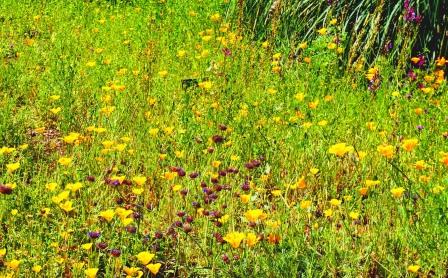
When we first arrived in the Phoenix area, I thought I would only be seeing drab colorsuntil I saw the wildflowers painting the desert floor in the entire spectrum in spring! They carpet the valleys and hillsides quite colorfully. Several regional parksEstrella, White Tank, and Cave Creekand state parksLost Dutchman, and Picacho Peakare some of those we visit during this time. The flowers come out more when winter has been especially wet and snow that has collected in mountain tops produces larger melts. Then a desert super bloom happens.

The wildflowers truly transform the desert floor but that is not what really delights me. At first, I hung on to the notion that I still preferred fall in the Northeast because the color swatches are so huge; they are splashed on the big trees! Well, imagine my delight when I witnessed the Arizona state tree, the desert trees called paloverdes green sticks in Spanish, all parts of which from the leaves to the branches, limbs, and trunk are green turn yellow in spring! Their little yellow blossoms sprout, bloom with abandon, and turn the crowns entirely yellow. Imagine the scene when there are miles of them together. You will appreciate my utter delight because I am an avid xanthophile!

There are two native Arizona Palo Verdes: Foothills and Blue. They bloom at separate times, so the golden blaze stays around for two months, from mid-March to mid-May. The Foothill paloverde has more yellowish bark and lighter yellow flowers. Blue paloverdes have twigs, young branches, and leaves that are bluish-green and flowers that are bordering on orange. Both are everywhere: in parking lots, freeway banks, private gardens, and public lands.

The first to bloom are the Blues, with the Foothills following about two to three weeks later. Their flowers are both five-petalled, with the banner petal standing out above the plane of the other four. In Blues, the banner petal is yellow, sometimes with orange spots. The Foothills’ banner petal is white. Once these flowers are pollinated, they produce edible beans.

Finally, the iconic Arizona desert cacti, the lovely saguaros that can grow to about 75 feet tall, also bloom in spring. Just go to the Saguaro National Park in May and you will see how beautiful it is when they all bloom at the same time! Imagine those green, thorny, and bulky trunks and arms transform themselves into delicate, flower-bearing trees of the desert. Truly quite a sight!

Enjoying Bodies of Water  


Some people react with disbelief when told that Arizona is blessed with 128 lakes and seven major rivers. So endowed, the desert beckons outdoor enthusiasts to swim, hike, raft, ski and fish especially during spring. The same snow melts that water the plants guarantee that these bodies of water come alive. In springtime, waterfalls gush, lakes fill, and rivers rise.

In fact, there are over 15 waterfalls in the state; many are in the Havasu region, in particular, the spectacular Havasu Falls. Close to where we live, the usually dry one on the Waterfall Drive of the White Tank Mountain Regional Park finally gushes after the rains in February and March.  

And because the lakes are full, we enjoy the two “steamboats” that ply the two gorgeous lakes all daythe Dolly Steamboat on Canyon Lake and the Desert Belle on Saguaro Lake offering lunches, cocktails, and dinners on tour. The many beaches come alive around those lakes, especially the great  Lake Havasu where the UK’s London Bridge was reconstructed, Apache Lake which offers motel rooms from where you can just step into the beaches, and the wonderful playground that Lake Powell has become.  

There are seven major rivers in Arizona. The mighty Colorado River is one and Salt, Gila, Verde, Blue, Virgin, and Agua Fria are others. There is rafting, tubing and kayaking galore. My husband and I particularly enjoy photographing the wild horses of the Salt River Valley playing in the tributaries of the Gila River.

Going to Markets, Festivals, Ghost Towns, and Ball Fields


Daytimes are perfect so markets come alive at this time in the desert. There always seem to be a farmers’ market to go to, every single day of the week. It is delightful that tropical fruits like avocados, watermelons, and cantaloupes, citrus like oranges, lemons, grapefruit, and lime, and even vegetables like artichokes, palm hearts, and Brussel sprouts are dirt cheap. At this time of the year, I rarely source produce from the groceries.  

Festivals also abound, from arts and crafts to music, film, and wine and everything in between. Go to the Indian Fair + Market run by one of the best Native American art museums in the country, Heard Museum of Phoenix on March 5 and 6, the Nascar Weekend at the Phoenix Raceway on March 11-12, or the massive Maricopa County Fair on April 6-10. Open-air concerts and drive-in theaters are plentiful. Even ghost towns like Goldfield come alive with gunfight reenactments, stagecoach runs, and steam locomotive tours offered again.

Even sports teams choose springtime in the desert to train. Come to see your favorite ballplayers practice at the Cactus League Spring Training at ball fields around Phoenixfrom the Arizona Diamondbacks, Chicago Cubs, Chicago White Sox, Cincinnati Reds, Cleveland Indians, Colorado Rockies, Kansas City Royals, LA Angels, LA Dodgers, Milwaukee Brewers, Oakland Athletics, San Diego Padres, San Francisco Giants, Seattle Mariners, and Texas Rangers. Their athletes appreciate springtime in the desert even when not at practice.

Visiting National Parks and Monuments
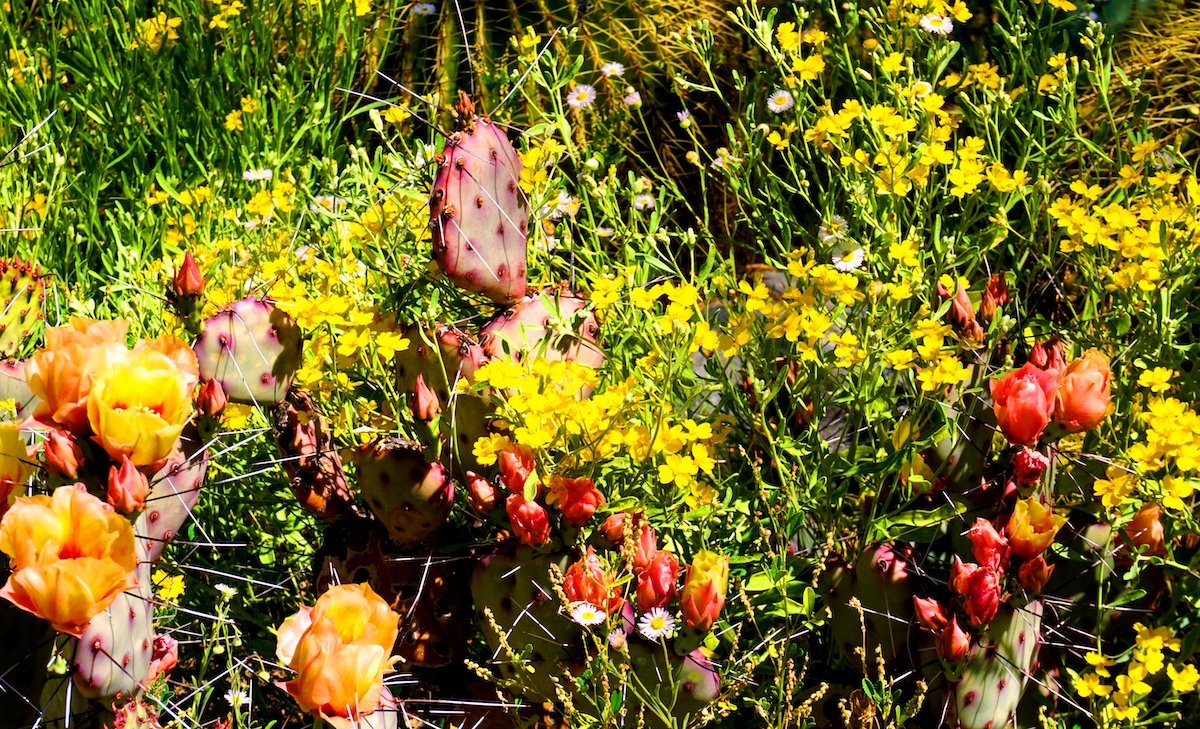

And it is the best time to visit the Arizona national parks and monuments that the area is known for: Sedona, Grand Canyon, Walnut Canyon National Monument, Wupatki National Monument, Montezuma Castle National Monument, Petrified Forest, etc. You’ll be pleased at how they are dotted with springtime flowers. And, in addition to the full blooming of the cacti at Saguaro National Park, the same thing happens at the Organ Pipe Cactus National Monument whose creamy blossoms open during the evenings in spring. In fact all cacti bloom in spring! 

Winter in the desert can be chilly, so we go farther south to Mexico. And the heat of summer, though no worse than the humid heat of the Midwest, motivates us to visit our children who all live in great summer places. Fall used to be my favorite season, hands down, until we came to the Phoenix area. It is such a paradise in spring. Besides, spring now means more to me than fall: it signals the beginning of life rather than the end of one.

So we make it a point to be home in April and May from all our travels. That is the time in the desert when it’s as if the sun has unloaded its energy, lending its rays to everything it’s touched, and the color yellow permeates the whole scene without the heat associated with the brightness of it all. I chose the right place to make our home. And it’s the time you should come and visit us!

FOR THOSE ON MOBILE, SHARE BUTTONS APPEAR WHEN YOU CLICK WEB VERSION AT THE VERY END AFTER COMMENTS.

PREVIOUS POST

My 12 Favorite Visits to Historic Presidents' Homes

Friday, May 7, 2021

Almost Back to Normal: Revisiting Arizona’s Best Landmarks


Spring is the favorite season of most people. And you should see it in the desert: 
10 Reasons to See the Desert in Bloom. That is why I always plan to be home this time of the year when the paloverde trees, both kinds, bloom and change their entire crown from green to yellow. I love it because it is not the yellow of fall which signals the falling of the leaves. It symbolizes the reverse: rebirth and renewal.

It is more so in the spring of 2021. Not only have the cases of coronavirus dramatically fallen such that life has almost returned to normal for us who have been fully vaccinated. Because of that, Bill’s elder sister and her husband were finally able to visit us. And because of their visit, we were able to revisit the significant landmarks of our state in Tucson, Phoenix, and Sedona, and the majesty of the Grand Canyon National Park.

Tucson

Being an engineer, we didn’t want Bill’s brother-in-law to miss what is known as Biosphere 2. It is the one and only place that fosters five different habitats (desert, savannah, mangrove, ocean, and rainforest) under one huge glass pyramid-like structure, mimicking Biosphere 1, the Earth. It was where eight Biospherians lived for two years, conducting major scientific studies that benefitted all of us.


Today, Biosphere 2 is managed by the University of Arizona which has added the Land Evolution Observatory, the world’s largest laboratory experiment in the interdisciplinary Earth sciences. It was too bad that, because of Covid, the major interests of Bill's brother-in-law (the apartments where the Biospherians lived and the Lung which controlled the environmental conditions of the habitats) were closed to visitors.  

It turned out that we did not have to show them the Saguaro National Park because everywhere they saw all the saguaros that were already beginning to bloom (the Arizona state flower is the saguaro blossom). But we did run out of time visiting the two missions we had planned on showing them: Mission San Juan del Bac, the oldest continuing mission with the most beautiful Spanish architecture in the country and the Tumacacori National Historical Park, the very first mission ever founded by the Spanish Anza.

Phoenix


East of Phoenix is the 40-mile trail that Apaches used to navigate the Superstition Mountains, the Apache Trail.  At its entrance stands the 15-acre land where the Old Old West movies were filmed. It includes the Superstition Mountain Museum, Apacheland Movie Ranch Museum, and the Elvis Presley Memorial Chapel. At almost the end of the trail is Tortilla Flat, the last stagecoach stop and now a town of 6 with a small post office, a country store that sells prickly pear ice cream, a restaurant with not-to-miss restrooms and $1 bills glued all over its walls, and a general store. We also took the Desert Belle Cruise on nearby Saguaro Lake after lunch at Shiprock Restaurant that is perched on an overlook of the lake.

On another day, we were supposed to tour them around the Desert Botanical Garden that showcases the treasures of the plant kingdom in the desert. But it was closed because of a private event so instead, we took them to the three architectural landmarks of Phoenix. First was Taliesin West, Frank Lloyd Wright’s winter home and desert laboratory (Taliesin East, his summer home, is in Spring Green, Wisconsin).  Another famous name, the chewing gum magnate, also had a Wrigley Mansion built for his wife in Phoenix. He has three other such mansions in Chicago, Catalina Island, and Geneva. It is now an upscale fine dining restaurant. The third was Tovrea Castle, the castle designed as a wedding cake that glows at night as the Sonora Desert icon. Its waiting list is six months long.

Sedona

And then we took them to the lovely city of Sedona, just two hours away. I have always remarked that the place should have been designated a national park were it not for the fact that 10,000 have already settled there. We stayed at the Los Abrigados Resort & Spa which has a pretty good restaurant on the premises (Spoke and Wheel with bicycles hanging all around) and sits right beside the Tlaquepaque, a beautiful pedestrian mall. For other meals, however, we chose restaurants that had views of the rocks like Creekside, Cowboy Club, and Open Range Grill and Tavern.


The Airport Overlook is one of the best places to have an aerial view of the red rock formations all together in one shot. But Bill’s sister loved best the Chapel of the Holy Cross (headline photo) best. It is built into the red rocks with views of many formations including the best three: Bell Rock, Courthouse Butte, and the most photographed of them all, Cathedral Rock. There are many more red rock formations: Snoopy, Coffeepot, Lucy, Chimney Rock, Steamboat, etc. But Sedona is not only famous for its red rocks but also for its mystical hiking trails and vortex experiences.


Grand Canyon National Park

But the couple came most especially for the Grand Canyon National Park. So on the sunniest day of our stay in Sedona, we drove to the South and East Rims, only two hours away. Luckily, because we were looking for a place to have lunch first, we were led to the Grand Canyon Village where the best lodging places and restaurants in the national park are located. We spotted Bright Angel Lodge but the lodge’s restaurant had a wait of two hours. It was good there was a place just behind the lodge called Fountain where adult lunch boxes of sandwiches, chips, and soda could be obtained.


And that’s where we found the beautiful section of the Grand Canyon’s South Rim that is part of the Bright Angel Trail that leads to the Colorado River down below with a campground, the Phantom Ranch, and several great stops for rest along the wat. We didn’t brave that and just explored the part of the trail immediately behind the Lodge. It included a few points of interest: the historic Buckeye’s Cabin, the Lookout Studio, and an Art Studio. There were also gift shops where we were able to buy our souvenir items.


Then we went to the East Rim via the section of the spectacular Desert View Drive that connects the South to the East Rim. There were about six vista points to view the Grand Canyon along the 20-minute drive.  We stopped at the Lipan Point, Mile Marker 263.5, just before reaching the East Rim. This section of the canyon includes the longest view of the Colorado River including a powerful whitewater rapid. 

We were lucky because we never had to walk a lot, like what you have to do from the parking lots of the Grand Canyon Visitor Center (still closed as of this writing) to the famous Mather Point of the South Rim or the Desert View Watchtower on the East Rim. It will take a few more visits before Bill and I can complete our exploration of the Grand Canyon. I have yet to see the North and West Rims; Bill just the West.

This visit allowed us to show Bill’s sister and her husband the best Arizona has to offer. And we feel blessed that we were able to do it during the best season, springtime in the desert, and when we are almost back to normal.  

FOR THOSE ON MOBILE, SHARE BUTTONS APPEAR WHEN YOU CLICK WEB VERSION AT THE VERY END AFTER COMMENTS.

PREVIOUS POST


Friday, May 22, 2020

5 Refreshing Socially Distanced Trips to State, Regional, and National Parks


We have been on lockdown, in our Viewpoint home in Arizona, since we arrived from Mazatlan, Mexico on March 23. There have been a few restrictions lifted. Bill can now play golf at the 18-hole course at our Viewpoint Golf Resort and the pools are now open where we live. I have been focused on finishing my second book. Groceries and medicines are picked up curbside. We had special dishes picked up for Easter Sunday and Mother’s Day. Zoom Parties have replaced physical hugs with family and friends.

But what has really saved the day is the refreshing outdoors that we sought on our road trips to open state, regional, and national parks around Phoenix. We can easily socially distance naturally because there are none to a few people who are doing it, like us. Also, our car is an extension of our home. We disinfect it and keep it isolated from foreign influences. We also carry with us our caboodle of face masks, surgical gloves, and hand sanitizers.

White Tank Mountain National Preserve


Spring in the desert is my favorite time and place. I immediately researched where the spring wildflowers were still blooming after our 14-day complete lockdown. We found one, the White Tank Mountain Regional Park. The Park features 19 hiking trails, ranging from 1.3 to 9.1 miles, 1,161 to 2,119 feet above sea level. Eleven of them are short and easy. However, the best one, the Waterfall Trail, was closed.

It was just an hour’s drive northwest from our home on Interstate 10, near the town of Surprise, Arizona. We were charged $7 for our vehicle and the registration was contactless. We were directed to the not yet bloomed-out section. As we drove there, we found about ten cars parked in different areas. And when we got to the spot, we had a ball photographing the yellow and purple blooms. It was our first chance to go out of our home and absolutely loved it.

Estrella Mountain Regional Park


This park was supposed to be just 45 minutes directly west of our home, also on Interstate 10, but this time near Goodyear, Arizona. But the GPS directed us to a dirt road near its southern border. It took us almost another hour to drive around the expansive park. It was a good thing that, on this extraneous drive, we found lots to photograph.  The paloverdes were still blooming yellow and we came upon an old jet fighter plane on display at an air club.

The Park is huge with 20,000 acres of desert, mountains, and a large wetland. There are baseball fields, a large grass picnic area, a golf course, fishing, and over 33 miles of trails for hiking, biking, and horseback riding. There was the abandoned horse show arena and a few horses were available for riding. A couple was riding their horses on to the Pederson Trail of 8.7 miles. Another couple was starting their hike on the 2.4 mile Baseline Trail. We were content photographing the horses and the geometric shapes of the empty benches and other parts of the arena.

Ironwood Forest National Monument


It was supposed to take us just two hours to get to the Ironwood Forest National Monument southeast from Mesa on Interstate 10. Our GPS took us to an exit that led to a dirt road that had a cautionary warning. As we reached the middle of the dirt road, we encountered a flooded wash area with another warning that said to not proceed in case of floods. We found a small track at the side to safely go but as the road became scarier, we turned back.

From my phone’s GPS, we found a route that took us south through more of Interstate 10. Forty minutes later, it took us to another dirt road called West SilverBell. This one, however, had the National Monument sign on entry and no warning. The whole trip took us three hours but it was so refreshing. It was like we were at the more primitive version of the Saguaro National Park. And the saguaros were in full bloom.

an ironwood tree in bloom at the park

Since it was a national forest, there was no visitor center and no fees to be paid. And we were pleasantly surprised with the ironwood tree. It is also called the palo fierro and it blooms in late April/May. We were there just at the right time. They were blazing in “fiery” purple. On the way home, the GPS directed us to a different route from how we came. And it led us to the same dirt road we were on at first. It was shorter but the longer route was definitely lovelier.

Picacho Peak State Park


This Park was about an hour from Ironwood Forest National Monument and it was on the way home right on Interstate 10. So we paid the $7 fee per vehicle and took the short drive through. It was supposed to be the best place to see spring flowers but we were late for the spectacle. But the peak itself is a spectacle. Its centerpiece spire is visible from downtown Tucson as it rises to 3,374 feet above mean sea level. It appears to be the remnant of a volcanic neck. Although now it is believed that it is just an eroded piece of rock.

Organ Pipe Cactus National Monument


Even if the trip to this National Monument took almost three hours each way south on Interstate 10 and Highway 85, we made it a point to go. It is a UNESCO biosphere reserve located in extreme southern Arizona, just 18 miles from the Mexican border. We understand that many illegal aliens use it as a corridor into the country. As a matter of fact, the Visitor Center is named after Kris Eggle, a border patrol agent killed by a drug smuggler during a border patrol operation.

We did not regret going because, although the visitor center was closed, there was a number to call to talk to a ranger. She directed us to where the special cacti grow in numbers. The park is the only place in the US where the organ pipe cactus grows wild. It was easy to drive through and spot the places where the cacti flourished, nearer the foothills. In addition, the desert wilderness scenery is so beautiful with ocotillos and saguaros blooming. Finally, there was practically no one around.

These five state, regional, and national parks were heaven-sent. I do not know why not more people go to get refreshed from being captive in their homes.


FOR THOSE ON MOBILE, SHARE BUTTONS APPEAR WHEN YOU CLICK WEB VERSION AT THE VERY END AFTER COMMENTS.


CLICK THIS TO PIN THE IMAGE BELOW


CLICK THIS TO PIN THE IMAGE BELOW


CLICK THIS TO PIN THE IMAGE BELOW

Thursday, June 6, 2019

10 Discoveries You Will Love in the High Desert of the Colorado Rockies

Cliff Palace in Mesa Verde NP

The Rocky Mountains is a significant feature of the North American landscape. The The Canadian Rockies and the four Canadian national parks are some of its most popular attractions. But the discoveries we made around the high desert plateau of the Colorado Rockies should really be as popular, especially since a significant part of Native American culture complement its outstanding rock formations.

Mesa Verde National Park

We spent a week in this largely undiscovered area en route to the Denver High School graduation of Bill’s granddaughter Cassie. About an hour west from where we stayed is beautiful Durango, Colorado, a city of about 17,000 people at 6,500 feet in elevation.  Another fifty minutes west is the Mesa Verde National Park, a UNESCO World Heritage Site. It sits very near the Four Corners, the intersection of the states of Utah, New Mexico, Colorado, and Arizona at elevations of 7,000-8,500 feet.

an Ancestral Pueblo in Mesa Verde NP

One day we took the self-guided tour of Mesa Verde, the largest archeological preserve of the Ancestral Pueblo people who made it their home for over 700 years, from 600 to 1300 CE. There are over 5,000 known archeological sites and well-preserved 600 cliff dwellings, including Cliff Palace, the largest in North America. The Park is easy to go through with over fifty miles of roads and many more trails. It is to me, the best national park of this type in the country. And it is just ninety miles from and “aligned” to the earlier ancestral Puebloan settlement of fifteen large buildings that comprise the Chaco Culture National Historical Park, also a UNESCO World Heritage Site which we visited in 2012.

aerial view of Durango, Colorado

The next day we asked the Durango Visitor Center to map out a plan for our city day trip. A few blocks around E 3rd Avenue are historic Victorian Homes, original hospital, churches, and residences of the city’s storied past of gold.  We then drove up a winding climbing road to Fort Lewis College to enjoy the beautiful aerial views of the mountains and the city valley below. Back to the city floor, we had a good tour of the Durango Art Museum and the busy Durango Theater that is currently featuring Mamma Mia. Then we had my Mother’s Day lunch at Ken and Sue’s before we took a walk along the banks of the Animas River some sections of which are famous for river rafting. On the way back, we drove through the Ute Indian Reservation, southeast of the city, with its world-class visitor center and museum. There is a bigger UTE reservation in Utah and that is how Utah got its name.  

Wyndham Pagosa

We stayed at Wyndham Pagosa in Pagosa Springs, higher in elevation than Durango at 7,150+ feet and five hours southwest of Denver. Wyndham Pagosa had a week’s availability of a one bedroom unit for us and we decided it would be good to break our trip there. We were already amazed at what we discovered in Durango but there were two more great sites right where we were based.

Mother Spring in Pagosa Springs

The town of about 1,700 is named for its sulfur springs, including the world's deepest geothermal hot spring. At approximately 144°F, this is the Mother Spring that feeds the other pools hosted by three local hot spring soaking locations right at the outskirts of the downtown area, the largest of which is at The Springs Resort & Spa. They and the pretty Visitor Center close by are right at the banks of the San Juan River that cuts through town (and is excellent for fishing).

Chimney Rock National Monument from the highway


at the  ridge top of Chimney Rock NM
But the highlight of our week was our visit to the Chimney Rock National Monument, another important discovery just nineteen minutes south of our resort and at more than 7,000 feet in elevation. The rangers told us they were initially trying to incorporate it as part of the Mesa Verde National Park but in 2012 it was decided to be named as a separate national monument. The Great House Pueblo of thirty-six rooms and two kivas at the top of the ridge, close to Chimney Rock and its close neighbor Companion Rock, had a largely ceremonial role in the Chacoan culture that was centered in the Chaco Canyon, ninety miles away. As the moon makes its lunar cycle across the sky over a period of 18.6 years, it appears in a Major Lunar Standstill (MLS) between the two rocks for approximately 16 months. The latest began in 2004 and the next one will be in 2021. As a matter of fact the construction of the Great House was started during the MLS in 1076 and ended at the ensuing MLS in 1093.

Pagosa Springs, Colorado

Beginning with Mesa Verde National Park and ending with the Chimney Rock National Monument, the area should really be more popular than it is. I guess the reason it is not is that it is more remote, high up in the Rockies. The national parks of Canada in the Canadian Rockies are just an hour away from the city of Calgary. This Colorado high desert plateau is 5-6 hours away from the nearest big city, Denver. But I would like to encourage all, especially Americans, to visit this area for its cultural and natural significance.
     
Pin This


Thursday, May 9, 2019

10 Reasons to See the Desert in Bloom


When I saw the Northeast in autumn for the very first time, I fell madly in love. From that time on, I couldn’t stop dreaming about living with those trees that paint the skies when they turn to golds, reds, yellows, and oranges. But being originally from the tropics, I knew it would be foolish. I would not be able to survive the height of winter in those places. Therein lies the quandary.

Fortunately, RVing full time for eight years brought us to the Arizona desert. Deserts are described as barren, desolate, waterless, and without vegetation. It is considered dull and uninteresting, unlivable due to extreme heat or cold. People, therefore, wonder how many can stand to live in Phoenix, Arizona,  Well, let me tell you that if spring and fall are the best seasons to visit (or live) in the Northeast, they are also in the Southwest. And, if the winter is the bane of the former, summer is it in the latter. That leads me to the crux of this post: Springtime is the best time to experience the desert. The following are the 10 reasons why.

If the trees turn multi-hued in the New England fall, trees turn yellow in the desert spring. (Disclosure: yellow is my favorite color) The Palo Verdes bloom with abandon and their tiny blossoms are yellow. The name Palo Verde literally translated means “green stick” in Spanish. All parts of the tree from the leaves to the branches, limbs, and trunk are green. There are two native Arizona Palo Verdes: the Foothills Palo Verde and the Blue Palo Verde. April is the blooming period for both. The first to bloom in April is the Blue Palo Verdes. Two weeks later, the Foothills follow.  The Mexican Palo Verdes bloom till August.

Flowers carpet the valleys and hillsides in the desert spring. Winter has been especially wet and cold this year. As a matter of fact, some snow collected in the desert valleys, more at the hill and mountain tops. Larger snow melts are now watering the landscapes. Yes, water abounds at this time in the desert, especially this year when winter produced so much melts. It is time to see the desert in bloom!


Because of the trees and the flowers, color reigns in the desert in spring. It is truly the best time to visit. Besides, temperatures in the desert are ideal at this time. Highs are in the 80-90s, lows in the 45-75s. It is fresh, chilly air to wake up to in the mornings, perfect for your hot coffee, chocolate or tea. And the nights of 60s-70s are cozy for indoor family activities or for night outs in style and comfort.

Daytime, on the other hand, is in the perfectly enjoyable 70-80s, except for June when it gets to the balmy ’90s later in the month. For this reason, markets come alive at this time in the desert. There will always be a farmers’ market to go to, every day of the week. Festivals also sprout, from art and music to film and everything in between. Even sports teams choose springtime in the desert to train. Come to see your favorite ballplayers from the Arizona Diamondbacks, Chicago Cubs, Chicago White Sox, Cincinnati Reds, Cleveland Indians, Colorado Rockies, Kansas City Royals, LA Angels, LA Dodgers, Milwaukee Brewers, Oakland Athletics, San Diego Padres, San Francisco Giants, Seattle Mariners, and Texas Rangers. What a bonus!

The Phoenix Metropolitan Area is such a paradise in spring for all these reasons. In fact, it is also good in the fall. Winter can be a little bit chilly so we go farther south to Mexico. And the heat of summer, though no worse than the humid heat of the Midwest drives us to visit our children who all live in great summer places. As you can see, we have even decided to settle in the Phoenix area. But this spring, come and see the desert in magnificent bloom and enjoy the other bonuses.