Cruising Past Seventy: The Inner Journeys: Arctic Circle
Showing posts with label Arctic Circle. Show all posts

Tuesday, July 16, 2024

YOU CAN RELIVE FIRST-TIME THRILLS AS MANY TIMES AS YOU WANT!

New Year snow in Phoenix


Lady Byrd Johnson once said: “When I no longer thrill to the first snow of the season, then I’ll know I am growing old.” That will never happen because I refuse to grow old and it doesn’t snow in Phoenix. But at a New Year’s Eve Party somewhere north of Phoenix, my husband and I experienced the impossible. Snow fell! That was a decade ago and it hasn’t happened again, but I remember the thrill we both felt.

I love first-time thrills like that and always look for more because age does not matter. Just be open to experiencing the rare, the unexpected, and even the scary. Somebody said, “If it excites and scares you at the same time, then it probably means you should do it.” It will give you a first-time thrill.

Exciting and Scary

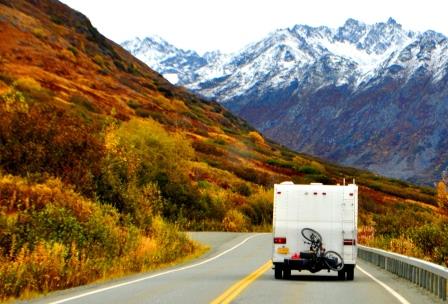
At Yukon’s Dawson City, I had waited all night for the Northern Lights to appear only to be disappointed. My doting husband knew he had to find a way to perk me up. He decided to drive to the Arctic Circle on the Dempster Highway. We had passed up the opportunity to do it from Fairbanks, Alaska on the shorter and better Dalton Highway. He was afraid our old Class C motorhome might not make the remote dirt gravel road because there was only one stop on the way that could help just in case.  

Soon, the unique fall spectacle unfolded before our very eyes. The trees and shrubs grew shorter; it turned into a brighter red, orange, and gold alpine tundra. The landscape became an autumnal carpet of lichens and fungi that hugged the Tombstone Territorial Park. We were shivering in that quiet cold windy spot, but it was well worth the drive! I may stil not have seen the Northern Lights (saw them later on another trip to Anchorage) but I got an even better thrill!

Difficult and Untried

Just two months later I did one thing I had never been able to do throughout my childhood. The Philippines would have been a great place to do it but I thought it was difficult for a wimp like me. We had traveled to visit my sister in Falls Church, Virginia. At nearby and windy Virginia Beach, my husband succeeded in guiding me to fly my first-ever kite. It was so thrilling that we forgot to take a photo.

A few months later we had to return to the West Coast. My new kite-flying prowess allowed me to enjoy two towns more than I could ever have done. I loved the World Kite Museum and Hall of Fame in Long Beach, Washington. In Seaside, Oregon, we chanced upon the World Kite Festival and were privileged to see outdoor and indoor competitions.  

I still must learn to ride a bike, however. And I don’t mean the one at the gym.

Fun but Risky

A year later, I experienced that first-time thrill again at the World Waterpark inside the fourth-largest shopping center, the West Edmonton Mall in Edmonton, Alberta, Canada. Corkscrew was its intermediate water slide with two enclosed pipes that twist, turn, and drop into a wide splash pool. I have never learned to swim and water deeper than three feet scares me.

But my husband promised he’d be there waiting for me at the end. That was all I needed. As I cascaded down, I was deathly afraid, especially when it got dark. I felt so alone and thought I would drown in the pool when I came out. But, when I did, there was my husband! He cuddled me in his arms, saying: “See how easy and fun it is?” Yes, he gave me another trophy in life.

There have been many other firsts, and I hope there will be more, even as I get older. One key is to have a cheerleader by your side.  That was my husband.   However, a certain Steven White once said: “If at first, you don’t succeed, then skydiving definitely isn’t for you.” I will, therefore, exclude skydiving from my pursuit of first-time thrills!


Tuesday, April 9, 2024

Would You Rather Go On or Off the Beaten Path?


We have found ourselves amid droves of tourists, all excited about having arrived at a destination like the Eiffel Tower, albeit as older lovers. We have found signs, followed them, and come upon six large charcoal ovens near Ely, Nevada. What gives you more satisfaction: on or off the beaten path? 

A Sense of Accomplishment

Either way, arriving at a destination always gives us a feeling of accomplishment. It is an achievement to have finally reached that place so many others rave about. We may have waited so long to save the dollars we needed to get there, sacrificing plenty. On the other hand, think of the risks we had to take to go off-the-beaten path: driving through a dirt road for miles to reach the Arctic Circle on Canada’s Yukon, suffering temperatures well below zero to catch the Northern Lights, or even climbing Mount Everest at the peril of death.

The Feeling of Amazement

More than this sense of accomplishment, we get the undeniable feeling of amazement when we reach a destination. When I got a glimpse of the Roman Colosseum, I marveled at the engineering feat built to today’s standards 2,000 years ago. At the Arctic Circle, I could not explain the feeling any better than with these words I have that capture the moment: “Sometimes you find yourself in the middle of nowhere. And sometimes in the middle of nowhere, you find yourself.”

The Feeling of Disappointment

Other times, however, I was forced to sigh,” What’s all the fuss about?” When I laid eyes upon the Manneken Pis in Brussels, Belgium, that tiny statue of a little boy taking a pee into a pond below, I was utterly disappointed; even more so when I found out later it was just a replica! But I didn’t say anything aloud. The huge throng was seriously engaged in taking masterpieces of a souvenir photo.

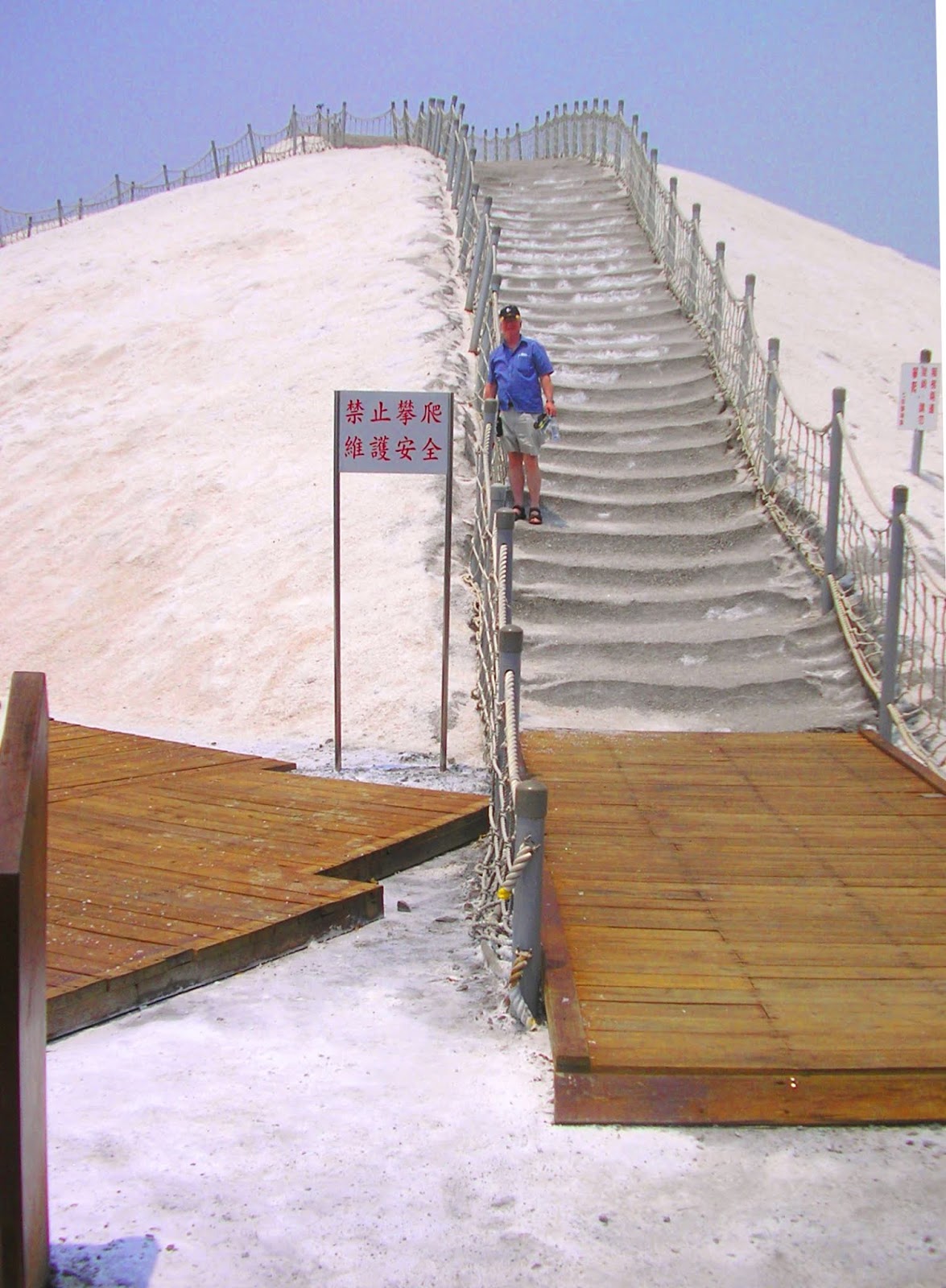
But the disappointment is even much bigger when I go through all the trouble and/or take many risks to reach somewhere off the beaten path. For example, to get to the Chigu Salt Mountain in Tainan City, Taiwan, we had to ride the expensive but fast bullet train from Taipei in the north and then take the only bus, where the driver, conductor, and passengers didn’t speak any English, to the outskirts of Tainan. This same bus went back only once, late in the afternoon.

Comments on its website like this more than express our disappointment: “Honestly! I had to spend 1 hour and 10 minutes on the bus to get there! And the last bus left at 18:10! What for? for a mountain of "salt" black of air pollution...nothing very amazing there! “

Finding a Saving Grace

We didn't want to wait four more hours for that one bus, so we called for a taxi. The driver, noticing we were hungry (the museum only had coffee), stopped, got out, took something out of the trunk, and gave us the most wonderful cookies we have ever tasted. Had we not gone to the Salt Mountain, we would not have met this extraordinary man! In Brussels, Bill’s saving grace was Belgian beer; mine, Belgian chocolates, and ours, waffles.

The question is not whether I would prefer to go on or off the beaten path. I will keep on doing both and you should, too. It doesn't matter how much expense or preparation we need to get to either. We can never guarantee anything in life. What matters most is to always have the right attitude when we get there. Then you may feel a sense of accomplishment, amazement, or a saving grace.

 
Bill climbing the Salt Mountain

PREVIOUS POST
Family Fun at a Farmhouse in Temecula Wine Valley

FOR MOBILES, click "View Web Version at the end of the post past comments and share buttons will appear.


Tuesday, March 12, 2024

Beyond Being Tourists


My husband and I have traveled together since the time we met in July 2007. We began as tourists, traveling for pleasure, visiting places out of curiosity.  We became more serious travelers when we bought an RV, rented out our condos, and cruised through forty-nine American states, nine Canadian provinces, and six Mexican states. It’s all chronicled in the book Carolina: Cruising to an American Dream. The RV gave us the wherewithal to become more than tourists. We became explorers, adventurers, and even pilgrims.

An Explorer is defined as a person who combs an area for discovery. When we became Elite Members of Thousand Trails (a nationwide network of campgrounds) and upgraded our RV to a 37.5-foot motorhome towing a dinghy, we stayed three to four weeks at a place. This gave us the chance to explore an area more completely. I would research the places nearby and schedule daily explorations of the areas within three hours of our base camp.

In Ontario, Canada, for example, we saw all four different faces of the province: a government hub in Ottawa, a bustling metropolitan center in Toronto, a famous tourist spot (Niagara), and the rural town where we were camped. In Europe, we got to go to three countries from our base in the small town of Oberstaufen in Germany. The trains allowed us to visit Switzerland (St. Gallen), Lichtenstein (Vaduz), and Innsbruck (Austria).

An Adventurer, on the other hand, is a person who has, or seeks, activities or places for excitement or an unusual experience, despite the risks they may entail. I must admit that Bill is more of an adventurer than I am. He used to scuba dive, ski, fly a plane, etc. I just play with my smartphone or laptop, an armchair sort of a girl.  I’ve tried playing tennis and pickleball, but they didn’t like me. Does riding the helicopter in Kauai or taking our RV to the Arctic Circle in the Yukon count?

When we stumbled upon the Worthington Glacier on the road to Valdez, Alaska, Bill went up to climb it while I stayed behind, scared I might hurt myself or be frozen. When we went with his high school friends for a reunion in Crested Butte, Colorado, he went wild river rafting with his friends while I stayed behind to write about the reunion instead. At Grandfather’s Mountain near the Blue Ridge Parkway, Bill negotiated the Mile-High Swinging Bridge while I took his photo.

A Pilgrim is another kind of traveler. This is a person who journeys, especially a long distance, to some sacred place as an act of devotion or even as an original settler. Once, being both Catholics, we diverted from our planned itinerary to Minnesota and turned west instead of north to visit the Grotto of the Redemption in the northeastern corner of Iowa. It was off the beaten path, but we wanted to see the complex of nine grottos made from forty-three different kinds of gems individually gathered and built entirely by the hands of three men.

A friend and I became accidental pilgrims in Eastern Europe. We were in Razlog, Bulgaria visiting a beautiful Eastern Orthodox Church in nearby Bansko when she suddenly had a yearning to find a Catholic Church. The nearest one was in Skopje, Macedonia, three and a half hours away, where Mother Teresa was born. We hired a taxi, prayed at the Chapel attached to her house, and visited the Church of the Black Madonna where she heard her calling at 18 in Letnice, Kosovo, an hour and a half away. The way home was through Nis, Serbia, birthplace of the first Christian Roman Emperor and Saint, Constantine the Great.

Indeed, we both had become explorers but I will not be the adventurer that Bill is. But we hope to be more of pilgrims. It is time for deepening our faith in this phase of our lives. Which of the three kinds of traveler do you want to be?


Thursday, August 15, 2019

How to Look at RVing, Objectively


My husband and I met late in life and jumped right into fulltime RV cruising after the wedding, inspired by the idea of a never-ending honeymoon. We made the RV our home and lived all over North America for five years, visiting forty-nine American states, nine Canadian provinces and territories, and six Mexican states. I even wrote a book about it, Carolina: Cruising to an American Dream. Now I recall the debate that raged in my head before we plunged into our great adventure.

at a campground in North Carolina

There are pros and cons to the fulltime RV cruising lifestyle. I wrote about them in this post. Today, I update that previous post with a better perspective, with the experience of all the RVing we have done, in hindsight. It is an objective look at this particular kind of travel to help those of you who are unsure of taking the plunge.

The following benefits are undeniable:

at the Arctic Circle in the Yukon

Experiencing new things-to-do
Seeing new places and sights
Meeting lots of new people
Being close to nature and the outdoors
Growing with a larger, refreshing view of life
Reducing negative stress

Because of the first three, boredom never had the chance to set in. The ability to boondock brought us closer to the mountains, the streams, the lakes, and the ocean. We had to adapt more easily to the nuances in daily living, becoming more aware of universal themes and larger concerns in the process.

at a Washington campground

Our lifestyles were quite driven before we married and fully retired. My husband was keeping a small business alive in a flagging economy after years of navigating the corporate jungle. In turn; I was juggling teaching at three institutions of higher learning while babysitting my grandson after years of pioneering in information technology in the Philippines.

Our RV cruising lifestyle was renewing, exhilarating and reinvigorating.

going into the Alaska Highway

And, though there was some stress looking for campgrounds, hooking-up and unhooking, planning itineraries, and choosing activities to do, it was the positive kind of stress; it wasn’t the kind where you earnestly pray that your situation will change or even wish you were somewhere else.  It was the kind that allowed you to sleep soundly at night with this: "That was an awesome day well spent!"

But we can also not deny the following disadvantages:

at a Monroe, Washington campground

Many unfamiliar situations
Loss of stability
Distance from family and friends
No involvement with worthwhile causes
Loss of income
Uncertainties in healthcare


The very benefit of having something new all the time also brought the disadvantage of instability. It was a preponderance of unfamiliar situations, especially in the beginning with our smaller 24-foot RV. The sad part was the increased distance with family and friends and the inability to work for causes we used to love.  Technology has definitely helped but the thing called “propinquity” was actually lost.


at a campground in Alaska

Since we moved to a new parish every other week, we could not participate in a regular ministry. What younger people would find most disturbing, however, is the loss of income, unless you can find portable jobs or work at campgrounds or even Amazon distribution centers. What finally made us settle down is to have better healthcare. 

at a campground in Mexico

But now we realize that all these disadvantages came about because we chose the full-time RV cruising lifestyle. We traveled in an unrelenting pace and covered the North American continent in less than five years. If you look at the benefits, they are the same whether you do it full-time or piecemeal. When you find a free week or two, escape to an RV adventure. There are ways to do this. You can buy a small camper, rent an RV or borrow a friend’s unit. At least try it and see for yourself.

parked at the side of a highway in Alaska

After ten years, we have modified our conclusion to the debate. We still believe RVing is something everyone should experience. Yes, we fully recommend you succumb to the lure of the open road. No other kind of travel will give you that absolute sense of freedom. But you don’t have to do it full-time like we did. Get the benefits. Skip the disadvantages. Escape the ordinariness of life. Go somewhere in an RV!

PREVIOUS POST
An Eventful Road Trip through the Canadian Rockies.

FOR MOBILES, click "View Web Version at the end of the post past comments and share buttons will appear.


CLICK THIS TO PIN THE IMAGE


CLICK THIS TO PIN THIS IMAGE


Sunday, December 7, 2014

Wonderings on Wanderings: Traveling as Much as You Can!

I have finally submitted my second book draft for my publisher's return editorial evaluation. I now turn to writing about the quotable quotes from the book, some by anonymous people, others by famous greats, and the rest from me, and why they are part of the book. My next travel write-ups will be in March 2015 from Europe. This week’s quotes are from an anonymous source and a favorite on Facebook walls, the most famous quote by Mark Twain on travel, and one of my very own.

“Travel as much as you can, as far as you can, as long as you can. Life is not meant to be lived in one place.” This is so appropriate for the lifestyle we adopted, cruising in an RV. I bet you will never guess how much, how far and how long we have traveled nor how many places we have lived in.

Bill and I have traveled 30,000 miles in our two RVs put together. An additional 60,000 miles are in road trips in our first red and second tan Saturns. On our ten months in our first year we traveled all of 15,000 in our RV from the Arctic Circle in the Canadian Yukon to the Tropic of Cancer in Mexico to the Southernmost Point in Key West, Florida. In the next 32 months we went as far east as Nova Scotia in Canada to as far west as Homer in Alaska, traveling the balance of 15,000 mile with a three-month trip to Asia in the middle.
Star @ Dempster Highway
on the way to the Arctic Circle

Wherever the RV is parked, a campground, a friend’s driveway, or even a Walmart, is called home. I estimate that we have lived in over a hundred homes in those 42 months or an average of two weeks per home. That was really a lot!

Fall in Blaine, Washington
We are staying put now, months at a time in a resort. So that has changed. But this does not come as a surprise for I have been relatively mobile in the Philippines. In 54 years, I lived in 8 homes, an average of 6.75 years per home all in Metro Manila. Bill, on the other hand, had been even more mobile in America and lived in 18 homes in 64 years, an average of 3.5 years in seven states.

So the quotation is really appropriate for Bill and me. The question is: what is the benefit of being this mobile and living not just in one place?  The other famous quotation of Mark Twain, from Innocents Abroad comes to mind: “Travel is fatal to prejudice, bigotry, and narrow-mindedness, and many of our people need it sorely on these accounts. Broad, wholesome, charitable views of men and things cannot be acquired by vegetating in one little corner of the earth all one’s lifetime.”

I am not saying though that, since we have not been confined to one little corner of the earth, we do not have any prejudice. I know I still do but there are more and more previous beliefs I had that I no longer hold true as I traveled more and more, getting more varied perspectives in life. For example, I no longer believe that people with higher degrees are necessarily better than those without one. People's education come from more than just schools. A good home life is a greater influence, I think.

I do hope that there will come a time when I will have absolutely no more bigoted views. That is why we will not stop from all our wandering. Travel makes me open to learn, be moved, and change.


Sunday, October 19, 2014

Top 10 Reasons for Quality of Life in Scandinavia

Nobel Museum in Stockholm
Scandinavian trolls...in Norway
Bill and I got a taste of life in Scandinavia for almost a month in May and June this year. It is comprised of Norway, Denmark and Sweden and can also include Iceland and Finland. In previous blog posts, I cited the interesting sights of each country. This post is about what I found common, shared, and loved in the region. First are the folkloric trolls, supernatural beings in Norse mythology, which we found everywhere. Second, I went gaga over the rows and tows of tulips in all colors, as well as wild lupines of Iceland that covered the geologic island masterpiece. What a fascinating place!

lovely tulips abound in Scandinavia
At a lecture of the Enrichment Voyage we attended, the professor flashed two comparative lists of country indicators, quality of life, democracy, gender gap, happiness and over all human development, leaving the headings blank. When asked where we would choose to live, majority of us (Americans) raised our hands for the country on the left, only to find out that was Norway! The other, sadly, was the US. It would have been quite revealing had a third country been included, the Philippines!

That the Euro is stronger than the US dollar should have already been a hint to us. And so number three is that, year after year, Scandinavia has continually scored the highest marks in all categories, garnering the top 4 or 5 usually. No wonder the Nobel awards are given by Oslo and Stockholm, two cities who best know how to live well. We had visited both centers.

offshore wind turbines in Copenhagen
light and heavy flushes
Fourth, the region’s success is due in part to its wealth in natural resources. Oil, forest and aquatic resources abound. Wood is used extensively and seafood is a hallmark of Scandinavian cuisine. Wind turbines are quite a sight to see off the coasts of Copenhagen, and the North Sea abounds with oil rigs.  Fifth, efficiency in energy use is a primordial principle. Commodes have two flushes, one for light, another heavy. Bicycles are as common as small (and dreamy like my Mini Cooper!!!) compact cars. And public transport systems are excellent and enviable. We always had a choice of trams, buses, trains, or subway systems to go from one place to another. Thus Scandinavia’s carbon footprint is lower than the US.

third largest restored Viking ship is in Norway
street sign in Helsinki
Sixth, Its success can also be attributed to homogeneity. The vast majority of Scandinavians are descended from Germanic tribes in what is now northern Germany, who spoke a Germanic language that evolved into Old Norse. The Vikings sprang from Norse culture and their influence is seen heavily throughout the region. In fact, Danish, Norwegian, and Swedish are related languages, considered mutually intelligible with one another, although Danish is considered much closer to Norwegian. Finnish is entirely unrelated to the Scandinavian languages, yet Swedish is required as a language in Finnish schools. All street signs in Finland have their counterparts in Swedish. And everyone we met spoke English in Sweden; it is required at all school levels.

color in Helsinki International Airport
HTL check-in
Seventh, I was even more impressed that Scandinavian products are imbued with excellence in design and innovation. Arabia, not at all pertaining to the Middle East, is a design district in Helsinki, the Design Capital of the World, where elegant products are tops in both form and function. Almost everyone that is starting a home in America must have come across IKEA, a Swedish icon in home furnishings. Soon that may also be true of HTL. It is the hotel we stayed in Sweden where the nonsense is taken out of hotels. There are no closets, just cute hangers everywhere, self check-in and and other innovations. Whether it is fences and roofs of old, modern minimalist furniture, exquisite tableware, or even airports that come alive with color, I was very impressed with everything Scandinavian.

my favorite shrimp open-faced sandwich
and Bill's salmon sandwich in Oslo
hamburger place in Iceland
Eighth, for people who care that the table is graced with well-designed tableware, it is no wonder that Scandinavian cuisine, built around seafood as already mentioned above, is also excellent. The shrimp open-faced sandwich I had at a Norwegian café was unforgettably so good! So were the many versions of salmon Bill ordered. Swedish meatballs and German sausages are now mainstays of kitchens around the world.  However food there is very expensive. As a result, McDonalds outlets have long lines and many other examples of American fast food are to be found everywhere. But not as common as Middle Eastern pizzas! Yes, they are having a wave of immigration from those countries/

a beach sauna in Helsinki
the Blue Lagoon in Reykjavik
Ninth, the climate was not as cold as I thought it would be, despite being in the high latitudes and many northern places even touching the Arctic Circle. Summers go as high as low 70s Fahrenheit while winters are mild in coastal regions (20-30s) due to the warming effect of the Gulf Stream. In Helsinki and Stockholm beaches are dotted with small sauna cottages that are separated from the main homes. A common practice is to have a sauna, plunge into the cold water, then return to the saunas again! In Iceland, the Blue Lagoon is the prime hot medicinal bath and tourist attraction. But Open Air Museums are top attractions in each of the major cities even though they are unusable for almost half of the year.

Amalienborg in Copenhagen
Oresund Bridge
Tenth, architecture and engineering are fascinating in the region. Except for Iceland, each country has great medieval castles, just like every country in the rest of Europe. The big engineering feat is, of course, the spectacular 5-mile Oresund Bridge which we saw from the deck of MV Explorer. It connects Stockholm to an artificial island after which a 2.5–mile tunnel connects it to Copenhagen, the largest combined road and rail bridge in Europe. It also seems there is a silent competition to have the most prominent, most awe-inspiring Opera House among Scandinavian countries. 

Reykjavik Opera House
Congratulations are certainly in order to all Scandinavians for a great example of good life! But I still would not live there! The United States is friendlier to tropical me!


Monday, July 28, 2014

Our Lifestyle Adventures: Getting More Captivated by Iceland

Our Party at the Arctic Circle
Reykjavik in summer
I have long wanted to visit Iceland, especially Reykjavik, the northernmost capital of the world. She captivated the world when over a period of six days In 2010 volcanic eruptions caused enormous disruption to air travel across western and northern Europe.  About 20 countries closed their airspace to commercial jet traffic, affecting about 10 million travelers.
lupina all over Iceland after winter

Coexisting ice and geothermal landscapes make a mysterious combination that has captured my imagination even before this seismic activity. We took the “Iron and Ice” segment of the MV Explorer’s Enrichment Voyage because of Iceland for me, Denmark for Bill, and also because it would take us from Scandinavia to the UK for the wedding of April and Clint.

island of Surtsey
It took two days at sea before we reached Iceland from the Shetland Islands. We attended all the sessions about what to expect in the three ports we will visit, about the Vikings and origins of the country and its people, and its current economy and development. But, even before reaching Reykjavik, we encountered the island of Surtsey off its southern coast formed in a volcanic eruption which began 426 ft below sea level in November 1963, continuing for seven months after. Now the island is half its maximum size of one square mile because of wind and wave erosion.

Iceland is a Nordic country between the North Atlantic and the Arctic Ocean. A population of 325,671 occupies an area of 40,000 square miles, the most sparsely populated country in Europe. It is volcanically and geologically active, consisting mainly of a plateau of sand and lava fields, mountains and glaciers, with many glacial rivers flowing to the sea. I learned that the Gulf Stream warms it so that its climate is temperate despite being just outside the Arctic Circle.

largest natural lake
We took a bus tour in Reykjavik that took us first to Þingvellir, a continually evolving volcanic area and to Þingvallavatn, the largest natural lake in Iceland. Haukadalur is the third tourist attraction in the Golden Circle where geysers and other geothermal features have developed on a rhyolitic dome.  There are also more than 40 other little hot springs, mud pots and fumaroles nearby. But it does not compare to Yosemite in America, the largest and densest area of geothermal activity in the world.

you would really want to dive into it
geothermal springs
Our next stop was the Blue Lagoon, a geothermal spa in a lava field in Grindavík. One of the most visited attractions of Iceland, the Lagoon started to form in 1976 from the waste water of the geothermal power plant that had just been built there. In 1981people started flocking to it after they discovered its healing powers for psoriasis. In 1992 the Blue Lagoon Company opened a public bathing facility, separate from the section used by people who sought its healing powers. It is truly blue! 
Viking Museum
The final swing of the tour was a brief stop at the Viking Museum, a glimpse of the Sun Voyager, a sculpture that is both a dreamboat and an ode to the sun, the Harpa, a very new concert hall and conference centre, and the Pearl with five immense hot water tanks topped with a domed revolving restaurant. It was too bad that the Hallgrímskirkja was not part of the tour and we were so tired that we couldn’t walk to it. It is the largest church in Iceland (Lutheran) and is of outstanding architecture, visible from any part of the city. There was a lot more to see but we simply did not have the time or the energy.

Sun Voyager
the town of Isofjordur, viewed from the ship
The next day our cruise ship docked at Ísafjörður, meaning ices' fjord, a town in northwest Iceland. With a population of about 2,600, the small town is located on a spit of sand, or eyri, in the Skutulsfjörður fjord which meets the waters of the larger Isafjarðardjúp fjord. The town is connected by road and a recent 3.4 mile road tunnel to Bolungarvík to the northwest and to the small town of Súðavík to the east. Completed in 1996, the tunnel also leads to the small towns of Flateyri and Suðureyri, and to the western parts of the Westfjords. Ísafjörður also has an airport with regular flights to Reykjavík.

view of the town, on foot
I had developed a slight fever so I stayed on the ship while Bill walked the town and took pictures for me. Fishing has been the main industry and the small town has one of the largest fisheries in Iceland. Despite its size, small population, and historical isolation from the rest of the country, the town has a rather urban atmosphere with a school of music, a hospital, a cultural center with a library and showrooms and a distance learning center for the 7,000 residents of the Westfjords area. Later in the day, Bill briefly took pictures of me from the viewing deck with the town as a background. The scenes were postcard pretty and not because of me, I concede.

Godafoss, Waterfall of the Gods
The following day I was feeling better and we joined a bus tour at Akureyri, the third Icelandic port we visited.  Iceland's second largest urban area after Reykjavík, Akureyri is nicknamed the Capital of North Iceland. It is an important port and fishing centre, with a population of 17,754. The area where Akureyri is located was settled in the 9th century and was the site of Allied units during World War II.

another scene as the bus gradually took us to the Falls
The tour bus gradually took us away from the town and gave us so many picturesque scenes of it, our docked cruise ship, and the countryside. We were taken to the The Goðafoss, waterfall of the gods, one of the most spectacular waterfalls in Iceland. It is located in the Mývatn district of North-Central Iceland where the water of the river Skjálfandafljót falls from a height of 12 meters over a width of 30 meters. It is said that in the year 999 or 1000, upon returning from the Alþingi (one of the oldest extant Parliaments in the world circa built 930 AD), the Lawspeaker Þorgeir Ljósvetningagoði Þorgeir threw his statues of the Norse gods into the waterfall, the story preserved in Ari Þorgilsson's Íslendingabók. Thus Christianity became Iceland’s official religion.

Church of Akureyri
A window in the Cathedral of Akureyri (Akureyrarkirkja) illustrates this story. And that was our next stop. It is a prominent Lutheran church towering above the city on a hill right in the middle of the city centre. Bill and I counted about 55 steps to reach the top. The church has a notably large 3200-pipe organ, a unique interpretation of the crucifixion and a suspended ship hanging from the ceiling which reflects an old Nordic tradition of giving offerings for the protection of loved ones at sea.

folkloric trolls in downtown Akureyri
We then wandered around town for more pictures, including one with folkloric trolls and the beautiful visitor center. The views from the dock and the ship were equally astonishing.  

view of the town from the ship's deck
After the ship set sail, we had a grandly wild party celebrating our crossing of the Arctic Circle. At precisely the time, the Captain announced at the Gazers Lounge, ’Ladies and gentlemen, look to the left of you.’  We all looked. Then he said, ‘Look to the right of you.’  We all looked. Finally he said, ‘There is really nothing.’ And we all laughed, drank, and danced. We may not have seen boundless expanses of ice for it was summer.  But Iceland is certainly another kind of land and I became even more captivated.