Cruising Past Seventy: The Inner Journeys: sunsets
Showing posts with label sunsets. Show all posts

Thursday, March 7, 2019

Prepare to Be Dazzled at Mazatlan’s Carnival

…and Witness Mexican Culture at its Best!


This is my third time in Mazatlan but I always went in the Fall. Luckily, we came in winter this time and ran right smack into the Carnaval de Mazatlan 2019.  It is reputed to be the third largest carnival in the world, after Rio and New Orleans. We have been in Mazatlan for ten weeks by this time so it was but natural for us to have learned a lot about Mexican culture. But at the Carnaval Parade, it was encapsulated in dazzling hours of pageantry from 5-10 pm. We saw the best of Mexican culture.

dramatic sunset

This year’s theme was Equinox and the Parade started near the Diver’s Point on the Malecon. It traveled along the Avenue del Mar that hugs the long boardwalk. We watched the Parade from a raised platform built by the Hotel Hacienda, almost where it started. Jutting out from the hotel’s façade, our front row seats were a strategic spot from which I could take pictures of the floats and the people with the glorious sunset glowing on the ocean as a backdrop.


During the whole night, it became obvious that Mexicans enjoy music. This includes traditional Mariachi, Norteño, Ranchera, and Corridos. It was in Mazatlán that the loud, booming Banda music was born. In fact, bands are a regular feature at Mazatlan beaches. But at the Carnaval Parade, it was front and center. One of the most applauded floats regaled the crowd with Banda music played by a band from a gigantic platform on a very tall float.

"bullfighting" at the Parade

prized seafood on floats

The national sport of Mexico is Charreria, which consists of a series of equestrian events. But bullfighting, a tradition brought from Spain, is also popular. In fact, Mexico has the largest venue for bullfighting in the world, the Plaza México in Mexico City which seats 48,000 people. There is one in Mazatlan but the city has banned the sport due to the urging of animal safety enthusiasts. At the Carnaval Parade, the penultimate showcase was a surprising and entertaining mock bullfight of a matador and two huge “bulls.”


Mazatlan’s economy is built upon the strong foundation of agri and aquaculture. Being next door to America is, in fact, a major stimulus to the country’s economy and Sinaloa is so close to Arizona that it is even more pronounced here. The city is extremely proud of its seafood. On this previous post, I wrote about Mexican food and mentioned that Mazatlan is the “shrimp capital of the world.” Many floats featured the prized seafood: pulpo (octopus), langosta (lobster), delfines (dolphins), etc. in contrast to the others that put Mexican beauties on pedestals. 

Mexican beauties on pedestals

Of course, Bill preferred those ladies to the bulls and the seafood! But both will not win against the favorite drink. Pacifico beer, the most popular Mexican beer, was founded in Mazatlan in the 1900s by German settlers. At the Parade, there was a special viewing platform for their people. In fact, because they partly sponsored the event, it was a huge Pacifico float that started the parade.


The dancing horses of Mazatlan ended the Parade. That’s when we started to walk back to the hotel as there was no taxi or pulmoniya around. It took us about an hour to reach the roundabout where the Carnaval Parade was just turning right at Avenue Rafael Buelva to go to its end point, Old Mazatlan near the Catedral. On the walk, we saw hundreds of thousands of Los Mazatlecos, families having spontaneous parties with food they had brought (or bought from the many street food kiosks on the main avenue and all its side streets), senoritas and senoritos dancing to the loud Banda music on the street, children collecting confetti so they can throw them again, and chairs seeming to float on their own as they were being carried on shoulders back to the cars.

picking up confetti to throw again

The Parade was well staged and directed. It brings to mind Mexico’s outstanding film industry that has produced Oscar winners in the Best Director category like Alfonso Cuarón who just won for Roma (which also won the Best Foreign Film category). The outstanding color and creativity all along the Malecon also brought to mind the famous  Mexican painter Frida Kahlo.


Mexican History on a Float

Mexican culture reflects the country’s complex history: the Aztec and Mayan roots that became an important cradle of civilization, the 300 years of Spanish rule and influence, and the turbulent road to independence. In one night, the warmth and expressiveness of the Spanish and the creative and artistic bent of the indigenous were meshed and on display. We were prepared to be dazzled at the Carnaval Parade. And we witnessed the best in Mexican culture.

POSTSCRIPT


One of the floats seemed to caricature the President of the US with whom Mexico seems to have a tenuous relationship. You be the judge!

pinnable image
pinnable image
pinnable image

Thursday, November 2, 2017

7 Great Spots on Waiheke, #4 Island of the World 2016

 
road trip on Waiheke

Waiheke Island is the second-largest and most populated island off Auckland, New Zealand. With nearly 8,730 permanent residents, another estimated 3,400 wealthy Aucklanders own holiday homes. In 2015, the Island was ranked the fifth best destination in the world by Lonely Planet. More recently, in 2016, Waiheke was voted the fourth best in Condé Nast’s Best Islands in the World List.


Matiatia Wharf


It was easy to see why Waiheke Island is the jewel of Hauraki Gulf. With regular ferry sailings, Waiheke is the perfect place to escape to for the day. Here’s how our day with Winnie, a long-missed college friend, went. First, we met at the downtown ferry terminal in Auckland. We arrived in Matiatia Bay on the Island, 13.4 miles away, after 35 minutes. There were a lot of photo-ops on the ferry and in the lovely wharf, especially when we got back after the island tour, right before sunset.

Orapiu Bay


Winnie immediately went to the car rental place and took out a little red car for us to use that day. She drove us to the southern part of the island and asked if we wanted to venture to the southernmost part in Orapiu Bay. Of course, we did! There we found one man fishing from the old wooden jetty. It was totally serene but also pretty exciting at the same time.

Man O’War Bay


Then we went up north, through rough coastal
roads, unfarmed empty fields, and homes few and far between until we reached the easternmost part of the island on Man O' War Bay. There we found the only waterfront vineyard and winery on the island. And we lingered at its beachfront tasting room to sample its best sellers and have our photos taken around the garden.

Onetangi Bay


Going further north and then westward, we reached the beachfront residences of many islanders around Onetangi Bay.  At the quiet beach, we saw a single man gamely playing with his dog on the beach with its rhythmic waves crashing on its waiting shoreline. How hard it was to capture the essence of the captivating scene through my inexperienced lens!

Ocean View Road


As we went further east through Ocean View Road, we found the many holiday homes of wealthy Aucklanders. We looked for a special one, the one owned by my friend Zenie and her husband Parkin Low, with whom we were staying in Auckland. It was one of the more modest bachs but it had a spectacular view of the Bay. How great it would have been had we stayed there for the night, too!

Mudbrick Restaurant and Vineyard


At about 2 pm, we had made the complete circle and reached the western part of the island where most of the art galleries, the shops, the restaurants, and other tourist destinations were located. Winnie selected Mudbrick for lunch. An excellent selection, the winery has a large restaurant with floor to ceiling windows, a second-floor deck for more viewing pleasures, and an extended balcony with dining tables for even better views of Auckland and Rangitoni Island. Each dish we ordered was explained to us by the chef’s assistant. The gardens and the gift shop completed the enchanting scene.

Cable Bay Winery


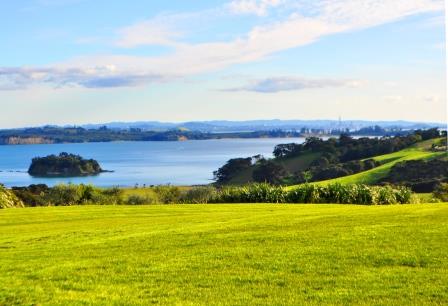
As if that was not enough, Winnie then brought us to another winery nearby, Cable Bay, with even more spectacular scenery. Ostensibly, it was only for dessert and coffee. But beyond the dining area, again through floor to ceiling windows, stands a wide expanse of greenery rolling down to the waters below. And it was overlooking another view of Auckland at a distance, and small islands between.   


We felt like we were a world away, as we soaked in stunning sea views, tasted world -class wines, and feasted on delectable cuisine. We found it hard to leave, after walking around some stunning coastal headlands, touring three spectacular vineyards and seeing idyllic scenes of sheep and fields as we drove around the island. We truly enjoyed our time on Waiheke. We are glad we took a day away from our Auckland tour.


Thursday, August 6, 2015

Our Lifestyle Adventures: Soaking up the Sun in Southern Spain

Costa del Sol in Benalmadena, Spain @ sunrise

Now that we have finished my Book Tour and successfully launched my book, Carolina: Cruising to an American Dream, let me go back to our March-April European Tour. All my posts for our week in Italy (March 18-28) with Bill’s daughter Suzanne and her family have been completed. The next few will be about the week that followed, when we toured southern Spain with my granddaughters Krishna, 22, and Daniela, 18. After some jitters about their taking such long flights by themselves (yes, even at that age!), I was ecstatic and heaved a big sigh of relief when they arrived at the Malaga International Airport.

from our balcony: Krishna, me and Daniela

sand castles
We took a short taxi ride to Benalmadena, one of 14 coastal towns and communities along the coastline of the Province of Malaga in Andalusia in the south of Spain. This region is collectively known as Costa del Sol, literally, “Coast of the Sun.” Benalmadena is one of the middle-sized towns (population, 58, 954). When I looked out from our plane window, the view was downright enthralling. When we got to our room at the Royal Club of Benal Beach, part of the Diamond Resorts International Hotel, our timeshare, we got even more excited! A balcony looked out to the beach! This post is about our posh and comfy home for the week.

After the frenzied picture-taking, we hurried to the beach for our first Spanish dinner and found many eateries lining the shores. Waiters competing for our attention could not confuse the issue; we were just looking for seafood paella and all of them offered the Spanish staple, with the same views of dusk at the beach. Spanish wine completed the scene at the table! And we finished the night by planning our day trips from this luxurious laid-back life on the beach.

resting under palapas

Costa del Sol in Benalmadena entertained all four of us in so many ways. The two young ladies wasted no time buying beach apparel at the many shops along the beach and soaking in the sun for hours. Well, they have gorgeous curves to show off. Bill and I walked the beach, resting from time to time among the recliners shaded by bright palapas. We marveled at sand sculpture fashioned by eager hands, had drinks and tapas at noisy pubs, got huge bargains from more than enthusiastic sidewalk vendors and analyzed Spanish menus for future meals!  

their St. Tropez
The Royal Club had many pluses besides being on the beach! One, there was a bird-tweeting park right beside it, ablaze with many colors of different flowering trees and shrubs and complete with a cafe. Two, the hotel itself has great amenities: swimming pools, a fitness center, and a restaurant. Third, the bus stop connecting us to the city of Malaga and other towns along the coast is right in front of the hotel. Fourth, groceries, pharmacies, and other needs were all just steps away. And fifth, it had the most hospitable reception desk, catering to every request, answering every question, and offering chocolate treats. We could not have had a better location or better hosts.

the Marina at the back and the yellow palapas in front

the landmark at Benalmadena Beach
At the end of the week, we all decided to walk to the Marina, the farthest point on the Bay of Benalmadena. Many yachts, boats, and ships were anchored there. A good-sized mall featuring many souvenir shops, restaurants, and pubs dotted the mall. But what was most mesmerizing was that, after dinner, we were greeted by something other than the bright Spanish sun. A full moon, glowing in the dark sky, lent light to the lively night scene. It was hard to leave this life we tasted in southern Spain,  especially when, at dawn, an amazing sunrise greeted all of us goodbye. 

full moon at the Marina

Thursday, April 17, 2014

Our Lifestyle Adventures: Sedona, Lovelier the Third Time Around!

Bell Rock in Sedona
@ Cheesecake Factory
Before we left for Sedona, Bill’s college fraternity brother Jim and his wife Glenda and their friends Archie and Teresa were also our neighbors for a couple of days during our last few days in Viewpoint (which is now almost a ghost town since most everybody has gone home). It turned out that they were also headed to Sedona and Verde Valley. Unfortunately, our schedules did not match. 

But yes, it was our third time. First was 2012 when Bill and I were looking at Arizona closely for a base. Then last month, we accompanied Rick and Cherry to see the lovely red city. Last week, as our ‘home’ was being attended to at Camping World, we booked ourselves a three-night, four-day stay at the beautiful Sedona Summit, a resort of Diamond Resorts International where we are members for a nice little vacation. 
Sedona Summit stucco buildings
blend with Thunder Mountain

The entire facility is broken into buildings of several units each; total number of units is 400. Our unit was a studio with a spacious bathroom suite and functional kitchen and dining aside from the living area and bed. We had a balcony and the walkway to our unit has a sneak view of the beautiful Boynton Canyon area.  Distributed around the property are five pools and even more hot tubs. There is even a large hot tub right next to our building of eight units with a good view of Thunder Mountain.
on walkway to our unit
In addition, there are many rooms at the Activity Center for a full schedule of activities like photography classes, etc. A fully-equipped Fitness Center is also housed at the Center.  During our stay, I was able to use this facility twice. At the guest lobby, there is a Café Center where coffee, tea, or hot chocolate is served free all day. It would be a nice place for a vacation of a week or two or even a month!

Cathedral Rock near sunset
In our last two visits we covered the Chapel of the Holy Cross, the Slide Rock State Park, the Airport Overlook, and trendy downtown shops and eateries. This time we visited Bell Rock, Courthouse Vista, and Boynton Area up close but we lingered a bit more at Red Rock Crossing where the dominant Cathedral Rock and the Oak Creek meet in the most beautiful setting of the city. There was even a wedding going on when we were there. We waited until sunset for the glorious sky painting at twilight!

@ Red Rock Crossing
The following day we were toured around model units in the Resort. After that we had a long discussion with sales executives and. Finally, we decided to be owners and start a new phase in our cruising lifestyle. Then we went to the Grill and Tavern for a date night and dine with the most spectacular view of the Red Rocks. What a fine way to end our little vacation!

dinner @/Grill and Tavern with the view!
As I said after our first visit, it is a wonder Sedona was not declared a national park. Sedona's red sandstone formations appear to glow in brilliant red when illuminated by the sun. They are a popular backdrop for many activities like hiking and biking. Many people visit Sedona to explore its vortexes, areas that have concentrated energies conducive to healing. This is relatively new but Sedona has been known as a sacred place long before that time. Pink Jeep tours are also a popular way to visit all attractions as well as helicopter rides that highlight the magnificent panorama from high above. Founded in 1902 and incorporated in 1988, Sedona now has a population of 10,000. It is too late to declare it a national park.

on Black Saturday
By Saturday we hurried to see if our home was ready. Good thing it was so we took it to our next Resort, Thousand Trails’ Verde Valley in Cottonwood only thirty minutes from Sedona. This is also our third time Bill and I are staying in Cottonwood. As a matter of fact, it will be a yearly companion park to Viewpoint since temperatures are about ten degrees cooler than Phoenix. People in the public library and the community center remembered us. And the three crosses at the Immaculate Conception Church's made a good photo for Black Saturday while easter lillies ushered in Easter Sunday!

Easter Lillies for Easter Sunday
Between this little vacation and our two to three month European tour, I will be busy with the submission of the book and the start of its marketing activities. Here goes.

Tuesday, May 24, 2011

OLA: Reliving WWII in the Philippines

sunset over the Bataan Peninsula from Battery Grubbs in Corregidor Island
monkeys by the road in Subic

At the end of the Spanish-American War in 1898, Spain ceded the Philippines to the US.  The US then built three major military bases in the country: Subic Naval Base in Zambales, Clark Air Force Base in Pampanga, and Fort Mills in Corregidor. The islands became a major battlefront in the Pacific during WWII. For a Filipino-American couple like Bill and me, this piece of history takes on a significance of more than double proportions. This was how we relived WWII in my home country.

During Bill’s first visit to the Philippines early in 2009 after our wedding, I took him to Subic and Clark.

my friend's  home, a former officer's house in Subic


Subic Base, now a major ship-repair, supply, and rest and recreation facility of the US Navy, was the largest overseas military installation of the United States Armed Forces after Clark Air Base.  Since the bases turnover to the Philippine government in 1991, it has become an industrial park, a tourist resort, and a residential haven.

One of my friends who is also married to an American now lives in a great former officer’s home for a mere $50,000 long-term lease. She works for the Chairman of the Subic Bay Development Corporation which manages the area. The tourist duty-free shops still operate and offer many a bargain, the beaches still look very inviting, and the hills offer good jungle trips.  Regularly, planeloads of Asians are brought to its casinos for a gambling weekend.

Clark International Airport
Goddess of Peace facing Japan
a similar one is in Corregidor


When we went to HongKong, we departed from the Clark International Airport. Unlike Subic, it looked like Clark was dying. But, since the plan to build a major airport (the bus trip to and from Manila was 1 ½ hour-long) had materialized, it has had a rebirth, especially with the base's extensive facilities and land (14.3 sq mi with a military reservation extending north at another 230 sq mi). The base was a stronghold of the combined Filipino and American forces and was a backbone of logistical support during the Vietnam War. In fact, Bill was able to fly a plane with a trainer of a Clark flying school.
an Aeta hut at The Villages

a cow being butchered in the fields


We had a few hours before boarding our plane, so we hired a van to take us around. At the time we found some areas to explore. We discovered a lonely Goddess of Peace memorial from Japan and an empty Expo Center, a former project of President Ramos. But since then Clark Freeport Zone has grown. It was our tour of the Villages, home of the native Aetas in the surrounding hills, that became a highlight. We witnessed wedding rituals, including a cow being butchered.

empty Centennial Expo

Coming back from HongKong, we stayed in Clark for the night, and my girlfriends picked us up. We first had the famous pizzaninis at C! and then took the SCTEX, the new interchange connecting Subic and Clark, and proceeded to Montemar Beach Resort in Mariveles, Bataan, where one of them is a member., It is a beautiful exclusive beach resort from where we were even able to watch the Pacquiao-Mosley fight.

km 00 of the Death March in Mariveles

On Dec. 7, 1941, the Japanese bombed Pearl Harbor. Four months after, Bataan fell to the Japanese.  75,000 Fil-Am soldiers were forcibly transferred to the POW camp in Capas, Tarlac. The 60 mi Death March resulted in very high fatalities inflicted upon prisoners and civilians alike and was later judged by an Allied military commission to be a Japanese war crime.

Las Casas Filipinas in Acuzar

It started in Mariveles near Montemar and markers are regularly placed on the road retracing the infamous route. On the way there, we paid tribute to Filipino heroes at Mt. Samat, the huge cross on top of the mountain, a memorial to those who suffered in the march.  In Acuzar, a town before Mariveles is Las Casas Filipinas (Philippine Houses) by the sea, a neat cluster of restored ancestral Filipino homes brought there piece by piece. 

water bikes in Montemar

hydrofoil and tramvias in Corregidor
On our second trip to the Philippines, I took Bill to Corregidor Island at the mouth of Manila Bay. This is why the Americans were prompted to make it an ‘impregnable fortress’.

During World War II, Corregidor played a significant role during the invasion and liberation of the Philippines from Japanese forces. The hydrofoil trip to the island took just 1 ½ hours from the Folk Arts Theatre area in the reclaimed land on Manila Bay.  Colorful tramvias, replicas of the old trollies, took us around the island.

ghost of Mile-Long Barracks
MacArthur's I Shall Return


The skeleton of heavily bombed Mile-long Barracks (the longest single military barracks in the world housing 8,000 soldiers) and the remains of the cross-shaped Hospital which the Japanese destroyed despite war treaties were spectacles of the gruesome battle that lasted five months. And the fitting tributes to the brave soldiers are many…the Pacific War Memorial (with its altar and Eternal Flame), the Filipino Heroes Memorial with 14 murals of Philippine history, and a statue of Gen. Macarthur who escaped to Australia where he declared, ‘I shall return’. Corregidor was retaken 3 years after.
Malinta Tunnel from our room at Corregidor Inn

air passages for a lateral


The Malinta Tunnel Night Tour is the most descriptive of the life of soldiers on the fortress. It is a 2.5-mile network of laterals on Malinta (full of leeches) Hill.  At times bending low to pass through narrower sub-laterals, we experienced utter darkness, felt whiffs of cooler air from the air passages, visited the 1,000 bed hospital that replaced the destroyed hospital outside, and retraced the escape route of Gen. MacArthur, the quarters of President Quezon, the petroleum storage facilities, the quarters, and even the femur bone of a Japanese soldier. 
     
the largest battery in the island

These two trips reminded us again of the closeness of Filipino-American relations. It also gave me memories of my father who fought with Americans and my mother, who was a Philippine-US government scholar to improve the education of the deaf in the Philippines and who learned Japanese to interpret for the Fil-Am soldiers. Taking this trip with Bill, my American husband made it doubly significant. Before the second trip, I became an American citizen. They became more than doubly significant.