Cruising Past Seventy: The Inner Journeys: Spain
Showing posts with label Spain. Show all posts

Tuesday, May 9, 2023

TRAVEL AWAITS: 7 Delicious Dishes That Taste Better In Their Native Country


The original article was published in TravelAwaits on Sept. 25, 2022.

Travel usually means marveling at spectacular sceneries. But many of us stepped up to a new level in our journeys when we noticed how food tastes so much better in its country of origin. That they are is quite understandable because outside, the exact ingredients may not be readily available, or the recipes have been modified to cater to local tastes. So, for those who truly love good food—we don’t have to be gourmets or the next Anthony Bourdain—we have to travel to taste the real thing.

Hainanese Chicken Rice

Singapore and Malaysia


This is one of my all-time favorite dishes. I discovered it in Singapore at Hyatt Regency Hotel (now Grand Hyatt Singapore) in the early 1990s, when I was still traveling the world for corporate work. Reports are that the hotel chefs have perfected the recipe over the past thirty years and that it is where they now have the best Hainanese Chicken Rice in the world.

Originating from Hainan in southern China, immigrants brought the dish with them wherever they eventually settled. So the dish is also widely available, for just a song, in hawkers’ centers. In fact, it has become Singapore’s unofficial national dish and Malaysia has also adopted it as a culinary staple.

It’s full of flavor and healthy, especially when served with sliced cucumbers and steamed bok choy. I have a poor man’s version, remaining true to three key secrets: poaching the chicken slowly at low temperature, cooking the rice with the poaching broth, and using the poaching broth as the base for the three sauces (garlicky, sweetened soy, and spicy).

Pro-Tip: The KL International Airport 2 has a branch of the well-known Malaysian chain “The Chicken Rice Shop” that is built around the dish. Don’t miss it on a layover!

Spanish Paella con Chorizo

Spain 


On a week in the Andalusian region of Spain, we took day trips to the historic Alhambra and Generalife in Granada and the Plaza de Espana, the Alcazar, and the Catedral in Seville. But we were based in Malaga right on the beautiful Costa del Sol, relishing the beach and the sun, and building fancy sandcastles for hours.

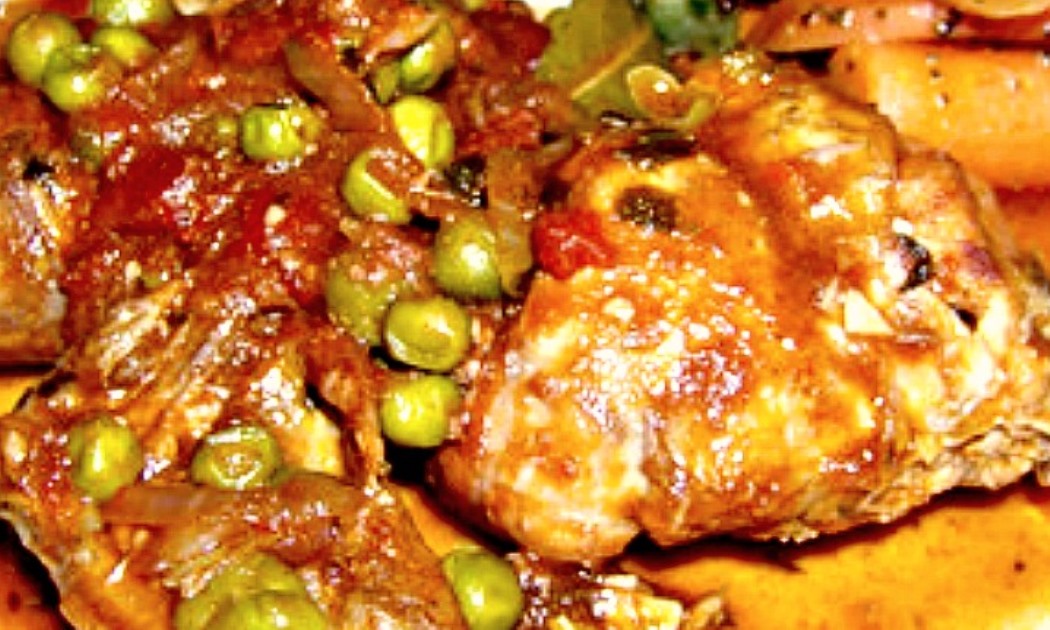
Every waterfront restaurant was peddling its version of the world-famous Spanish Paella. My husband fell in love with the dish, so I had to learn how to make it! I discovered that the secret ingredients are: 1) Spanish chorizo sausage, 2) expensive authentic saffron, and 3) special short-grain rice. They were cooking them in plain view. I saw that the chorizo slices were first fried to release its savory oil which is then used to cook the rice together with the sauteed garlic, onions, tomatoes, and bell pepper. Lastly, chicken or seafood previously fried with the same oil is used to decorate the top. I have found a special kiosk to buy good Spanish chorizos in Phoenix, use either cheaper imitation saffron or substitute with turmeric, and source the rice (paella, arborio or sushi) from the grocery. Bless my husband. Even if what I make is passable and not the real thing, he loves it.

Pro-Tip: Never use another type of chorizo, especially not the Mexican version. Mexican cuisine is very different from Spanish.

Desserts with Just a Hint of Sweetness

Slovenia


We hosted two friends we met in the island of Palawan in the Philippines in the US and they returned the favor by hostingd us in Slovenia. Our girlfriend’s family owned an Airbnb property at the foot of the castle in the Old Town of the capital Ljubljana. The National Slovenian Cuisine Restaurant was a tenant on the ground floor; we stayed in a unit on the upper floor. At a dinner she hosted there, we had Slovenian sausages paired with special buckeye wheat dumplings. But what we loved best was the prekmurska gibanica,  a layered pastry filled with poppy seeds, cottage cheese, walnuts, apples, and cream. It had just the hint of sweetness we needed. This dessert experience was repeated in beautiful Lake Bled where our other friend had a waterfront condo unit where we stayed. He was also proud of kremna rezina, the famous Bled cream cake, another such kind of pastry.

The secret to Slovenian cuisine is that very little sugar or salt is added. They depend on the natural sweetness or salinity of the ingredients. In fact, every Slovenian house has a small garden where they plant their favorite vegetables and fruits. Water comes from crystalline sources, aplenty in the green country.

Pro-Tip: Usually, dishes have no names at authentic restaurants. Instead, menus list all the ingredients used in a dish.

Vegetable Tempura

Japan


My husband and I are in our 70s, and we have committed to eating as healthy as possible; vegetables are now center stage for us. It is generally believed that Japanese cuisine is one of the reasons for long lives in Japan. Thus, we try to serve delicious and healthy Japanese dishes at home, also a good way to reminisce about the awesome places we have visited in the beautiful country.

One of my favorites is tempura. I always order it at Japanese restaurants because it has this light and soft breading that’s difficult to replicate. The dish usually consists of seafood, meat, and vegetables that have been coated and deep-fried to perfection. It was introduced by the Portuguese (who had settled in Nagasaki and introduced their fritter-cooking technique of the 16th century). The name comes from the Latin phrase quatuor anni tempora, historically the Ember Days, when no meat is supposed to be consumed. Thus, tempura must really have originated as a vegetable dish. And that’s how I choose to make it—from sweet potato, carrots, broccoli, eggplant, and onions. Here’s my humble version.

Pro-Tip: I can now make it at home, almost like the way they make it in Japan, with this tempura batter mix from Amazon because it is always out of stock at the grocery where I shop. Use the air-fryer for a healthier version!

The Belgian Waffle

Belgium


We were hugely impressed by the absolute grandeur of Grand Place (it was awesome to be among the glittering old buildings) and the Atomium was a spectacle to behold in Brussels, Belgium. But what struck us most was how food is celebrated on every corner with Belgian culinary specialties. Beer and chocolates can be easily packaged to reach our homes in their original distinct flavors.

But you have to celebrate Belgian waffles in Belgium. I am a waffles (instead of pancakes) girl; it has a better texture. But our waffle maker at home makes the traditional kind, much thinner. At first, we had a tough time deciding which waffle place to enter and which ones to order. But soon we learned to choose the least sinful. The waffle itself is a treasure, made with a yeasted batter that makes it extra light and fluffy yet crisp on the outside. Baking powder and/or baking soda have been used of late but it’s better the original way. Larger than regular waffles, they are made in a special iron with a deeper grid pattern and finished with crunchy sugar. Choose to load up with healthy toppings.

Pro-Tip: If you are in Belgium, don’t forget to sample moules-frites or fried mussels. I do not normally eat them, but this dish I do!

Cornish Pasty

England


When we are in England, my husband usually looks for Cornish pasties. I soon learned how different they are from meat pies. This British pastry was associated with the mining industry and Cornwall. It is made by placing an uncooked filling—of beef, potato, and the buttery vegetable swede (yellow turnip or rutabaga), seasoned with salt and pepper—on one half of a flat pastry circle, folding the pastry in half, and crimping the curved edge to form a seal before baking. There are variations in Australia, the US, and elsewhere. Pasties are different from the meat pies from other cuisines and cultures like the Spanish empanadas, pirogis of Eastern Europe, Indian samosas, etc.  They are much larger and has more veggies. 

Pro-Tip: The West Cornwall Pasty Company is the UK’s largest pasty maker and is #51 of the UK’s top 100 Companies. Their pasties are available in UK groceries and cafes. 

Dim Sim

Australia 


My daughter’s first home was just a ten-minute walk to the South Melbourne Market, whose Food Hall delighted me no end. I was there at least once a week, food items like Hot Jam doughnuts. But I also loved the famous Australian dim sim, a snack that dates from 1928. Like dim sum, it’s also a Chinese-inspired dumpling-style snack food. Popularized by a Chinese immigrant in Melbourne, it consists of minced meat, cabbage, and seasoning encased in a rectangular wrapper. It’s very much larger than the traditional dim sum but also served deep-fried or steamed and dipped in soy sauce.  I have not seen them outside Melbourne so this one, you may have to go there to taste it! 

Pro-Tip: The South Melbourne Market is the birthplace of the even larger circular version, commonly known as the "South Melbourne Dim Sim.”

FOR THOSE ON MOBILE, THE SHARE BUTTONS APPEAR WHEN YOU CLICK WEB VERSION AT THE VERY END AFTER COMMENTS.

PREVIOUS POST

My 6 Favorite Islands to Visit in the World

Thursday, March 7, 2019

Prepare to Be Dazzled at Mazatlan’s Carnival

…and Witness Mexican Culture at its Best!


This is my third time in Mazatlan but I always went in the Fall. Luckily, we came in winter this time and ran right smack into the Carnaval de Mazatlan 2019.  It is reputed to be the third largest carnival in the world, after Rio and New Orleans. We have been in Mazatlan for ten weeks by this time so it was but natural for us to have learned a lot about Mexican culture. But at the Carnaval Parade, it was encapsulated in dazzling hours of pageantry from 5-10 pm. We saw the best of Mexican culture.

dramatic sunset

This year’s theme was Equinox and the Parade started near the Diver’s Point on the Malecon. It traveled along the Avenue del Mar that hugs the long boardwalk. We watched the Parade from a raised platform built by the Hotel Hacienda, almost where it started. Jutting out from the hotel’s façade, our front row seats were a strategic spot from which I could take pictures of the floats and the people with the glorious sunset glowing on the ocean as a backdrop.


During the whole night, it became obvious that Mexicans enjoy music. This includes traditional Mariachi, Norteño, Ranchera, and Corridos. It was in Mazatlán that the loud, booming Banda music was born. In fact, bands are a regular feature at Mazatlan beaches. But at the Carnaval Parade, it was front and center. One of the most applauded floats regaled the crowd with Banda music played by a band from a gigantic platform on a very tall float.

"bullfighting" at the Parade

prized seafood on floats

The national sport of Mexico is Charreria, which consists of a series of equestrian events. But bullfighting, a tradition brought from Spain, is also popular. In fact, Mexico has the largest venue for bullfighting in the world, the Plaza México in Mexico City which seats 48,000 people. There is one in Mazatlan but the city has banned the sport due to the urging of animal safety enthusiasts. At the Carnaval Parade, the penultimate showcase was a surprising and entertaining mock bullfight of a matador and two huge “bulls.”


Mazatlan’s economy is built upon the strong foundation of agri and aquaculture. Being next door to America is, in fact, a major stimulus to the country’s economy and Sinaloa is so close to Arizona that it is even more pronounced here. The city is extremely proud of its seafood. On this previous post, I wrote about Mexican food and mentioned that Mazatlan is the “shrimp capital of the world.” Many floats featured the prized seafood: pulpo (octopus), langosta (lobster), delfines (dolphins), etc. in contrast to the others that put Mexican beauties on pedestals. 

Mexican beauties on pedestals

Of course, Bill preferred those ladies to the bulls and the seafood! But both will not win against the favorite drink. Pacifico beer, the most popular Mexican beer, was founded in Mazatlan in the 1900s by German settlers. At the Parade, there was a special viewing platform for their people. In fact, because they partly sponsored the event, it was a huge Pacifico float that started the parade.


The dancing horses of Mazatlan ended the Parade. That’s when we started to walk back to the hotel as there was no taxi or pulmoniya around. It took us about an hour to reach the roundabout where the Carnaval Parade was just turning right at Avenue Rafael Buelva to go to its end point, Old Mazatlan near the Catedral. On the walk, we saw hundreds of thousands of Los Mazatlecos, families having spontaneous parties with food they had brought (or bought from the many street food kiosks on the main avenue and all its side streets), senoritas and senoritos dancing to the loud Banda music on the street, children collecting confetti so they can throw them again, and chairs seeming to float on their own as they were being carried on shoulders back to the cars.

picking up confetti to throw again

The Parade was well staged and directed. It brings to mind Mexico’s outstanding film industry that has produced Oscar winners in the Best Director category like Alfonso Cuarón who just won for Roma (which also won the Best Foreign Film category). The outstanding color and creativity all along the Malecon also brought to mind the famous  Mexican painter Frida Kahlo.


Mexican History on a Float

Mexican culture reflects the country’s complex history: the Aztec and Mayan roots that became an important cradle of civilization, the 300 years of Spanish rule and influence, and the turbulent road to independence. In one night, the warmth and expressiveness of the Spanish and the creative and artistic bent of the indigenous were meshed and on display. We were prepared to be dazzled at the Carnaval Parade. And we witnessed the best in Mexican culture.

POSTSCRIPT


One of the floats seemed to caricature the President of the US with whom Mexico seems to have a tenuous relationship. You be the judge!

pinnable image
pinnable image
pinnable image

Thursday, May 12, 2016

Out Lifestyle Adventures: Durango, the Land of Pancho Villa and John Wayne

Cultural and Convention Center Bicentennial
Of the many discounted tours available, Bill and I chose the Durango tour even if we had to wake up early at daybreak and return long before sundown, the driving distance between the two cities being about two and a half hours. After all, it is the home of the Mexican legendary hero Pancho Villa. The capital and the largest metropolis in the Mexican state of Durango, the city stands at an altitude of 6,168 feet above sea level and is, therefore, a fresh haven when Mazatlan sizzles. Founded in 1563 by Spanish Basque explorer Francisco de Ibarra, the city’s population is now almost 600,000.

FEDERAL HIGHWAY 40 AND THE BALUARTE BRIDGE

Interoceanic Federal Highway 40
The drive through the New Mexican Federal Highway 40, also called the Carretera Interoceánica (Interoceanic Highway), was spectacular at sunrise. Highway 40 is a road which begins at Reynosa, just west of the Port of Brownsville, Texas, and ends at Mexican Federal Highway 15 near Mazatlán and the Pacific coast. It is Interoceanic because it connects the Gulf of Mexico and the Pacific Ocean. This new highway shortened the time between Durango and Mazatlan by as much as 6 hours, passing under and over the Sierra Madre Occidental through 63 new tunnels and 115 new bridges.

one of 63 tunnels
The most significant of the bridges is Baluarte Bridge, officially the Baluarte Bicentennial Bridge, is a cable-stayed bridge along the Durango–Mazatlán highway. The total length of the bridge is 3,688 ft with a cable-stayed span of 1,710 ft. at the center. With the road deck at 1,322 ft. above the valley below, the Baluarte Bridge is the highest cable-stayed bridge in the world, the third-highest bridge overall and the highest bridge in the Americas. It was quite a sight to see, another reason we wanted to take the tour. Construction of the bridge began in 2008, and it was opened to traffic in late 2013.

most significant of the 115 bridges
CABLE CAR RIDE

Our first stop in the city was Telerifico de Durango, or the Cable Car Durango is a cableway (only one of four in Mexico) located in the city’s historic center, connecting the Cerro del Calvario with the viewpoint of the Cerro de Los Remedios. It has a capacity to carry five thousand people a day on a tour of 750 meters at a height of 82 meters. The entry to the boarding platform, the first Cerro, was still under construction and we approached it from an old street at the rear. A large painting greeted us at this first Cerro, alluding to the many movies that were filmed in Durango.

large mural depicting the many movies made in Durango
At the second Cerro, the view of the former mining city was spectacular, especially the view of the mountains. The state of Durango is a vast and mountainous terrain known for its forests of timber and its gold and silver mines (also rock aggregates and resizables). Its most famous symbol is the scorpion because many species are found in the state. An added bonus atop the hill was the Nuestra Sonora de Los Remedios. Unfortunately, the little church was closed when we visited.

view from the Cerro del Calvario
CULTURAL AND CONVENTION CENTER BICENTENNIAL

This fascinating building was designed in 1899 to be the most prestigious hospital in northern Mexico but was left unfinished due to the Mexican Revolution. Later it hosted the Institute of Culture State of Durango and the National Institute of Anthropology and History.  A couple of years ago the building was restored and transformed into what is now the complex to accommodate trade shows and conventions.  In 2010, over twenty artists and craftsmen created a series of murals depicting moments in the history of Durango carved in stone. The extensive grounds and gardens make for great family picnics on weekends.

the history of Durango in murals
John Wayne, a Durango folk hero
At the entrance to the Convention Center are two statues, one of Pancho Villa (more later) and another of John Wayne! Yes, John Wayne did many Western classics in Durango, he is considered another folk hero. You do not have to go very far to find Villas del Oeste and Chupaderos, two villages with dusty streets, teeming with cowboys, saloons, sheriffs, and dancers. These communities became settings for approximately 150 films among them John Wayne’s The Sons of Katie Elder, The War Wagon, and Chisum.

WORLD HERITAGE SITE, OLD HISTORIC DISTRICT

The Old Historic District of Durango has close to one thousand historic buildings with diverse architectural styles ranging from neoclassical and Baroque to Gothic. Exploring the streets of the downtown area is like walking through a huge open-air museum. For this reason, Durango has earned a spot on the route called the “Camino Real de Tierra Adentro”, or “Royal Inland Road,” declared a World Heritage Site by UNESCO.

Catedral Basilica de Durango
Pancho Villa at his Museum
The Plaza de Armas is at the center of this Old District. With a huge Gazebo at the center, it leads to the  Catedral Basílica de Durango, one of the most beautiful landmarks in northern Mexico, built from 1685 through 1787. It is a blend of architectural styles, including Spanish Baroque or Churrigueresque. The main façade is Baroque and includes Corinthian columns and niches built to protect the image of St. Peter and St. Paul. The cathedral boasts of the second most richly carved choir stage in the country; second only to the one in the Metropolitan Cathedral in Mexico City. The altar is Neoclassical, guarding the 18th century gilded carving of the Purisima Concepcion and housing paintings by Duranguense artists Miguel Cabrera and Juan Correa.

Among the many architectural icons including churches, government offices, and former homes turned museums, is the Pancho Villa Museum. The man was born in Chihuahua, Mexico about 400 miles north of Durango City and only 150 miles south of El Paso, Texas. But the Museum in Durango City gives you a good enough insight into the man, the abandoned child of a penniless peon who became a mountain bandit and then turned into a revolutionary hero who robbed from the rich to give to the poor. The Museum is housed in a magnificent 18th-century building, the home of a wealthy miner from Spain. Juan José Zambrano, that became the Government´s Palace in the mid-19th century.

variety of Mexican cheeses at the Mercado
A short visit to the Mercado was our last stop and then it was napping time on the bus on the way home. It turned out to be a great discovery tour for us and added another state, making it seven out of Mexico’s thirty-one states we have visited. After all, Bill and I have adopted it as a second home, a kind of nearby Philippines, only several hundred miles from Arizona, our soon-to-be first home. 

Thursday, January 21, 2016

Our Lifestyle Adventures: Six Striking Scenes in Valetta, Capital of Malta

Valetta, as we were landing 
Hotel Intercontinental Beach Club
First, a short note about where we stayed. The  Diamond Suites in Malta are four floors of Intercontinental Hotel at  St.George’s Bay, St.  Julian’s.  Jingjing and I enjoyed a large studio with a balcony that looked out to man-made cascading waterfalls. A jug of refreshing water with lots of lemons always met us at the lobby. There is an enormous pool at the top floor where there is an excellent view of the town and the  Hotel Beach Club, a two-minute walk away. There were plenty of choices for dining and shopping at the mall in front.

A day after our cab tour of Malta, we turned our sights to Valletta, the capital of Malta. Less than a square kilometer in area, the city is the smallest national capital in the European Union.

VALETTA'S PALACE SQUARE
Palace Square
Alas, we were not able to wake up early again so we could not get tickets for the Hypogeum. As luck would have it, another friendly cab driver took us, not to the tourists’ general drop point in the pedestrian-only UNESCO World Heritage Site, but to the closest side street accessible to residents. We only had to make a short walk to the Palace Square, the seat of government. A block away we found the Manoel Theatre, Europe's third-oldest working theatre, Malta's National Theatre. 

CAFFE CORDINA
Cafe Cordina and the National Library
But it was St. John’s Cathedral, the famous baroque church, that we wanted to see. We smelled a great aroma from a nearby bakery/restaurant. True enough, we stumbled upon Caffé Cordina, the first Maltese tea shop that has grown to become a Maltese icon in the last 175 years. Just across the main walkway, in front of the National Library, are many tables where we could sit and dine. In the middle of the tables was the good-looking young man playing incredible music on a unique open piano. We promised to come back for late lunch after our tour of the Cathedral, which was just a couple ob blocks away.

ST. JOHN'S CATHEDRAL
St. John's Cathedral
St. .John Relic
At first we were disappointed; the façade was undergoing renovation! But when we found our way inside through a side door, we were impressed. The interior was in sharp contrast with the plain façade. It is extremely ornate and decorated in the height of the Baroque period. There are intricately carved stone walls, painted vaulted ceiling and side altars with scenes from the life of St John. The ceiling paintings appear as three-dimensional statues due to the artist’s use of shadows and placement. The carvings, done in Maltese stone, were all done in-situ. The marble floor is an entire series of tombs, housing about 375 Knights.  The classic 1608 painting of Caravaggio, “Beheading of St. John the Baptist, hangs at the Oratory. Jingjing even found a first-class relic of St. John the Baptist, his forearm, at one of the museum rooms.

St. John’s Co-Cathedral is considered one of the finest examples of high Baroque architecture in Europe and one of the world's great cathedrals. It was built between 1573 and 1578, as the conventual church of the Order of the Knights Hospitaller of St John, known as the Knights of Malta. As the islands were much desired due to their strategic importance, its history is replete with many conquests by different regimes: Phoenicians, Carthaginians, Romans, Byzantines, French, Germans, and Spanish. In 1530, Emperor Charles V of Spain gave the islands to the Knights Hospitaller for which they had to pay an annual Tribute for its perpetual lease. These knights, a military, religious order, had been driven out of Rhodes by the Ottoman Empire in 1522.

MALTESE ART AND CUISINE
street artist and her art
rabbit stew
As we had planned, after the tour of the cathedral, we went back for our late lunch at the tables of Caffe Codina. As we listened to romantic old goodies piano music, we slowly savored the famed stuffat tal-fenek, the full of flavor slowly-cooked rabbit stew for which Maltese cuisine is known. Satisfied with our meal, we went shopping for souvenirs in Valetta, encountering many street artists. Then we called our cab driver who had earlier volunteered to take us back to our hotel.

THE WATERFRONT


Maltese crosses for sale
When he arrived, he took us through the waterfront. He showed us the awesome view of the Three Cities of Malta, Birgu, Senglea, and Cospicua. After the reign of the Knights of St. John, Napoleon ruled until the islands were surrendered to the British Empire. For the bravery of the Maltese during WWII,.King George VI gave the islands its national symbol, the eight-pointed Maltese cross that stands for the 8 obligations of the Knights (truth, faith, repent of sins, humility, justice, merciful, sincere and enduring persecution), Our driver also told us that on Nov. 27-29, 2015, the Commonwealth of Nations would meet in Birgu  for the turnover of the titular leadership from the Sri Lankan to the Maltese Prime Minister..  

Maltese Bread

Then our driver showed us the place where the cruise ships dock. When we asked about Maltese bread, he took us to a small store where the bread was sold on a side road on the way back to our hotel. He even told us that Malta was the venue of the first face-to-face encounter between US President George H.W. Bush and Soviet leader Mikhail Gorbachev, signaling the end of the Cold War. Cab drivers in Malta are, besides being kind, excellent English-speaking tour guides!  

Thursday, September 10, 2015

Our Lifestyle Adventures: 7 Ways we Celebrated our Setting Foot on African Soil


finally rode a camel, I mean, dromedary!

Our last day trip from Benalmadena, Spain was to Tangier, Morocco. All four of us were looking forward to it. For Bill and me, it was our first chance to set foot on the African continent. For Krishna and Daniela, it was to a mysterious, distant land. The tour bus picked us up early from our resort hotel. There were many more that were picked up; we were one of the first!

the Rock of Gibraltar from our bus

leaving Tarifa, Spain
The Bus Ride

The trip took us southwest, and we passed some industrial plants. We also spotted Spanish wind turbines on ridges of green hills. But the most intriguing thing we saw on the way down to Tarifa where we would ride the ferry was the Rock of Gibraltar. It was quite visible from the road, past those green hills. There was another tour we could have taken us to the Rock, but we ran out of days!

arriving in Tangier, Morocco

The Ferry Ride

A couple of hours later, we arrived in Tarifa, Spain in the province of Cadiz still in the region of Andalusia on Costa de la Luz, across the Straits of Gibraltar. It is the southernmost point of Spain and continental Europe and is known as the most popular destination for wind sports. The necessary departure and embarkation procedures went by fast, and we boarded a ferry that was waiting to take us to Tangier.

Tangier, blend of the old and the new

The Camel Ride

After we had said goodbye to the Tarifa shoreline, the ferry took only an hour, and we were in Tangier. After the quick disembarkation and arrival paperwork, we rode another tour bus that drove us through the city. Its population is about a million, and it is roughly divided into three sections:  New City, Kasbah, and Medina. The bus drove us through New Town and its commercial and residential districts. Then the driver stopped at a park where several dromedaries were waiting for us. He told us we had time to ride them if we wanted to! The four of us hurriedly took our turns! It was such a thrill!

a communal water source in the Medina

no, he didn't use the cobra
The Tangier Medina

The bus then took us to the Old Town, the Medina, a labyrinthine set of cobblestone streets, largely unplanned. Our guide pointed out how several architectural styles (Moorish, Andalusian, and European) are packed together into the small homes and establishments inside the complex. The Medina is atop a hill beside the coast, overlooking the Straits of Gibraltar. Our tour guide let us see what a big project the expansion of the port has become. Moroccan economy as international trading port and zone and even as tourism center has been growing.

The Tangier Kasbah

Then, he took us to a view of the Kasbah, which looms over the Medina. The section is comprised of ancient fortifications that historically defended the city and that have been turned into hotels, restaurants, and private homes. Shortly after this, we were treated to a side show of Moroccans cavorting with a cobra and other snakes that came from a basket. I had played with snakes once in Boise, so I gladly volunteered to do it again with the Cobra.  Inside the Medina, our guide took us to a small square to show how the community got their water from a common well.

No, Bill didn't allow me to bring home this yellow carpet!

Bill and the two young ladies interested in Moroccan spices
Shopping in Tangier

He also provided us several opportunities for shopping. First, we were taken to a large government center for Moroccan goods where we sat through a presentation and demonstration about various kinds of rugs. Too bad Bill and I didn’t have a huge home.  We were then led to a store for Moroccan spices and oils. Now that was more like it for this fledgling cook! Bill and Daniela gladly volunteered to sample the free argan oil massage.  All throughout our wandering in the labyrinth, Moroccan vendors followed and pleaded with us to buy. It was okay at first, but then it became quite irritating. 

finally, a Moroccan banquet

A Moroccan Banquet

But the highlight of the day was the Moroccan banquet! We sat inside a hall with our fellow tourists. Before the sumptuous buffet of eat-all-you-can and served Moroccan soup, Moroccan salad, and Moroccan beef stew, there were chances to have our pictures taken with a
Moroccan “band.” For Bill, the real highlight was the belly dancer who made her gyrations right beside him! It was a great feast, complete with drink-all-you-can Moroccan tea and sweets.

Krishna and Daniela were both pleased with the last day trip we took. They slept throughout the bus ride home. Bill and I felt good that we had added another continent to our conquests!
I caught Bill entranced with belly danc(er)ing