Cruising Past Seventy: The Inner Journeys: history
Showing posts with label history. Show all posts

Tuesday, July 9, 2024

Becoming an American without Losing My Roots, Part 2


I had to renounce my Filipino citizenship when I took my oath as a US citizen. It was a heartbreaking technicality.   

Although having lived here for almost 20 years, I must admit I have changed. My dancing turned from disco and ballroom to country and rock, my singing from pop to country, and my clothes from blouses and skirts to tank tops and shorts. My kitchen is shifting from cooking pancit and lumpia to grilling steaks and baking pies. My everyday conversation has become American English, not Tag-lish. 

Still, my sixty years of Filipino upbringing are a solid foundation. I felt lost when I was thrust into a largely white community of RVers, meeting only a handful of African-American, Hispanic, and Asian-American couples in eight years. Even in Viewpoint’s thousands of households, there are only three Filipinos.

When I am with kababayans, I readily shift to Tagalog because that is how I think. That’s why I can confuse genders. Tagalog words, except for those that connote respect like kuya for older brother and ate, older sister, are the same. Son or daughter is anak; wife or husband, asawa; brother or sister, kapatid. Speaking in Tagalog will always be easier for me.

I miss authentic Filipino food, too. A sandwich is not a complete meal because there’s no rice. Pan de sal (bread) is only for snacks or breakfast. The Philippine mango is still my favorite fruit. And I will never erase the fact that my skin is brown, and my nose is small. Nor do I want to change any of these.

When I meet Filipinos worldwide who are sacrificing not being with their families to eke out dollars to send home, I identify with the homesickness. And I take pride in Filipino triumphs and feel compassion for Filipino difficulties.  Those will always be my automatic impulses.

But there is a deep kinship between the Philippines and America. We share the Pacific Ocean and with it, the treacherous Pacific Ring of Fire. Spain colonized the American Southwest and the Philippines at the same time. Filipino nurses, teachers, and seamen are part of US hospitals, schools, and ships. And July 4 is doubly meaningful for, on that day in 1946, the US gave us our independence, 170 years after she got her own.

There are also big differences. The Philippines is a tropical archipelago of 7,641 islands while the US is more of a vast contiguous temperate landmass. Plants and wildlife are different. The wide vistas of the Great Plains, the desert landscape of the Southwest, and the glaciers of Alaska are so different from what I knew as a child.

At first, I despaired for my homeland when I saw that American systems are much more developed. But no more. The Philippines is only 78 years old; the US is already 248. And it was America who laid the foundation for Philippine highways, schools, and public administration. There is reason, time, and room to grow!

I will not be able to recapture the life I left in the Philippines. Other people are not as clannish as those with Spanish heritage like us. Sometimes friendships we build here move far away to different states or countries. The good news is that America is moving away from being a melting pot. Pockets of people can preserve their traditions and cultures, except when you marry into another culture like I did.

When I learned that the Philippines is one of the few countries where the US allows dual citizenship, I heaved a sigh of relief. But the nearest Philippine Consulate was in Los Angeles so it took me two years to get the chance to do it. On Oct. 13, 2013, I re-pledged my loyalty to my native land and became a Filipino-American.  

I did not get boiled into a thick soup melting in the pot. Instead, I got included in a colorful chunky stew, contributing to the taste, but retaining enough of my shape, color, and flavor. In this privileged perch, I see my developing homeland from the perspective of my developed home base. I have an enviable dual mission: helping the Philippines as an American and contributing to America as a Filipino.


Tuesday, April 16, 2024

Are a Few Hours Enough to Enjoy a City: Vienna and Salzburg


Are A Few Hours Enough to Enjoy a City?

We were already in Innsbruck, Austria so why not visit Vienna and Salzburg, too? Vienna is two hours east of Salzburg, which is two hours east of Innsbruck. The solution was simple. Leave Innsbruck by 7:30 am, arrive in Vienna by 11:30 am, and retire in a Viennese Airbnb by 6:30 pm, giving us seven sight-seeing hours. The following day, we leave at 8 am, arrive in Salzburg at 10, and head back to Innsbruck at 5 pm, giving us seven hours, too. Or so we thought.

The Case of Vienna

We lost each other at the Innsbruck Hauptbahnhof (Main Railway Station). As soon as we found each other again, we jumped onto the train that was leaving. When the conductor checked our tickets, he told us we were going to Munich, in the opposite direction! We reached Vienna at 1:30 pm and had only five hours to enjoy the city of 2.6 million!

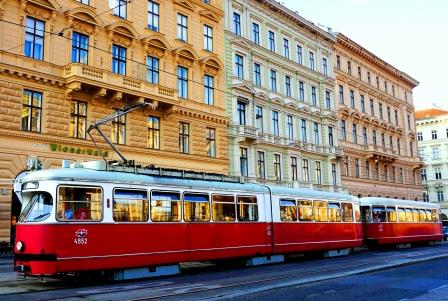
We still covered quite a few landmarks (StephenPlatz, Mozart Haus, KarlsKirche, Secession Building, Hofburg Palace, Museum Quartier), but we were running from one to the other with just time to take photos. It was not how to enjoy a city. Long lines at the Café Sacher prevented us from tasting the original Sacher torte, and we ended up having those ubiquitous puffers being sold on the sidewalks for lunch.

At the end of our frenzied walk, we had a quick dinner at Café Raymond, enjoying some wine and a slice of, albeit not the original, sacher torte. Our Airbnb was only four subway stops away, so we slept well but felt sad. Even seven hours would not have been enough for the Viennese allure.

The Case of Salzburg

But we had seven hours in Salzburg, smaller with a population of 150,000. From the Hauptbahnhof, we walked to the Mirabell Palace on the way to the Old Town Square. It was at this beautiful palace and garden where Maria (Julie Andrews) and the von Trapp children sang Do Re Mi.  

Across from the Palace, there was a raging Thursday farmer’s market at the Church Plaza. How lucky could we be? It was a haven for local food, produce, plants, and even dry goods. We did not leave until Bill had a version of the famous apple strudel and I got a 15-euro leather purse.

A bridge glistening from the number of love locks (the sun shone on it just right) led directly to 9 Getreidegasse where Mozart was born. Just a block away is the historic center of Salzburg called Residence Platz, a large stately square named after the Residence of the Prince-Archbishop of Salzburg. In front of the building, beside the Cathedral, and in the middle of the Square is the beautiful Residenzbrunnen fountain, another point in the Sound of Music Tour.

The Salzburg Cathedral, St. Peter’s Abbey, and the Residential Building define the lovely Dom Platz where carriages can be hired for tours. Happy newlyweds were doing it at the time. You can see the Salzburg Fortress up the hill (you can also see it from the Mirabel).Finally, aA huge golden ball embellished the interesting craft stands.

The Visitors Information Center at Mozart Platz (with a statue of the man) recommended Swelter’s for an early dinner. My husband had wiener schnitzel while I loved my griesnockerlsupp. Wine capped our memories of the Sound of Music and Mozart, street food and shopping, and the love bridge. 

Yes, we enjoyed Salzburg and felt we didn’t miss a thing. But if a city is big, it would be better to allow for more time. We didn’t regret visiting Vienna, however, since we may not pass that way again, but we certainly enjoyed Salzburg a whole lot more.

PREVIOUS POST
Would You Rather Go On or Off the Beaten Path?
FOR MOBILES, click "View Web Version at the end of the post past comments and share buttons will appear.


pinnable image
pinnable image


Tuesday, June 20, 2023

TRAVEL AWAITS: 7 Amazing Experiences In San Diego’s Historic Liberty Station


This article was originally published in Travel Awaits on Nov. 22, 2022.

There is no other place like it: a historic landmark turned into a rich and rewarding experience for the whole family. And in a city blessed with great all-year-round weather. Liberty Station was built from the buildings and grounds of the Naval Training Center (NTC) in San Diego, California. Of the original 300 buildings, 64 make up the Station; all but 10 have been restored and repurposed. From its inception in 1923, and before it closed in 1998, the NTC turned two million recruits into naval servicemen who went on to serve their country.

The NTC Park, the Ship that Never Sailed, and Gate One


One of the naval servicemen who were trained here was my cousin, an electrician who worked on many “classified” nuclear submarines. All those ships are memorialized in two rows of black blocks lining each side of the Naval Training Center Park bordering Liberty Station. Large naval guns line the front. The NTC Park is now a place for family sports, walks, and just watching the underbellies of planes as they take off from the nearby San Diego International Airport. 


The ship through which the naval servicemen all underwent rigorous training is fondly called Recruit, the ship that never sailed. It stands as a proud memorial near NTC Park. At the northern end of Liberty Station is Gate One, the only gate left open past curfew then and now a non-pedestrian entry. Attached to its two sides are former prison cells. And, as you enter the gate, you will see a large anchor, the mainstay of the Station logo, outlined by flowering shrubs on an expansive green lawn.

Liberty Public Market: The Former Mess Hall

There were, at its peak, 40,000 servicemen who took their meals at what is now the Liberty Public Market. It has been repurposed as a hip dining area with 22 food stalls serving different cuisines. Almost everything is left near its original state. In fact, in the section called Mess Hall, where there are bars providing refreshment options, the murals painted by artists/naval recruits are still on the upper walls.  There are also local sellers of crafts, clothes, and jewelry.

North, Central, and South Promenade: Former Parade Grounds

The old central buildings are laid out in two rows between what were once parade grounds which have been fittingly landscaped as wide spaces for family events. There are three sections: North, Central, and South. Sidewalks are provided all around the manicured lawns.


The North Promenade has an 88-ft pine tree that dazzles with bright lights for the Christmas season, beginning the Friday after Thanksgiving. The historic white church, where many servicemen were married and their children baptized, stands at the South Promenade. Behind the Dick Laub NTC Command Center is the Central Promenade. There is a reflecting pool, a rose garden with great history, and three outstanding art installations: “Facetime”, “Tesselation”, and “A Dime to Call Home.” Between the Central and South Promenades is a Greetings mural for an Instagrammable souvenir photo.

The Arts District and Historic Decatur Road


The Arts District on Historic Decatur Road, the main artery of Liberty Station, is home to art galleries, studios, artistic venues, art societies, and museums where families can have fun or stage events. In one building there are three museums: the San Diego Watercolor Society which hosts workshops in and exhibits of the medium, the New Visions Museum for quilt and textile artists, and the New Americans Museum dedicated to the experiences of people like me, immigrants to this land of promise. And you will love Hugo Crosthwaite’s murals that adorn the covered walk from the Liberty Public Market to Barracks 41. Most buildings have these walks fronting the promenades and varied artist’s chairs provide occasional resting spots.

A Lot of Entertainment and Exercise Options


Entertainment options include The Lot, formerly the Luce Auditorium where recruits enjoyed concerts, comedies, and more. It is now six cinemas featuring the latest movies with a bar/lounge in front. A 9-hole golf course, near Gate One, has surprisingly reasonable prices by California standards. There is a variety of fitness centers available across the property, including Point Loma Sports Club in Bldg. 210, which was once the Gymnasium. An original mosaic artwork of a sailor waiting for the bell has been kept in the entryway. Other centers include Spark Cycle, Fitness Together, Club Pilates, Yoga Six, and more.

All year round, special events are hosted at Liberty Station. A current one is “Octoberfest” and soon “Halloween at the Station.” An annual “Salute the Season” is coming up to include the Holiday Tree Lighting, the Hannukah Menorah lighting, and a Nutcracker Tea Party. Last summer, the Arts District put on the outdoor Summer Music Series. Individual vendors and businesses also sponsor their own events. An Events Calendar is kept so you don’t miss anything. And next year there is a year-long celebration of Liberty Station’s Centennial.

The Shopping to Love


For me, the ultimate entertainment option is shopping.  Since there is a preference for locally owned businesses, the shops make for a very interesting variety.  I started at the stalls in the Liberty Public Market and ended at the Sea Hive, a collection of 30-odd retailers. There are 21 other shops, but I spent a lot of time at Pigment.

It is a curated plant and garden store. I had been looking for suitable options for several projects at home in the nurseries of Home Depot or Lowe’s. At this wonderful store, I found many interesting possibilities. There is a beautiful plant with yellow stems (my favorite color; the plant lady said there is also a red variety). The store has separate sections, each focusing on a pigment color: pink, salmon, or yellow. I loved the neon section because I had long been looking for neon plants to brighten my living room. Another section had varieties of hanging cacti for my pergola. 

Hydrating, Snacking, and Dining


After walking around the Promenades and the Arts District, my husband and I had an intimate dinner at the posh Solare on Historic Decatur Road. An excellent charcuterie board accompanied by red wines for cocktails, followed by divine swordfish and sea bass entrees. We finished with coffee and chamomile tea, skipping sinful dessert.

The next day we lunched at The Presley, a new restaurant added to the over 50 restaurants, cafes, and food vendors around Liberty Station. I loved the ambiance, especially the romantic almost boho nooks around the spacious gardens outside.

Children will love Mini Donut Place. But it was at Moniker General where my husband lingered. We loved the nook called “Better Together.” He would have also liked The Stone Brewery, makers of craft beer and the biggest eating place in Liberty Station but it was closed for renovation. But its brewing stations were visible from large display windows.

Quality Lodging at the Station


We stayed at the comfortable Town and Place Suites by Marriott at the extension area of Liberty Station, surprisingly quiet even if it was beside the San Diego International Airport. It was also right across from the Spanish Landing Park. The Hampton Inn and Suites by Hilton was also there while The Courtyard by Marriott and Homewood Suites by Hilton are both on Laning Road at Liberty Station.

Prized Residential Neighborhoods 

There are prized residential areas at the north and south ends of Liberty Station. I imagined that they are expensive pieces of real estate but now that I have seen Liberty Station, I’d say they are well worth it. Just like any American neighborhood, the usual national chain businesses people love to have near their homes are there.

So Many Exciting Day Trips from Liberty Station

There are already many resources for a rich and rewarding family experience at the Station. But if you have more than a weekend, or if you like packing your days with activities, there are other exciting places to explore. Old Town San Diego is only ten minutes away; downtown San Diego with Balboa Park, San Diego Zoo, Seaport Village, Seaworld, Gas Lamp Quarter, and other landmarks is five minutes more.

The same is true for the Cabrillo National Monument on Point Loma, which honors the 16th-century explorer Juan Rodriguez Cabrillo, and has the Old Point Loma Lighthouse built in 1854. The two-mile Bayside Trail has spectacular views of San Diego Bay and the Coastal Tidepool Trail leads to the unique ecosystem in Southern California.


The Women’s Museum of California, previously part of Liberty Station, is just 15 minutes away.  Its educational center at the Jacobs Center in Euclid provides interactive workshops on the history of women who pushed for necessary social changes through grassroots activism. I especially loved the delicate pink flowers cascading from the roof line.

And, at just five minutes more, La Jolla including the Cove, Scripps Park, and the Children’s Pool all cover a coastline on a steep grade from the restaurants and shops of downtown. Part of the La Jolla Underwater Park and Ecological Reserve, there is ample wildlife, including the popular seals’ colony. Activities include snorkeling, open-water swimming, scuba diving, kayaking, paddle boarding, biking, and coastal walks.

And just when we thought we’d seen everything, a Glider Port In Torrey Pines caught our fancy. Liberty Station is just such a great place for a rich and rewarding family experience.   

FOR THOSE ON MOBILE, THE SHARE BUTTONS APPEAR WHEN YOU CLICK WEB VERSION AT THE VERY END AFTER COMMENTS.

PREVIOUS POST

10 Fantastic Places to Celebrate Fall in Beautiful Calgary      

Tuesday, April 11, 2023

TRAVEL AWAITS: Why Soriano Nel Cimino Is One Of My Favorite Places in Italy


The original article was published in Travel Awaits o Aug. 21, 2022

After a night in Sorrento and a day in Pompeii, we drove to Soriano Nel Cimino, our favorite base in Italy. As a small, picturesque charmer with lots of history, the town not only gave — and gives, as we have a timeshare space there — us the chance to experience Italian life but also to explore the province of Viterbo in Central Italy. It helps that our room is in an old castle! Furthermore, it allows us to revisit Rome and Florence in just one trip.

Soriano is one of my favorite places in Italy. Here are the reasons why.

1. It Is A Small, Idyllic Italian Town


Imagine a town overlooked by one of the highest peaks in the Monti Cimini range. Breathtaking! Down the valley, before dining at the excellent restaurants around (we found one where we had to return a second night), you can walk around the Fontana Vecchia (“Old Fountain”), built in the 15th century, and the Porta Romana, a replica of the Porta Pia in Rome. You will be surprised to find three lovely places of worship for its 8,000 residents: the small Romanesque Chiesa di San Giorgio, built in the 11th century; the Chiesa di Sant’Eutizio, built in the 15th century; and the Cathedral of San Nicola di Bari, built in the 18th century.


One afternoon we wanted to get the best vantage point for an iconic picture. When we found it, we realized we did not bring our tripod with us. Luckily, a sweet old man walked by. He spoke no English but understood our dilemma and gladly took our picture. We went on to peek at lovely Italian homes and gardens, found winding cobbled alleys on hills, and spotted one of the tiny sidewalk gas stations Italy is known for. The flowers about town reminded us that it was still spring, and the small fruit and vegetable shops, as well as the little grocers and bakers, gave us a good taste of life in Italy. We even discovered a small eatery (just four seats) behind one of the stores and loved their homemade meatballs and spaghetti. And, of course, a local gelato was easy to find afterward.

Pro Tip: It would be good to schedule your visit during Sagra delle Castagne, or the Chestnut Festival, that Soriano is known for. It runs from the end of September until the beginning of October.

2. It Has A Long And Eventful History


At the town’s highest point stands the Orsini Castle. Built by Orso Orsini in the 13th century, the castle was the summer residence of Pope Nicholas III, Orsini’s uncle. It became a high-security edifice until the 1990s, and today it is managed by the University of Viterbo as a tourist attraction.

After imagining the past splendor of Orsini Castle’s courtyard and great room, as well as visiting its dim prison cells, we navigated a small circular stone staircase fit for one. From the castle top, we saw the town’s history expanding outward.

Soriano nel Cimino’s history can be traced back to the Etruscans, a pre-Roman civilization first mentioned by the Roman historian Livy — who wrote that in 443 BC, the Etruscans were “easily defeated” by the invading Romans. The area, especially near the neighboring town of Bomarzo, is full of Etruscan inscriptions, tombs, and medieval ruins connected by trails in a 4-hour hike.

3. You Can Sleep In A Castle


We stayed in a castle called Palazzo Catalani, part of our timeshare network of 300 resorts worldwide. It’s a small 14th-century castle of marvelous architectural design and delightful decor that blend Renaissance style with Roman elements. To get there, we could walk up either of two winding cobbled pathways from parallel streets to the top of the small hill where the castle is located.

Our room was an astonishing studio with original murals, large antique furniture, and more period decor. It was conveniently located right beside the reception office and the well-appointed bar. We even had a small kitchen where we prepared breakfast in the mornings and cocktail food some nights. (We had our first evening’s dinner at an a la carte restaurant serving delicious Italian specialties and other European dishes.) The sauna and heated pool soothed us in preparation for our night’s rest. But it was the excellent customer service from the highly experienced staff that we cherished most.

4. It Is A Great Base For Exploring Viterbo

Soriano is also a great base for exploring the province of Viterbo, which, being so close to Rome, is a great place to see the deep influence on Italian life the Roman Catholic Church has always had and will continue to have. Here are three fanciful old-world towns worth visiting — as well as the provincial capital, Viterbo, once a Papal Seat.

Civita


Civita di Bagnoregio is 75 miles north of Rome and 45 minutes from Soriano. Its striking position will amaze you: atop a small plateau of volcanic tuff overlooking the Tiber River valley. Its edges began to fall (and continue to fall) when a major earthquake happened at the end of the 17th century. As the pace of erosion quickened two centuries later, it became a spectacle of an island hill, leaving buildings on its edges to crumble.

Its population is now just 12 during winter (about 100 during summer), but it is so wonderful to explore because its relative isolation has left its non-edge architecture unaltered. In 2006, it was placed on the World Monuments Fund’s Watch List of the 100 World’s Most Endangered Sites.

Civita and Bagnoregio used to be parts of the same town until the bishop and the municipal government relocated to the village in the valley after the earthquake.

Montefiascone


Montefiascone lies around Lake Bolsena, a caldera (or large volcanic crater) that formed in the Vulsini Volcanic Complex. Fifty-nine miles north of Rome and 30 minutes from Soriano, the town has numerous camping sites and bed and breakfasts. But its crowning glory is the Montefiascone Cathedral, also known as the Basilica of Santa Margherita, which has the fourth largest dome in Italy, behind the Pantheon, St. Peter’s Basilica, and Florence’s Duomo. It really looked like the whole church was under the dome.

Caprarola


The third town we visited was Caprarola, just 31 miles northwest of Rome and 25 minutes from Soriano, also sitting in the Cimini range of volcanic hills. I wanted to see the massive pentagonal-shaped Villa Farnese (not to be confused with the Palazzo Farnese in Rome). The Rennaissance villa was planned in 1530 to be a fortress to protect Cardinal Alessandro Farnese, but construction was discontinued when he was elected Pope in 1534 as Paul III. His grandson commissioned the construction of an estate on the completed pentagonal base.

Villa Farnese dominates the entire town, and everything was rearranged so that the main road leads directly to it. Each room is filled with oversized murals, and I was happily surprised to find that the Philippines (identified as Philipina) was on the Asian map in the Room of World Map. The maps were painted in the 1570s and depict cartographers’ understanding of the Earth at the time.

Viterbo


The capital, Viterbo, lies 50 miles north of Rome and 20 minutes from Soriano. Its historic center is surrounded by medieval walls, still intact, with ancient gates as entrances. They were built during the 11th and 12th centuries. In the 14th century, Viterbo became a Papal Seat and part of the Papal States. In fact, four Popes were elected in Viterbo. But when a foreigner got elected, the townsfolk invaded the Papal Palace while the longest conclave in history was being held. Two Cardinals were arrested. After this incident, Popes began to avoid Viterbo, and the city fell to secondary importance.

5. Florence And Rome Are Easily Accessible

Saving the best for last. Because Soriano is just 8 miles from the A1 Motorway, right smack in the middle between Rome and Florence, it was convenient to visit the two must-see cities of Italy. Rome is just an hour away by train, and Florence is two hours away by car. While it’s always fun to see the Roman Forum, the Colosseum, Trevi Fountain, the Pantheon, the Vatican, and the Spanish Steps, there are still many piazzas and attractions to discover. And although we have been to Florence’s Accademia, the Duomo, Santa Croce, and the Leather School, we still have the Uffizi, Palazzo and Ponte Vecchio, wineries, and more to explore.

We hope to go back to Italy when we resume flying. We have missed our room in Palazzo Catalani, and there are always new things to discover in Viterbo. Besides, this is truly the best base from which to revisit Rome and Florence in one trip.

FOR THOSE ON MOBILE, THE SHARE BUTTONS APPEAR WHEN YOU CLICK WEB VERSION AT THE VERY END AFTER COMMENTS.

PREVIOUS POST

11 Fantastic Things in Scenic Seaside, Oregon

Tuesday, March 28, 2023

TRAVEL AWAITS: 11 Fantastic Things To Do In Scenic Seaside, Oregon


The original article was published in Travel Awaits on Aug. 13, 2022.


There was a year when we wanted a vacation from our months of full-time RVing. We also wanted to make our wedding anniversary more special than usual that year. As we were coming down from Vancouver, Canada, we chose the romantic town of Seaside, Oregon, for a special stop. awesome scenery, fantastic shopping, and amazing history.

There were two days of drizzles, three days of partly cloudy weather, seven days of strong winds, and two days of sun. But having lived in Seattle for three years, we were familiar with this kind of weather. It’s part and parcel of life in the Pacific Northwest. No matter the weather or how long you have, here is our advice on where to stay, eat, and play on a getaway to this West Coast beach town.

Located about 80 miles outside of Portland, Seaside is known as the Jewel of the Oregon Coast. A town in Clatsop County, it has a population of well under 7,000 but it is in the middle of a historically important area: the last stop of the two-and-a-half-year, 8,000-mile Lewis and Clark expedition that led to the doubling of the size of the U.S. Blessed with a romantic name that comes from Seaside House, a historic summer resort built in the 1870s by railroad magnate Ben Holladay, the town is not only historical; there is also an outstanding beach, lots of shopping, and many beautiful spots to spend hours with your camera in tow.

1. See Seaside Beach


It was tremendous luck that the American Kite Fliers Association’s 39th Annual Kite Festival was going on during our stay. The competing kites were quite a sight as we luxuriated in the hot tubs beside the pool of our resort. The beach and sky were a wide canvas littered with the giant colorful beings that danced to the hum of the ocean and the songs of the winds.

Even if you don’t make it there during a kite festival, you can enjoy the views of the Pacific Ocean, and, because there are always such good winds, you could even try flying your own giant kite. The beach area is so wide and expansive that there are always people milling around, playing volleyball, biking, or skating in addition to flying kites.

2. Stroll The Seaside Promenade

The best feature of the beach is the grand Seaside Promenade. There are always many strollers walking along this special place. Where the Seaside Promenade ends at Broadway Street, you’ll find the Seaside Turnaround, a small pedestrian and vehicular rotunda that reaches out to the shoreline and marks the actual spot of the historic end of the Lewis and Clark Trail. Their statue, together with the iconic Seaside, Oregon, sign, aptly stands in the middle. Friendly strollers took our souvenir photo.

3. Check Out Lewis And Clark National Historical Park


Fort Clatsop is about a 20-minute drive outside of town. This is wFort here Lewis and Clark were encamped in the winter of 1805 and 1806. This memorial was later grouped with the other spots the duo explored around the vicinity, and the whole area was preserved as Lewis and Clark National Historical Park. History will be recreated for you as you meet Sacagawea and wander through historical replicas of the last stop of the famous explorers’ historic expedition.

4. Explore Fort Stevens And See The Iredale Wreck

Just 10 minutes north of the park is Fort Stevens State Park. It was built near the end of the American Civil War. It had such great infrastructure that it continued to be of very good use as an active military reservation, protecting the harbor all the way up to WWII. But it was the sailing ship Peter Iredale that ran aground at its beachhead in 1906 that has drawn tourists to the area. The Iredale wreck proved to be a great photo opportunity for me.


5. Trek Tillamook Head

A lovely promontory, Tillamook Head is defined by a steep rocky bluff jutting out into the ocean at approximately 1,200 feet high. It was named after the Tillamook, a Salishan-speaking tribe of Native Americans who inhabited the coast around the area in the 19th century.

In 1806, Clark led a team that traveled south from Fort Clatsop to harvest blubber from a beached whale in the area. Today, the area is called Ecola State Park. “Ecola” is the Salish word for big fish.

6. Swing By The Seaside Aquarium

Back in town, you can visit Seaside Aquarium. This privately owned aquarium was an indoor saltwater public bath in the 1920s. Water was pumped from the Pacific Ocean through a still-visible pipe. In 1937, it became an aquarium, meaning it is one of the oldest in the U.S. In fact, it was the first to breed harbor seals in captivity. An even more interesting fact is that during the 2011 earthquake and tsunami in Japan, a boat drifted from across the Pacific and washed up on the shores carrying trapped live fish. The remaining of these so-called tsunami fish are still on display in the aquarium. Kiddos will enjoy getting up-close-and-personal with sea life at the Touch Tank exhibit.

7. Stop By The Seaside Historical Society Museum

The small Seaside Historical Society Museum will take you back thousands of years through its many exhibits. If you allow at least an hour for an overview, then you can have the chance to go through the Native American, logging, historic hotels, old Pacific pier, Turnaround Building, Broadway Billiards, railroad history, and Hall of Fame exhibits.

8. Eat At Mo’s

The most important thing we had to decide was where we were going to dine to celebrate our anniversary. We went around town to scout for the special place. We tried Osprey Cafe, Maggie’s on the Prom, and Sam’s Seaside Cafe. The food was good at all these establishments.

But we were ecstatic when we found the place: Mo’s Seafood and Chowder on the ground floor of Shilo Inn Seaside Oceanfront. It had the ambiance we were looking for with huge picture windows for scenic dining by the sea.

9. Ride A Carousel


Shopping is one of the activities I loved in Seaside. We started downtown at the Seaside Carousel Mall. It was built in 1985 on the site of the old Bungalow Dance Hall. This hall was built in 1920 for the big-time bands of the era. It ran for 20 years, and greats like Bing Crosby and Glenn Miller performed there. Locals say that Seaside was the place to be during those days.

Today, the mall is full of crafts, local products, and food outlets aside from fun things to do like riding the carousel that is right in the middle of the quaint mall. My husband thinks riding a carousel is one of the most romantic things in the world so, of course, we had to take a spin.

10. Shop Seaside Outlets

But it was at the Seaside Outlets where I found a lot of treasured items. Featuring outlets for 22 name brands, it was at an Eddie Bauer store that I found a light black jacket on sale at a 70 percent discount. It has become a favorite of mine and is still in good use today. What surprised me most, however, was the multi-station recharging area near the mall. It was the first time I saw such a thing for Tesla vehicles.

11. Stay At WorldMark Seaside

We had enough Club Wyndham timeshare points to stay in a spacious one-bedroom unit at the four-star WorldMark Seaside resort. Also available for booking by the public, it is recognized as one of the state’s best waterfront locations. It was a great choice and became a wonderful home (not on wheels) for a full week.

There is a large pool area that looks outside to the beach. It is surrounded by several hot tubs where we spent many hours of relaxation. We also frequented the game room, where we enjoyed playing table tennis. The fitness center saw us every day for our exercise regimen. At the end of the day, however, we thoroughly treasured our drinks and appetizers on our balcony. It offered such a great view of the town, the nearby hills, the beach, and the ocean. Since our unit was equipped with a kitchen, we bought a lot of seafood and other supplies at the grocery store and prepared most of our breakfasts and dinners.

Bonus: Day Trips From Seaside

Locals will tell you that taking some half-day and day-long trips to nearby areas will afford you even more connections to the area’s history, plus fantastic scenery. The historic city of Astoria with its historic column and so-called bridge to nowhere is just 20 minutes to the north of Fort Stevens. And the scenic town of Cannon Beach with Haystack and the Needles is just 15 minutes to the south of Tillamook Head.

Our week in Seaside was such a welcome break from all our months of RVing. Our anniversary that year became a special celebration. We had everything from history and scenery to shopping and beaches. The weather may not have been perfect, but you don’t need that in Seaside. There is something for every kind of day. It was a luxurious treat we deserved to have.

FOR THOSE ON MOBILE, THE SHARE BUTTONS APPEAR WHEN YOU CLICK WEB VERSION AT THE VERY END AFTER COMMENTS.

PREVIOUS POST

 Why This Quaint German Town Was the Perfect Base for Our European Adventure

Monday, October 10, 2022

TRAVEL AWAITS: My 12 Favorite Visits to Historic President’s Homes


The full article first appeared in Travel Awaits on Feb. 18, 2022.

When we first began RVing, I was not an American citizen yet. Actually, the trips across the country so educated me about America’s history that when I took my oath on Valentines’ Day 2011, I felt I had truly become an American. One of my best learning experiences was visiting former President’s homes: everything from small, simple cabins to large, luxurious mansions. Each gave me a view, not of how the President governed, but of the man: how he came to be and how he chose to live. Here are my favorite twelve.   

George Washington’s Mt. Vernon (1789-1797)


George Washington was our first president. He is the larger-than-life general who led the country to victory in America’s war for independence. His historic home and estate,
Mt. Vernon, is now a National Historic Landmark in Virginia 13 miles south of Washington DC. The original house was built by his father in 1754 on land they owned since 1674 and expanded by Washington in the 1770s. I distinctly remember the large patio at the back where I sat on one of the rocking chairs, looking over the wide, historic Potomac River which he probably often did.

Thomas Jefferson’ Monticello (1801-1809) (headline photo)

Thomas Jefferson, another Founding Father and principal author of the Declaration of Independence, became our third president. He inherited Monticello, meaning “little mountain,” when he was only 26. He designed it in neoclassical design and incorporated French elements while he was Minister to France. Monticello, together with his summer home Poplar Forest in Virginia, is architecturally brilliant and has been designated a National Historic Landmark and UNESCO World Heritage Site.

Andrew Jackson  (1829-1837)


Three presidents came from Tennessee: Andrew Jackson, James Polk, and Andrew Johnson.
The Hermitage is Jackson’s home and it ranks with Mt. Vernon and Monticello as the best presidential sites. Jackson, the seventh president, was credited with the annexation of Arkansas and Michigan. And part of his legacy is the home where there is a beautiful Greek-inspired tomb and memorial to the wife he lost, even before he claimed the presidency, because of the scandal of their marriage being done before her divorce was finalized.

James Polk (1845-49)

Columbia, Tennessee is where you will find the home of James Polk, our 11th president. Sickly from the start, he put in so much hard work that the presidency cost him his life. Two portraits in his modest home, taken only two years apart, show how much he’d aged. Polk led the US to win the Mexican-American War, and his legacy was the annexation of the rest of the West.

Abraham Lincoln (1861-1865)


Our 16th President was Abraham Lincoln, frequently cited as the best president we ever had. He led the country during its worst crisis, the Civil War, preserved the Union and abolished slavery. Such bold actions ultimately cost him his life. His
Presidential Library in Springfield, Illinois is, to me, the best of them all. There he comes alive with holograms. He and his wife Mary, played by actors, welcomed us to his nearby modest, Greek revival-style home. Fifty-six steps (representing his short life) lead to the Lincoln Birthplace National Historical Park in Hodgenville, Kentucky. It features the humble, tiny cabin where he was born.

Theodore Roosevelt (1901-1905)

Theodore Roosevelt became our youngest president at 42 after President McKinley was assassinated. Still, he accomplished much: the Square Deal, the Panama Canal, and conservation as a top national priority. Although we were not able to visit the Sagamore Hill National Historic Site in New York, we saw his birthplace in the city and the Maltese Cross Cabin at the Theodore Roosevelt National Park in North Dakota which showed me how he came to love the great outdoors.

William Howard Taft (1909-1913)


It was a stroke of luck! We came across the home of William Howard Taft, the 27th president, in front of the hospital where my husband had to have arthroscopic knee surgery in Ohio. That was especially meaningful since he did a good job laying the foundation of my home country’s public systems and infrastructure as the first Governor-General of the Philippines. In fact, that success catapulted him into the presidency. And then his strong judicial background led him to be the only president who later served as Chief Justice.

Franklin Delano Roosevelt (1933-1945)


Franklin Delano Roosevelt was our 32nd President for a record four terms, leading the nation through the Great Depression and WWII. His home, the
Springwood Estate in Hyde Park, New York, a National Historic Site, started the tradition of Presidential Libraries. He doubled the size of his mother’s mansion and transformed it into a Colonial revival style. He stayed at the Top Cottage while his wife Eleanor lived at her Val-Kill Cottage, two miles away, another National Historic Site. She redefined the role of First Lady and became ninth of the Top Ten Most Widely Admired People of the 20th Century.


Harry Truman (1945-1953)

When Roosevelt died, Harry Truman became our 33rd president. He is known for authorizing the first and only use of nuclear weapons ending WWII; rebuilding of Europe through the Marshall Plan; and establishing the Truman doctrine and NATO. We visited his birthplace in Lamar, Missouri, and his presidential library and men’s store “Wild About Harry” managed by my husband’s nephew are both in Independence. But later he had to spend his winters orders from his doctor at the Little White House in Key West, Florida, a former base commandant’s home that became the site of many historic agreements and meetings.

Dwight Eisenhower (1953-1961)


At the end of WWII, Dwight Eisenhower, Supreme Commander of the Allied Forces in Europe, became our 34th president. He was responsible for the success of the Normandy landings that ended the European war. He authorized the creation of NASA, contributed to the end of McCarthyism, and built the Interstate Highway System leading to widespread economic prosperity. We visited his  
Boyhood Home and Presidential Library in Abilene, Kansas (my husband is from Kansas), a simple two-story wood-frame house on an acre of land. It is also his final resting place.

John F. Kennedy (1961-1963)


John Kennedy was elected our 35th president. It was a short but beloved presidency. His eloquent speeches inspired not only the nation but the world. Together with the entire world, I mourned his assassination. My husband and I visited the
Kennedy Compound in Hyannis Port, Massachusetts which sits on six acres on the Cape Cod waterfront. The main home was the patriarch’s and Edward Kennedy, the smaller home on Irving Avenue became his summer White House, and Robert Kennedy’s was on Marchant Avenue. None of these is open to the public so we spent the time at the JFK Hyannis Museum nearby.

Jimmy Carter (1077-1981)


My staff and I built a home for the Philippine Chapter of Habitat for Humanity when I was GM of MegaLink, the ATM consortium of banks in the Philippines. I visited its
headquarters in Americus and Atlanta Georgia. The nonprofit organization built homes using volunteer labor and sold them at no profit for affordable monthly payments. The visit also gave me the chance to take a peek at Jimmy Carter’s modest two-bedroom home in Plains. Our 39th president may not have had a fully successful presidency but he has inspired many. Up to six years ago, he still went on a Carter-Habitat project every year.

There are ten other President’s homes we have seen that I could not include here. Visiting presidential homes has been truly instructive for me. So we are still hoping to see the other 24. 

FOR THOSE ON MOBILE, SHARE BUTTONS APPEAR WHEN YOU CLICK WEB VERSION AT THE VERY END AFTER COMMENTS.

PREVIOUS POST

The Living Ice-Age Discovery Right in the Heart of Los Angeles