Cruising Past Seventy: The Inner Journeys: cathedrals
Showing posts with label cathedrals. Show all posts

Tuesday, April 16, 2024

Are a Few Hours Enough to Enjoy a City: Vienna and Salzburg


Are A Few Hours Enough to Enjoy a City?

We were already in Innsbruck, Austria so why not visit Vienna and Salzburg, too? Vienna is two hours east of Salzburg, which is two hours east of Innsbruck. The solution was simple. Leave Innsbruck by 7:30 am, arrive in Vienna by 11:30 am, and retire in a Viennese Airbnb by 6:30 pm, giving us seven sight-seeing hours. The following day, we leave at 8 am, arrive in Salzburg at 10, and head back to Innsbruck at 5 pm, giving us seven hours, too. Or so we thought.

The Case of Vienna

We lost each other at the Innsbruck Hauptbahnhof (Main Railway Station). As soon as we found each other again, we jumped onto the train that was leaving. When the conductor checked our tickets, he told us we were going to Munich, in the opposite direction! We reached Vienna at 1:30 pm and had only five hours to enjoy the city of 2.6 million!

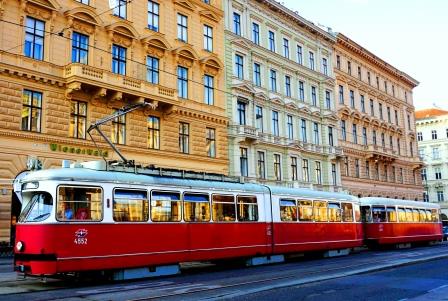
We still covered quite a few landmarks (StephenPlatz, Mozart Haus, KarlsKirche, Secession Building, Hofburg Palace, Museum Quartier), but we were running from one to the other with just time to take photos. It was not how to enjoy a city. Long lines at the Café Sacher prevented us from tasting the original Sacher torte, and we ended up having those ubiquitous puffers being sold on the sidewalks for lunch.

At the end of our frenzied walk, we had a quick dinner at Café Raymond, enjoying some wine and a slice of, albeit not the original, sacher torte. Our Airbnb was only four subway stops away, so we slept well but felt sad. Even seven hours would not have been enough for the Viennese allure.

The Case of Salzburg

But we had seven hours in Salzburg, smaller with a population of 150,000. From the Hauptbahnhof, we walked to the Mirabell Palace on the way to the Old Town Square. It was at this beautiful palace and garden where Maria (Julie Andrews) and the von Trapp children sang Do Re Mi.  

Across from the Palace, there was a raging Thursday farmer’s market at the Church Plaza. How lucky could we be? It was a haven for local food, produce, plants, and even dry goods. We did not leave until Bill had a version of the famous apple strudel and I got a 15-euro leather purse.

A bridge glistening from the number of love locks (the sun shone on it just right) led directly to 9 Getreidegasse where Mozart was born. Just a block away is the historic center of Salzburg called Residence Platz, a large stately square named after the Residence of the Prince-Archbishop of Salzburg. In front of the building, beside the Cathedral, and in the middle of the Square is the beautiful Residenzbrunnen fountain, another point in the Sound of Music Tour.

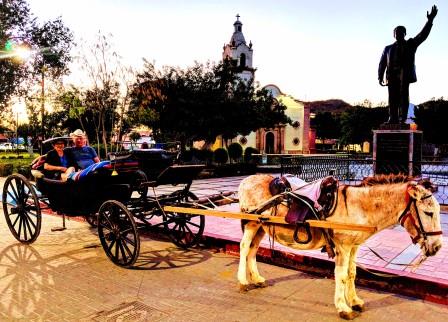
The Salzburg Cathedral, St. Peter’s Abbey, and the Residential Building define the lovely Dom Platz where carriages can be hired for tours. Happy newlyweds were doing it at the time. You can see the Salzburg Fortress up the hill (you can also see it from the Mirabel).Finally, aA huge golden ball embellished the interesting craft stands.

The Visitors Information Center at Mozart Platz (with a statue of the man) recommended Swelter’s for an early dinner. My husband had wiener schnitzel while I loved my griesnockerlsupp. Wine capped our memories of the Sound of Music and Mozart, street food and shopping, and the love bridge. 

Yes, we enjoyed Salzburg and felt we didn’t miss a thing. But if a city is big, it would be better to allow for more time. We didn’t regret visiting Vienna, however, since we may not pass that way again, but we certainly enjoyed Salzburg a whole lot more.

PREVIOUS POST
Would You Rather Go On or Off the Beaten Path?
FOR MOBILES, click "View Web Version at the end of the post past comments and share buttons will appear.


pinnable image
pinnable image


Thursday, April 11, 2019

Feeling More Confident, Choosing a Different Route to Drive Home


It’s a far cry from the feeling we had driving down to Mazatlan. Yes, those urinals we bought will be of utterly no use. As a matter of fact, we felt confident enough that we even took a different route. We followed the advice given to us by a couple we met in El Cid who had been driving the route for years. 

This route is so much better because it divides the trip more evenly to 6.5-6-5.5 hours. The previous one we took was 8-6-4. (Both include border times.) We also bypass Los Mochis, Sinaloa the city with Level 4, the highest crime level according to the US State Department Advisory (our trip down was uneventful, too, but we were so cautious).

Saying goodbye to all the friends we had made in the three months we were in Mazatlan was not easy. We hugged lots and reminded ourselves that we would be seeing each other again on January 4, 2020. I gave copies of my book, Carolina: Cruising to an American Dream, and boxes of chocolates. 

Packing all the things we brought with us and all the things we bought in Mazatlan was not easy either. But, on the morning of April 1, 2019, we drove our car north on Mexico 15 D, the Cuota freeway. I delighted at the burst of yellows along the way on an early Spring Day. We also stopped at inexpensive Mexican pottery stores. 

Navojoa

The first stop of our three-day road trip was Navojoa. It is the fifth-largest city (population, over 150,000) in the state of Sonora just past the state of Sinaloa where Mazatlan is located.  The Mexican Revolutionary Álvaro Obregón was born in Hacienda Siquisiva in the small town near the city. After the 1910 revolt, he became the President of Mexico, introducing modern agricultural techniques.

Navojoa's Palacio Municipal
seen at the Main Plaza

He made the Valley one of the most prosperous agricultural regions in Mexico. Today, aside from agriculture, foreign as well as local investors have gone into many industries like shrimp farming, swine production, recycled containerboard and box making, and a Tecate brewery (recently acquired from Heineken). The Valley exports mainly to the US because of its close proximity to the border.

The colorful Navojoa signage stands out at the roundabout as you enter the city. Prosperity is evident and we had time to take pictures of the Main Plaza fronting the Palacio Municipal. Four monuments surround the Plaza and the City Clock Tower donated by the Rotary Club leads to it from the main thoroughfare, Mexico 15 D. The Cathedral is just a block away, its spires visible from the Plaza.

the Welcome Sign of Navojoa

Magdalena de Kino

The next stop should have been Santa Ana, about six hours from Navojoa and a little over 60 miles south of Nogales on the US border.  Santa Ana is a small city with a population of just over 10,000 known for raising cattle with over 20,000 head exported to the US annually. The movie The Fast and The Furious was filmed there throughout the months of June and July 2008, as well as the larger town of Magdalena de Kino (population, 25,000).

Padre Kino's Mausoleum
Temple to Santa Magdalena

Hotels.com did not have available hotels in Santa Ana so we booked at Magdalena de Kino which is even closer to the Mexico-U.S. border. When I researched the city, I found out that it is a Pueblo Mágico, one of 83 towns selected for scenic, cultural or historical qualities. 

We loved our stay at the 5-star Hotel Industria, one of six hotels in the city. It is just a half block away from the Main Plaza. The remains of Father Francisco Eusebio Kino, the pioneer Roman Catholic missionary who founded fifteen missions  in the area as well as Arizona was discovered in this town in 1966, 255 years after his death. A monument with a crypt housing his remains and a chapel with his effigy lying down are both in the Plaza. The city is named after him and the patron saint Santa Maria Magdalena. There is a pretty temple/church built in her honor also at the Plaza.

the Main Plaza of Magdalena de Kino

The border was only a little over an hour from our hotel. This time we went through the correct crossing called Mariposa. It is right after Km 21 where we surrendered our auto permit that refunded our US$400. However, we forgot to surrender our visitors’ permit. We will have to find out how to do that by mail. The wait at the US border was a whole hour and our car didn’t have to be inspected by the US Customs border agents.  

the Mariposa Border Crossing

After realizing that we had forgotten to surrender our permits we passed by the Mexican Consulate in Tucson. But we were told they didn’t have an immigration office there and we either had to go back to the border or forget about it. We wanted to make sure we would be given reentry to Mexico next year but we definitely didn’t want to go back to the border. We lost our appetite for lunch and continued on to Viewpoint. We simply said we will stop at the first McDonalds we spot. Would you believe we didn’t see any? We left Magdalena de Kino at 8 am and we arrived home at 2:15 pm.

We will find out if we can mail our visa permit to the Immigration Office. By next year, we will have all the border processes down pat. So, yes, we will drive down to Mazatlan again next year, if they’ll let us!

Thursday, March 28, 2019

Into Lovely Homes and Jazzy Art Galleries


Two weeks ago, I wrote about how much I think about Mazatlan as our third home country. And then I saw a poster at the El Cid Country Club advertising an Annual Tour of Mazatlan Homes sponsored by the Damas Trabajandos for the “A Drop in the Ocean” cause. What if we upped our investment and bought a home in this city? I reasoned that, even if we do not, the tour would give us excellent ideas about how to decorate our new Viewpoint home base with a Mexican theme. There were seven homes on the tour but these are the five I liked. Two of them I really, really liked.

Casa Maria Cortez

the second floor garden at Casa Maria Cortez

I was immediately enamored by this home. The color yellow is everywhere, unifying the home and brightening the look. The main house has the living room, dining room, kitchen, and a portico. There are also three bedrooms on the upper floor. A two-story casita with an upper and lower bedroom has a beautiful garden area on the second floor that joins the two houses. Also connecting the two houses on the ground level is a swimming pool. With lots of space filled with plants, flowers, and greens, the entire compound feels very open and refreshing. Big décor pieces are flushed into huge windows. The beautiful owner, Maria, operates a popular restaurant across the street.

courtyard, Casa Constitution
Casa Constitucion

Angelina, the owner of the second house, also owns a restaurant named after her. She didn't have a name for her house but, when I pressed her, she said, "Call it Casa Constitucion." The one-story main house has the portico, the kitchen, dining, bar, and master’s bedroom. Built in the 1850s, it feels old Spanish. A small courtyard is in front with lots of greens and a central fountain. The lot is fairly small and the newer yellow casita has one bedroom on the ground and two on the second.

the Catedral Spires
from the Casa Las Campanas
Casa de Las Campanas

We were not allowed to take pictures of the inside of the third home so I only have photos of the garden and porticos. Also built in the 1850s, it feels a lot like a house museum. With many antique fixtures, furniture and décor, American owners Greg and Renee enthusiastically talked about the distinctive features of their home, especially those that the previous owner was able to obtain from Bel Mar, the original Malecon Hotel when they did an update.  The living room, the playroom, the dining room, the kitchen, and the bedrooms are on one floor laid out as an L-shape. There is a two-level courtyard: the upper level with a garden and a central fountain and the lower level with a patio/bar and a small swimming pool. The property is called Casa de Las Campanas. The Mazatlan Catedral’s spires can be seen from the garden and you can hear the bells that begin to chime at 5 am.
dining room, Casa Delaney

Casa Delaney

This property is owned by Kim and Tom Delaney who decided to retire in beautiful Mazatlan just a few years ago. It sits on the area called El Rebajo which means a recess. The original hill was cut-off to create a beautiful raised residential space for the now multi-colored homes (see headline photo). This house is the one with the yellow façade. The entrance opens to a sitting room and a spacious living room that leads to a dining room, split level, that then leads to the kitchen. Between the dining room and the living room are stairs to the family room and two bedrooms upstairs. The dining room looks out to a small garden while the kitchen leads to the bar/patio and a good-sized blue swimming pool at the back.

Casa Guzman

what you see when you walk into Casa Guzman

As they say, “Save the best for last.” The Casa Guzman is on the highest point of Mazatlan, beside the  Observatorio Historico de Mazatlan which is being converted into a museum, atop Cerro del Vigia. So we had to change to smaller buses since the big bus would not be able to climb the winding uphill road. And this house wowed us all. It has a 360-degree view of the city of Mazatlan/ and all the waters around it, It overlooks the El Faro Lighthouse which is the highest operating lighthouse in the world sitting atop the opposite hill, Cerro del Creston, and the twin Mexican “icebergs” so called because they are white with bird poop. More than 17,000 square feet in three levels, new sections are still being built (the renovations started a couple of years ago). The main level has the receiving area, a formal living area, a den, a dining /family area, and a large kitchen that all open to the majestic views. The lower level has a family room, a cellar, and another social area that opens to a garden. There you will find a modern infinity pool and a cedar fire pit area for relaxing. The garden continues on to a play area for the young couple Karla and Amado’s children. The upper floor with the bedrooms was not open for us to see, however. This gorgeous home is elegantly laid out, decorated with stunning art pieces, and built with classy high ceilings.

fire pit, infinity pool, and jacuzzi at Casa Guzman

Dorey and her "Mazatlan Doors"
We took the opportunity to visit the Old Observatory beside it for more photos of the views. This house (and the first) gave rise to the following question: “Should we settle into a beautiful home and forego our wandering life?” After some talk, we decided not just yet or maybe not ever. We could never afford this last one and, even if we are able to buy something like the first, both of us do not really like maintaining a house. All-inclusive vacation and resort community are perfect for us.

Jazzy Art Galleries

But we got lots of ideas for decorating our little Viewpoint home base. At the Casa de Las Campanas was a wall full of Spanish masks. They may be perfect for the space above our bed headboard. If we find at least six pieces we love, we will string them together. Actually, we also got a lot of ideas from the Art Walk in Centro Hispanico that happens every first Friday of the month. We were able to visit around ten of the fifty galleries and stopped only because we had found an art piece that we fell for at the Beau Pres Gallery. It is a collection of sixteen photographs of beautiful Mazatlan doors set in two door panels each with eight frames. Since we have a car, we can easily bring it home! Next year, we will go to more galleries. And we may again tour a new set of homes. It’s not only fun but also enriching.

________________________________________________________________________________
NOTE FOR THOSE WHO WANT TO SHARE:
Share buttons appear automatically to the right on laptops. On mobiles, please scroll to the bottom of the post past the comments. Click "view web version." Share buttons will appear on the bottom.


Thursday, March 14, 2019

When You Have Three Home Countries, You Are Truly Blessed


Catedral de Mazatlan
In a little over two weeks, we will complete our three months in Mazatlan, Mexico. Last week, I shared with you the 2019 Mazatlan Carnaval which I thought best exemplified Mexican culture. This week, I would like to tell you about why I keep on returning to the notion of Mexico having become my third home. 

The Philippines is where I was born and lived for 54 years. It's my first home. The USA is where I have lived for the past 16 years after I retired. It's my second. And starting this year, Mexico is where we will stay for three months each year. It has become my third. It was Bill's decision to spend this much time here but now there are many reasons why it really feels like home to me, too.


Mexico and the Philippines share major parallels in history. Although we started with very different indigenous cultures, we both were ruled by Spain for centuries, Mexico for 300 and the Philippines for 377, both starting in 1521 at the height of the global Spanish empire. Thus, Spanish influence is heavy in both cultures. It is why we have the following  similarities in our cultures:

       First, 90 % of both countries are Roman Catholic, although Mexico is bigger by 20 million people with 130 million in population. Therefore, one of the obvious comforts for me is that we do not have a hard time finding churches to hear mass on Sundays around El Cid Resorts where we stay. There are two only a kilometer (ten minutes walk) away in each direction.
    
Mexican dishes that are also Filipino
     Second, Mexico may be the largest Spanish-speaking country in the world. But many Tagalog words are the same as their counterparts in Spanish: silya for silla (chair), sapatos for zapatos (shoes), deretso for derecho (straight), kamiseta for camiseta (shirt), banyo for bano (bathroom), for example. This resulted in the relative ease with which I  can carry on a smattering of conversations here even without learning it formally. And, as you know, I am learning the language in free El Cid classes. I can't wait for the time when I can speak it fluently. I've had progress.

Third (and what I am thrilled about), we share so many dishes. I thought it was just tacos and fajitas and burritos and enchiladas. I delighted in finding a lot of my favorites in buffets and a la carte menus. One of those is chicharrones (crispy pork rind) especially since they are almost discarded after the pork meat is shredded for the tacos de puerco. The pork thighs and legs are first roasted, much like how the Filipino lechon is cooked. Don Ignacio chicken could easily be mistaken for chicken inasal. Sopa de mariscos is actually a version of sinigang na hipon or isda. I love to eat my pescado frito or pritong isda with a plate of fried garlic rice and sliced tomatoes. Even their grilled mahi-mahi, pescado zarandeando is similar to our inihaw na bangus. Finally, for dessert, I always have the option of flan (just like our leche flan), candied camote or plantain banana, or the tropical fruits I have so missed for desserts. Jicamas (singkamas in Manila) have been mainstays in my salads, too. The only part of Filipino cuisine we do not share with Mexico is that which comes from our Chinese heritage. So I miss pancit and the various forms of lumpia. 


Feliz Ano Nuevo

     Fourth, even music is shared due to our common Spanish origins. I loved singing Cucurucucu Paloma when I found Lola Beltran’s Museo in El Rosario, an hour south of Mazatlan. And I always sing or hum to La Bamba, Besame Mucho, Sabor a Mi, or Cuando Caliente El Sol whenever they are aired through the piped-in music of the 9 El Cid restaurants.
        
Dia de Los Muertos
         

Fifth, festivals and traditions are very much alike: Navidad (Pasko), Dia de Los Muertos (All Souls Day), and Dia de Los Santos (All Saints Day), for example. This year we had a Feliz Ano Nuevo party at La Concha just two days after our arrival, complete with fireworks and round fruits. Then on Feb. 14, we had a party called Dia del Amor y la Amistad (Day of Love and Friendship). Filipinos celebrate these festivals with the same pomp and traditions.

Feliz Dia del Amor y La Amistad


pinnable image
Sixth, both Mexicans and Filipinos are warm, expressive, and hospitable. Whenever Mexicans are complimented, I tell people they should also go to the Philippines and they will experience the same level of helpfulness and hospitality. We have many new friends not just from the guests from Canada and America like us, but from the staff of El Cid. We have even been invited to their family parties. 

Lastly, our climates are so alike: sunny, warm, and humid. And our sunsets are gloriously the same.

After the periods of Spanish rule, both of our histories became intertwined with the USA. The Mexicans were defeated by the Americans in the Mexican-American War and Mexico ceded half of its territory to become the southwestern USA. The Americans also defeated the Spanish in the Spanish-American War shortly after that and the Philippines was ceded to the USA in 1898. This began the 50-year rule of America over my native land until our independence was granted in 1946. But we could say that, during this period, the Philippines developed like its new territory, the southwestern USA. 


pinnable image
pinnable image
It is not by chance that we have also chosen to live in southwestern USA, Arizona in particular, as our primary home for the major part of the year. Filipinos, Arizonians, and Mexicans are truly brothers in history and culture. It's good that I do not have to travel the 24-hour flight to Manila to be “home.” Now in my 70s, it has become more difficult to do this. I will still visit the Philippines once every three to five years. Today, I can just take the 2 or 3-hour flight to somewhere in Mexico and I am also "home!" 


Thursday, February 21, 2019

10 New Landmarks That Considerably Add to the Charm of Mexico's Mazatlan


pinnable image
This wasn’t our first time in Mazatlan. It’s my third and my husband's fifteenth (see this previous post on classic landmarks of Mazatlan). A City Tour was something we did not think we were going to do again. But it was free for all El Cid’s Elite members. So on one Wednesday morning, we joined a whole bus full of eager first-timers. To my surprise, there are new landmarks that either I had not noticed before or are truly new. As a matter of fact, when we went around in our car or used public buses, we found even more. Here are the ten new landmarks that have considerably added to the city's charm.  

From the City Tour

The Zona Dorada or Golden Zone is a shopping zone just a block away from El Moro. It was built to supplement Old Town shopping. It was here where I found a beautiful silver Aztec-inspired pendant during my first City Tour. Sadly, it didn't have matching earrings. On this second City Tour, we stopped at a brand new Jewelry Store (#1). It features a huge silver lion for a mascot. I finally found my matching earrings. 

pinnable image
After the shopping zone, we quickly reached the Malecon, the longest boardwalk in Latin America, and perhaps the world, at all of 21 kilometers. There was a colorful Mazatlan City Sign (#2) that surprised me. It is a great addition to all the classic monuments that are memorials to life in Mazatlan built along the boardwalk (the Family, the Pulmoniya, the Lady, the Fisherman’s Memorial, and the Dolphins. Maybe I didn't notice it before but I was also surprised by the Baseball Monument (#3). It was curious but then I found out that baseball is a very important sport for all Mazatlan residents.


Soon after the monuments and the fishermen’s section of the Malecon, we reached the Punta de Clavadistas or Divers’ Point (#4). This was another new thing for me because we did not go this far before. There were two divers who regaled us with their skills at jumping to the sea from the high 50-ft cliff, avoiding the huge rocks, and returning to the small park (to do it all over again), swimming against the big waves hitting the rocks.  

pinnable image
The last stop of our City Tour was lunch at Roca Mar fronting the Malecon. It was our chance to taste something else other than El Cid food (good Mexican Cazuelitas). On the way there, I saw for the first time the Acuario Mazatlan (Mazatlan Aquarium) (#5). In writing this article, I found out that it actually opened in 1980. There are shows of sea lions, divers, and even sharks. I guess I have not been that much interested because I have always preferred to see animals in the wild for some time now.


From Days Out

On a separate day out, we visited Juarez Market (#6), the other large market in Mazatlan that overflows every Sunday morning. We took the Cerritos Juarez bus from El Cid. We got off to a labyrinth of streets around the original concrete building near the church. Those streets were teeming with people peddling their wares: from clothes, toys, and housewares to fruits and vegetables, shrimps and fish, meat and poultry, and even all kinds of cakes. In fact, it is where I found Dior knock-off sunglasses for just US$10. I went back for another pair before going home.

cakes galore at the flea market


the art piece we bought with the artist Dory
Every First Friday of the month, there is an Art Walk at the Centro Hispanico (#7) near Old Town Mazatlan. We took the Sabalo Centro bus from El Cid and got off at the Mercado. There are about fifty galleries included where many paintings, photography, sculptures, jewelry, and other decor art are offered. At about the time we were ready to go back to El Cid on Feb. 1, we found a unique wooden collage of classic painting-like photographs of sixteen Mazatlan doors at the Beaupres Gallery. Bill returned with the car the next day to pick it up. It proved right that we drove down to Mazatlan with our car despite the warnings (see this previous post on our drive down to Mazatlan). What a find!

But the newest developed area in Mazatlan is to the north of the city. Every time we drive there, we feel we are back in the US. Sear's, Walmart and Sam's Club (#8), Mazatlan Galleries Mall (#9). and a new Centro de Convenciones (#10) are its most important landmarks. We do a lot of shopping there for toiletries, clothes, and gifts. It is also where we watch English movies. Finally, at the state-of-the-art Mazatlan International Center (Centro), you will find the world's largest mural, a three-dimensional mosaic of tile called the "Sea of Cortez." Lovely to look at both up close and from afar, it measures 25x59 meters, made from 105 panels of 3x5 meters each.

Sea of Cortez at the Convention Center
With a population of 650,000, Mazatlan is not just a resort town like the other beach capitals of Mexico. An old city with many landmarks that you wouldn’t want to miss,  its beauty comes from its colorful history and thriving economy, not entirely based on tourism. Called the Shrimping Capital of the World, it is founded on both agriculture and aquaculture. My previous post was on two small Mexican towns, one to the north, the other to the south. I have yet to write on four other day trips from Mazatlan. We will be kept busy. There may even be another future post on new landmarks that will again considerably add to Mazatlan's charm.

another pinnable image