Cruising Past Seventy: The Inner Journeys: full time RVing
Showing posts with label full time RVing. Show all posts

Tuesday, April 30, 2024

Telling Stories Better than Words Can Ever Weave


Little did I know that my third try at marriage would bring out 
my passion for telling stories through travel, words, and yes, even pictures.

Telling Our Stories

After we married, Bill bought an RV, and we went full-time RVing for a total of eight years.  He had the foresight to buy not just a huge GPS but also a Nikon DSLR. On this my third try, I was given the tools with which to give life to previously unspoken passions. He became my travel buddy; he painstakingly edited my blog posts; and he gifted me the cameras with which to take pictures. As someone said: "Once you learn to care, you can record images in your mind and film. There is no difference."

Winning Photo Contests

After completing five years of RVing when we turned 65 and 70, our bodies told us to find more convenient ways of traveling. We turned to snowbirding in Phoenix, Arizona during winter, traveling the world and visiting our children the rest of the year.   

Resort living became our lifestyle between trips. Four pools, six hot tubs, two saunas, ten tennis and ten pickleball courts, two golf courses, a shuffleboard court, a softball field, a billiards hall, many hobby and crafts rooms, a dance studio, a computer lab, many meeting rooms, three clubhouses, three ballrooms, a Pub & Grill. etc. made sure of that. In the fourth year, we sold our RV and bought a home for a base. Part of the draw was some 50 clubs. One of them, the Viewpoint Photography Club, became my favorite.

In my very first year of joining the annual Viewpoint Photo Show, I won Best of Show, People’s Choice, and Judges’ Choice in the Bronze Division with my photo of the Blue Doors of Tunisia. Beginner’s luck! I was immediately bumped into the Silver Division and the competition became stiffer. Still, in the following years, I kept on winning more. Seeing that my passion had grown, my husband upgraded my tools and gifted me with a Sony mirrorless digital camera to replace the bulky Nikon DSLR of 8 years.

Making Stories Deeper

Beginning in 2019, we took comfort travel up another notch and made Mexico our second home through our El Cid Vacations Club timeshare. From January 1 to March 31, when it turns "cold" in the desert, we stay at one of their resorts either in Mazatlan or Cancun. We stay in our Arizona base during spring and fall. In the hot summer months, we use our two other timeshares and visit our children in their homes, all cooler places.   

But I had to give up my membership in the Photography Club which operated during the winter season when all the snowbirds were in Viewpoint. I turned to photography basics to tell better stories, not to win contests. I resorted to natural lighting, good composition, and evocative shots. As I polished my writing into travel essays, my photos also began to tell deeper stories, the inner journeys.  

When Even Photographs Will Be Inadequate

Now we have reached that phase when we travel less. We are traveling more from our armchairs. Just in time, Bill has shifted me to the best camera phone on the market, the S21 Ultra. He said it’s time to capture life, especially family life, with more convenience.  

And I won’t mind if these Ansell Adams words come true: "When words become unclear, I shall focus with photographs. When images become inadequate, I shall be content with silence." I thank Bill for my retirement life of travel, writing, and pictures. 

PREVIOUS POST
Adventures with Family in the Mile-High City

FOR MOBILES, please click "View Web Version" at the end of the post, past the comments. Share buttons will appear.

Tuesday, March 12, 2024

Beyond Being Tourists


My husband and I have traveled together since the time we met in July 2007. We began as tourists, traveling for pleasure, visiting places out of curiosity.  We became more serious travelers when we bought an RV, rented out our condos, and cruised through forty-nine American states, nine Canadian provinces, and six Mexican states. It’s all chronicled in the book Carolina: Cruising to an American Dream. The RV gave us the wherewithal to become more than tourists. We became explorers, adventurers, and even pilgrims.

An Explorer is defined as a person who combs an area for discovery. When we became Elite Members of Thousand Trails (a nationwide network of campgrounds) and upgraded our RV to a 37.5-foot motorhome towing a dinghy, we stayed three to four weeks at a place. This gave us the chance to explore an area more completely. I would research the places nearby and schedule daily explorations of the areas within three hours of our base camp.

In Ontario, Canada, for example, we saw all four different faces of the province: a government hub in Ottawa, a bustling metropolitan center in Toronto, a famous tourist spot (Niagara), and the rural town where we were camped. In Europe, we got to go to three countries from our base in the small town of Oberstaufen in Germany. The trains allowed us to visit Switzerland (St. Gallen), Lichtenstein (Vaduz), and Innsbruck (Austria).

An Adventurer, on the other hand, is a person who has, or seeks, activities or places for excitement or an unusual experience, despite the risks they may entail. I must admit that Bill is more of an adventurer than I am. He used to scuba dive, ski, fly a plane, etc. I just play with my smartphone or laptop, an armchair sort of a girl.  I’ve tried playing tennis and pickleball, but they didn’t like me. Does riding the helicopter in Kauai or taking our RV to the Arctic Circle in the Yukon count?

When we stumbled upon the Worthington Glacier on the road to Valdez, Alaska, Bill went up to climb it while I stayed behind, scared I might hurt myself or be frozen. When we went with his high school friends for a reunion in Crested Butte, Colorado, he went wild river rafting with his friends while I stayed behind to write about the reunion instead. At Grandfather’s Mountain near the Blue Ridge Parkway, Bill negotiated the Mile-High Swinging Bridge while I took his photo.

A Pilgrim is another kind of traveler. This is a person who journeys, especially a long distance, to some sacred place as an act of devotion or even as an original settler. Once, being both Catholics, we diverted from our planned itinerary to Minnesota and turned west instead of north to visit the Grotto of the Redemption in the northeastern corner of Iowa. It was off the beaten path, but we wanted to see the complex of nine grottos made from forty-three different kinds of gems individually gathered and built entirely by the hands of three men.

A friend and I became accidental pilgrims in Eastern Europe. We were in Razlog, Bulgaria visiting a beautiful Eastern Orthodox Church in nearby Bansko when she suddenly had a yearning to find a Catholic Church. The nearest one was in Skopje, Macedonia, three and a half hours away, where Mother Teresa was born. We hired a taxi, prayed at the Chapel attached to her house, and visited the Church of the Black Madonna where she heard her calling at 18 in Letnice, Kosovo, an hour and a half away. The way home was through Nis, Serbia, birthplace of the first Christian Roman Emperor and Saint, Constantine the Great.

Indeed, we both had become explorers but I will not be the adventurer that Bill is. But we hope to be more of pilgrims. It is time for deepening our faith in this phase of our lives. Which of the three kinds of traveler do you want to be?


Monday, December 11, 2023

Great Lifestyles Perfect for Those Who Love Traveling


It’s almost the beginning of another year, the time we think about priorities and how we want to move on. You may be preparing for retirement or want to make a change in how you work from home, especially since there are many portable careers available now. It’s time to make another pause.

My husband and I have used such pauses well over the years. In 2007 we met and married more than a year later. We retired embracing one retirement lifestyle; in 2013, made a change; and in 2017, went through another. Now it’s time to do it all over again. Here are the lifestyles we tried and what we dream of doing next.

Full-time RVing

About six months after we married, we decided to live in an RV full-time. We rented out our homes, sold some of our belongings, gave away others to family, and stored the rest in the garage of my daughter’s house and the shed of my condo in Seattle. We set out to conquer North America.

For the first three months, we simply tried it out and bought a small used 24-ft. Class B motorhome. When we were convinced it was the lifestyle we wanted, we bought a membership at a national campground network and upgraded our “home” to a 37.5-ft Class A. The network enabled us to stay at a campground (one of almost 200) for three weeks at a time (daily camping cost turned out to be less than ten dollars).

Fulltime RVing is perfect for the avid travelers that we are. We cris-crossed the continent six times in five years, staying in all 49 American states, ten Canadian provinces, and six Mexican states. We visited 35 national parks, 34 national monuments, and hundreds of other national, regional, and state landmarks. It was even more perfect for me: I had just retired and migrated to the US. I felt I truly deserved the citizenship I was granted.

We also found out that it was a very economical way to live as long as you invested in a good brand second-hand RV from a national chain, joined a reputable campground network spread out over the continent, mostly dined in with the majestic backdrops you found, and loved the outdoors and its bounty.

Snowbirding and World Travel

In 2013, when we discovered some health issues, we had to tweak our retirement lifestyle. We shifted to snowbirding, staying put for a few months, and having annual check-ups with a team of doctors. Starting that Christmas season, we parked our RV at the Viewpoint RV and Golf Resort and wintered in the Phoenix area. The rest of the year, we stored the RV and visited family, held family reunions, and took off to explore the rest of the world.

To do this, we invested in two timeshare memberships: one that gave us many resort options around the world and another that had extensive properties all over the US. As a result, traveled Europe extensively, spending a week in different towns, making them bases for wandering around and touring nearby countries.

The other allowed us to host week-long family reunions for each of our families in many scenic states. And, since our children’s homes are spread out over three countries and four states, we have gotten to know those locations and their adjoining areas well.  

Resort Living

We loved this snowbirding phase so much that we decided to stay permanently in Viewpoint and sold our RV. In Christmas 2017, we gifted each other a brand new three-bedroom unit. Three months later, we moved into our new home, getting “lost” in the 1,200 sq. ft of space, having lived in a cozy 350-sq. ft. RV for eight years.

Viewpoint has everything you need for an active 55+ lifestyle. I choose from two fitness centers every day; after which I go to the pool, hot tub (there are four available), and sauna. We tried our hands at the tennis courts (there are ten) and when we did not do well, contemplated a shift to pickleball (also ten courts).  Bill settled on golf and I, writing. We take walks around the park in the evening. There are movies, bingo, concerts, dinners, games, parties, and about 50 clubs to choose from. I chose the Photography, Writing, Painting, Texas Hold’Em, and the Computer Clubs.

With a big kitchen, I have enjoyed cooking more; tending to my plants has been a new pastime; and I have enjoyed time with valued friends. Staying home has allowed me to get renewed for the demanding and exciting world travel and family visits ahead.

Making Another Country a Second Home

In 2017, one timeshare reminded us that we still had three weeks that we would lose if we didn’t use the points by the end of the year. We quickly decided to spend that Christmas season in Cozumel. On that Caribbean island, we got a chance to change our retirement lifestyle yet again.

The truth is Bill would love to retire full-time in Mexico. It was where he had enjoyed months with his family before his first wife passed on. As a compromise, we gifted ourselves with an all-inclusive three-month leased timeshare we could use in any of the seven resorts in Mazatlan, Puerto Morelos, or Cozumel. This has turned out to be more practical than maintaining a house in a foreign land.

In 2018 and 2019 (impossible in 2020), and 2021 we went to Mazatlan where we never had to cook or clean, with ten restaurants available, a country club, and a short drive to downtown Mazatlan.  In 2022 we shifted to a resort on the Riviera Maya in Puerto Morelos with nine restaurants and many new landmarks to explore. We are returning there this December.

Long-Term Cruising for Life-Long Learning

In 1926 its first ship sailed from New Jersey for a voyage of seven and a half months to 90 ports. It was called the University of Seven Seas; later it came to be called the World Campus Afloat. Then the Institute of Shipboard Education shifted to its successor program, Semester at Sea. We had a taste of this when we sailed the Baltic countries, Iceland, and the UK in 2015.

The program was made available for non-students, as Enrichment Voyages first and then the Lifelong Learning Program. For a minimum of 30 days, visits to ports are complemented by seminars or workshops: political, economic, historical, geographical, and art and architectural discussions of the ports/regions, while at sea. The same professors with PhDs in their fields who teach the students are the seminar leaders. Some workshops include arts and crafts, writing and book clubs, dance, yoga, tai chi sessions, etc.

The ship’s facilities may not be as luxurious as regular cruise ships but adequate for the 700: 10 classrooms, 1 large seminar/showroom, another large seminar/ballroom, a piano bar, two dining rooms (buffet and waiter service), a pool and poolside bar, three viewing decks, a gym, spa, sauna, and massage wellness center, a library, a computer lab, a cruise ship store, and a medical clinic. Wifi facilities were formerly very limited but now that problem has been solved.

Other cruise lines have followed suit and offer living options on cruise ships. This new lifestyle has attracted some.

Making Another Country A First Home

This is what we have not yet tried. There are places where the cost of living is such that you can pretty much live at the same cost as home but be at the backdoor of other dream destinations. You can stay at a Spanish “castle,” a French chateau, an Italian vineyard, a South American pueblo, or “own” an island in the Philippines! But, at 75 and 80, Bill and I may have run out of time for this last lifestyle. What we can do is still dream!

PREVIOUS POST

We Sold Our RV and Bought a New Traveling Lifestyle

Tuesday, December 5, 2023

We Sold Our RV and Bought a New Traveling Lifestyle


Last week I told you about how and why we chose to settle in Phoeni, first every winter and then three years later permanently, after eight years of RVing. The winters of the last three years were spent at Viewpoint, a large RV and golf resort in the city. In the third year, at about this time around Christmas, we decided to gift ourselves a change in traveling lifestyle. We bought a small, simple house and sold our RV.

WHAT LED TO OUR DECISION

1.    Completed Goal: North America

By that time, we had visited seven Mexican states, ten Canadian provinces, and 49 American states—had also gone to Hawaii although the RV could not take us there! We realized that we had essentially covered our North American bucket list, chronicled in my first travel book published in 2015: Carolina: Cruising to an American Dream.

2.    New Goal: The World

Meanwhile, our travels abroad have mainly been trips back to the Philippines and to my daughters’ homesthey live in three separate countries: the US, Canada, and Australia.  As we toured all the areas around where they lived, a thirst for the rest of this wonderful world set in. But going home after each trip had become increasingly difficult. Enduring jet lag, we still had to haul our RV from storage, drive it back to Viewpoint, and refit it into the hook-ups.  We couldn’t just turn a key, drop our luggage, and plop into a nice comfy bed.

3.    Lasting Friendships

In addition, even if we met interesting people in the many campgrounds where we had stayed, we often lost contact with them afterward. It’s a not-so-happy consequence of regularly changing our neighborhoods and one of the cons of the full-time RV cruising lifestyle. Meanwhile, in Viewpoint, we were adopted by kindred campers. They included us in their tennis teams, golfing groups, and social events. Four decided to buy homes in the new golf resort phase featuring great-looking, good-sized brand-new manufactured homes. We followed the lead of our new lifelong friends.

4.    Good Healthcare

It was healthcare that led us to stay put at a central location every winter for our medical needs. Fortunately, we found Dr. Rustin Crawford of Cornerstone Family Medicine who diagnosed my two nascent issues and prescribed half of the smallest dose of medications for maintenance. They were quickly arrested. He referred my husband to an excellent cardiologist who fitted him with a pacemaker and a great dermatologist who is controlling skin cancer issues. We wanted Rustin to take care of us until the end. His small clinic has grown to three branches in the East Valley Phoenix Area.  

It all made so much sense. We had to have a permanent home here.

WHAT WE ENDED UP DOING

1.    Buying a House

We chose one of the model units close to the newest clubhouse complex (photo), giving us thousands of dollars of upgrades. The 1,200-square-foot three-bedroom home was more than three times the space we had in the RV. When we moved three months later, I almost got lost! But the biggest thrill was that I had a bride’s dream of being carried over the thresholdat the young age of 70after a never-ending honeymoon.  Imagine furnishing and decorating our little home with tastes that are cultures apart and attitudes so stubborn!

2.    Selling Out RV

Selling our RV proved to be a cinch, too. We bought our moving home that took us all over North America for $40,000. It was an 11-year-old Newmar Mountain Aire, one of the best brands and models in the market. On the day we listed it on Craigslist, it sold before noon! With the $10,000 in hand, the math meant that our first home had cost us just $312.50 per month over the previous eight years. It was the best travel investment we could ever have made because we even found the lifestyle more economical than living in an apartment. On top of that, we had rental income from our properties, giving us hefty savings!

WHAT WE GOT WITH THE CHANGE

World Travel

We had wanted to explore more of the other continents. After the house, we invested the balance of our savings in timeshares for our new “traveling lifestyle with a base.” So far, we have made trips to 28 countries, have annual reunions with both of our families in resort destinations around the US and enjoyed an awesome all-inclusive winter vacation for three months each year in Mexico.

Resort Lifestyle

Between trips, we had a resort lifestyle community in Viewpoint. Amenities include three clubhouses, two golf courses, an onsite restaurant and pro shop, four heated swimming pools, five hot tubs, two fitness centers, ten tennis courts, nine pickle ball courts, a shuffleboard court, a ball field, multi-purpose rooms, ballrooms, craft rooms, fifty clubs, and weekly dinners, concerts, and dances. The golf courses are right after the clubhouse near our house. It was a great place to relax and be with friends.

Visits from Family and Friends

The pleasant surprise was that, with more space in our home, lots of resort amenities in Viewpoint, and Arizona endowed with great landmarks such as the Grand Canyon National Park or lovely Sedona many of our favorite people have come to visit and stay with us for vacations. This has been the additional blessing of owning a home. Family and friends now have a place to stay to be with us. Consider yourself invited!

A Covid-19 Sanctuary

And when the pandemic upended our lives, our home became a great sanctuary for the tiny bubble I shared with my husband. We have added a 200-square-foot Arizona room for my writing area and our playroom that converts into a guest room. Yes, that’s where you’ll stay!

I must admit that I miss RVing, every time I see one going down a freeway or parked at Walmart, especially when it became the safest way to travel during COVID-19 days. But not my husband neither the driving nor the hooking or unhooking. I guess we can’t have it all; not forever. Anyway, a change always settles on being good again. 

PREVIOUS POST

How We Chose to Settle in Phoenix After RVing for 8 Years

Tuesday, November 21, 2023

How to Choose the Best RV and Campground for How You Want to RV


This article was first published in TravelAwaits on March 25, 2020, and has been updated here.

We RVed full-time for eight years and thoroughly enjoyed every minute of it. We experienced three ways of RVing and I learned about two basic types of RVs you can use, and four kinds of campgrounds where you can stay. This will introduce you to all of them and help you match the best RV and campground for the way you want to RV.

3 WAYS TO RV

The first way is what people tied to a home base need. You want to take a short trip to be renewed and get the benefits of RVing: the open road, the outdoors, and no unpacking. It’s escaping from everyday life. I was not able to do this when I was younger for the obvious reason that there was no RVing infrastructure in the Philippines. America, however, has the best RVing infrastructure, and Bill, my husband, took weekend RV trips with his family regularly before we met.

We RVed the second way for the eight months right after our wedding. We tried it out for our honeymoon. We wanted a longer trip, but we still thought of returning home at the end of it. This is snowbirding — for three to six months — to move away from the cold (or heat) of their home base. They seek a warmer (or cooler) place and stay there until the weather back home eases. It is what farmers (mostly from the northern U.S.) do when their farms are idle in the winter. It’s what educators do during long summer breaks. Some people do this while working at seasonal jobs, using their RV as a temporary home away from home.  The goal is to be in the north during summer and in the south during winter.

The third and final way is what Bill and I eventually chose to do. After our first eight months on the road, we wanted to extend our honeymoon, so we bought a bigger RV and became members of a nationwide campground network. We shifted into full-time RVing. We made the RV our home and drove all over North America for five years. Then we went back to the second way for three years. We stayed in Arizona during the winters; the rest of the time we traveled the world and visited our children. Now we are back to the first way

2 GENERAL RV TYPES

There are two general classifications of recreational vehicles (RVs): motorized and non-motorized. Motorized RVs combine the living area and the engine and drivetrain in one vehicular unit. Non-motorized RVs are complete housing units that can be pulled or towed by a motor vehicle (like a truck) powerful enough to do just that. We chose a motorized RV because it was easier to set up and we planned on staying weeks, not months in a given place.

There are four kinds of motorized RVs, from the smallest camper vans to the biggest Class As. Camper vans are vans retrofitted to create a small, walkable area in the back that houses a sleeping area at a minimum, popular in Europe where the roads are very narrow. Class B and C motor homes are bigger and can be up to almost 30 feet in length. In Class C, the sleeping area is on top of the driver’s compartment while for Class B, it is at the back. Both are typically complete with a kitchen, a dinette, and a bathroom. We chose a 24-foot Class B for snowbirding. When we went full-time RVing, we traded it in for a Class A. These are usually upward of 30 feet long (ours was 37.5 feet long). They are also usually fitted with slide-outs — as many as five, but we had only one — that make the living areas much bigger when parked. They can tow a dinghy — ours was a Saturn compact car. With our Class B, we were limited to a scooter.

Then there are two kinds of non-motorized RVs: travel trailers and fifth wheels. . They must be towed by vehicles with enough power for their size. Travel trailers are towable housing units of various sizes, from the lighter pop-ups and teardrop campers to the bigger Airstreams and even larger units On the other hand, fifth wheels are usually larger and feature big noses that house the bedroom. Those noses are attached to the beds of pick-up trucks, making the attachment more secure and stable. They are usually as big as Class A motor homes and can also have slide-outs that expand the living areas.

Like camper vans, small pop-ups or teardrop campers are ideal for shorter weekend escapes. Like Class B and C motor homes, medium-size travel trailers are great for longer seasonal stays. And like Class A motor homes, large travel trailers and fifth wheels make the best full-time homes, especially if you’re planning to stay in one place for several months or longer. You do not have to buy any of these RVs. Many RV rental companies have all these types of RVs available at reasonable prices. But it is best to buy your RV if you plan to use it as your home.

4 KINDS OF CAMPGROUNDS

There are four kinds of campgrounds. They can best be illustrated by imagining a grid divided into four quadrants. As you go higher vertically, you go from urban to rural; as you move from left to right, you go from absolutely no amenities/activities to those with a ton of them. Those with many amenities/activities I call resorts and those with few, parks. Those that are in rural areas I call nature campgrounds and in urban areas, city campgrounds. Here’s more on each of the kinds of RV campgrounds you’ll have to choose from.

We chose a nature RV resort in North Carolina when we explored the Blue Ridge Parkway. It was a great place to go home to each day. Each space had a sizable deck looking out over a fresh spring, and we were surrounded by large trees. The campground had hiking trails, a lake for fishing and boating, a clubhouse with billiards and table tennis, and tennis, volleyball, and a golf course.

What immediately comes to mind as a city RV resort is just six miles from Disney World and within walking distance of a strip mall and a big grocery chain. The large clubhouse was filled with game tables, billiards, table tennis, a large TV room, a gift shop, and even a diner. Guests also had access to a fitness center, hot tubs, pools, tennis courts, horseshoe pits, volleyball courts, and a mini-golf course. The resort hosted dances with live bands, concerts, and craft/hobby events.

You’ll check into a city RV park primarily to be near family or friends or as a base from which to explore a city. We found one on the outskirts of Boston, which we explored daily by taking the train and subway.

My favorite example of a nature RV park is the National Forest Service’s Kirk Creek Campground on Highway 1 through Big Sur, considered to be one of the most scenic driving routes in the U.S. It is in the sparsely populated area where the Santa Lucia Mountains rise sharply out of the Pacific Ocean. We loved the trail that led down to the largest sand beach in the area.

To escape, go to a nature resort or nature park. A city resort could also be good if you want the RV experience and additional recreation options. For longer vacations, you can go to faraway nature resorts or nature parks. City parks are best for visiting family and friends or exploring an urban destination while staying in your RV. For full-time RVers, nature or city resorts are best as bases. 

PREVIOUS POST

The Best Gifts of Travel: Lessons Learned, Changes Made, Insights Gained

Friday, November 6, 2020

A Handy Booklet on the Basics You Need to Know about RVing


When coronavirus hit the US, traveling by recreational vehicles (RVs) became a preferred mode of travel. It was not surprising since with RVs you can have more control over what happens on your trip. You can keep an RV as sanitized as you want and not let anyone inside except for those in your safe bubble. Depending on the places you choose to go, you can minimize your exposure to just filling up at a gas station. And that may be a small risk compared to the benefits of the open road, the great outdoors, and absolutely no unpacking.

You must have wanted to get started right away. And you must have been looking for a short, sweet, and simple source of information to help you do just that. Well, I hope I have come to the rescue. We RVed for eight years across North America and reached forty-nine American states, nine Canadian provinces, and six Mexican states.  Carolina: Cruising to an American Dream is the book I published in 2015 about the RV odyssey. This year, I have put together a little booklet that is meant to show you that there are an RV and a campground suited for the way you want to go. This little book comes in five easy-to-read short chapters: Cruising in an RV: the basics you need to know.


Chapter 1 outlines the three ways to RV:  escaping for short periods, making longer seasonal travels, and making it your home on wheels. We have done the second and third. Now that we are settled in a base, we can do the first. The chapter then goes to describe two general classifications of RVs: motorized, with A, B, C, and smaller models, and non-motorized that are either trailers or fifth-wheels. The chapter ends with recommendations on the RVs best suited for a particular way of RVing.


Chapter 2 lists the four types of campgrounds that arise based on two factors. The first is where it is located, whether it is near a city or is actually out there in more rural places. The second is whether a campground has a lot or few or even no amenities or activities. So I have listed the Nature Resort or Nature Park, those that are out there in the boondocks where a Resort means many amenities and Park means few or none. The other two types are City Resort or City Park, those that are in a city or just on the outskirts. We hope you make sure that the campground you choose is the right one for what you want to do.


In Chapter 3, I have outlined the different resources one can find around a locale. When we stayed long in a place, we found public, educational, or religious institutions as excellent resources for things we can borrow or activities we can tap into. There are also the commercial establishments that are unique to places outside city centers, places that have, in fact, become more popular during these times. And we had been amazed at the many things government and non-government organizations offer. Lastly, I have mapped out creative campground substitutes.


Chapter 4 compares the costs we experienced among the seasonal RV travel we had in the first eight months, living at our condo in Seattle, and making the RV our home. You would be surprised to find that the last one, full-time RVing, was the least costly. Imagine being able to visit all the beautiful places America has to offer and saving dollars at the same time!


And the last Chapter asserts the “Ten Commandments of Fulltime RVing.” These are the ten big recommendations we have put together for an RV life that is well spent and better managed. It goes from where to go to, how to go, how to buy, where to get services, how to take care of health, when and how to use technology, how to cut costs, and when and how to work or volunteer, etc. As a matter of fact, it adds two other tips that did not rise to the level of a commandment.

Even if you don’t RV or go but only part-time, you may find principles in these chapters that will be useful for any way you want to travel. If you are already RVing, gift this to a friend. Otherwise, it may inform your preparation and enrich your forthcoming RV trips. After you finish reading this booklet, you will know how to start RVing. And pretty soon you will be enjoying the open road, the great outdoors, and travel without having to unpack in the safety of your own “home

HOW TO BUY THIS BOOK (AND TWO OTHER BOOKS OF MINE) :


Middle: This ebook is now available for $0.99 and the paperback, $3.99. Just click Cruising in an RV. the basics you need to know 

Left:  My first book that is all about RVing is also still available on Amazon for $3.99.  Simply click Carolina: Cruising to an American Dream

Right: Another book is now available for preorder at $1.99.  Please click Cruising Past Seventy. It's Not Only about Outer Journeys. It's Also about Inner Ones

FOR THOSE ON MOBILE, SHARE BUTTONS APPEAR WHEN YOU CLICK WEB VERSION AT THE VERY END AFTER COMMENTS.

PREVIOUS POST

The Sequel to My First Travel Book is Now Available for Preorder 


CLICK THIS TO PIN THE IMAGE BELOW             


CLICK THIS TO PIN THE IMAGE BELOW


Thursday, August 15, 2019

How to Look at RVing, Objectively


My husband and I met late in life and jumped right into fulltime RV cruising after the wedding, inspired by the idea of a never-ending honeymoon. We made the RV our home and lived all over North America for five years, visiting forty-nine American states, nine Canadian provinces and territories, and six Mexican states. I even wrote a book about it, Carolina: Cruising to an American Dream. Now I recall the debate that raged in my head before we plunged into our great adventure.

at a campground in North Carolina

There are pros and cons to the fulltime RV cruising lifestyle. I wrote about them in this post. Today, I update that previous post with a better perspective, with the experience of all the RVing we have done, in hindsight. It is an objective look at this particular kind of travel to help those of you who are unsure of taking the plunge.

The following benefits are undeniable:

at the Arctic Circle in the Yukon

Experiencing new things-to-do
Seeing new places and sights
Meeting lots of new people
Being close to nature and the outdoors
Growing with a larger, refreshing view of life
Reducing negative stress

Because of the first three, boredom never had the chance to set in. The ability to boondock brought us closer to the mountains, the streams, the lakes, and the ocean. We had to adapt more easily to the nuances in daily living, becoming more aware of universal themes and larger concerns in the process.

at a Washington campground

Our lifestyles were quite driven before we married and fully retired. My husband was keeping a small business alive in a flagging economy after years of navigating the corporate jungle. In turn; I was juggling teaching at three institutions of higher learning while babysitting my grandson after years of pioneering in information technology in the Philippines.

Our RV cruising lifestyle was renewing, exhilarating and reinvigorating.

going into the Alaska Highway

And, though there was some stress looking for campgrounds, hooking-up and unhooking, planning itineraries, and choosing activities to do, it was the positive kind of stress; it wasn’t the kind where you earnestly pray that your situation will change or even wish you were somewhere else.  It was the kind that allowed you to sleep soundly at night with this: "That was an awesome day well spent!"

But we can also not deny the following disadvantages:

at a Monroe, Washington campground

Many unfamiliar situations
Loss of stability
Distance from family and friends
No involvement with worthwhile causes
Loss of income
Uncertainties in healthcare


The very benefit of having something new all the time also brought the disadvantage of instability. It was a preponderance of unfamiliar situations, especially in the beginning with our smaller 24-foot RV. The sad part was the increased distance with family and friends and the inability to work for causes we used to love.  Technology has definitely helped but the thing called “propinquity” was actually lost.


at a campground in Alaska

Since we moved to a new parish every other week, we could not participate in a regular ministry. What younger people would find most disturbing, however, is the loss of income, unless you can find portable jobs or work at campgrounds or even Amazon distribution centers. What finally made us settle down is to have better healthcare. 

at a campground in Mexico

But now we realize that all these disadvantages came about because we chose the full-time RV cruising lifestyle. We traveled in an unrelenting pace and covered the North American continent in less than five years. If you look at the benefits, they are the same whether you do it full-time or piecemeal. When you find a free week or two, escape to an RV adventure. There are ways to do this. You can buy a small camper, rent an RV or borrow a friend’s unit. At least try it and see for yourself.

parked at the side of a highway in Alaska

After ten years, we have modified our conclusion to the debate. We still believe RVing is something everyone should experience. Yes, we fully recommend you succumb to the lure of the open road. No other kind of travel will give you that absolute sense of freedom. But you don’t have to do it full-time like we did. Get the benefits. Skip the disadvantages. Escape the ordinariness of life. Go somewhere in an RV!

PREVIOUS POST
An Eventful Road Trip through the Canadian Rockies.

FOR MOBILES, click "View Web Version at the end of the post past comments and share buttons will appear.


CLICK THIS TO PIN THE IMAGE


CLICK THIS TO PIN THIS IMAGE


Thursday, January 31, 2019

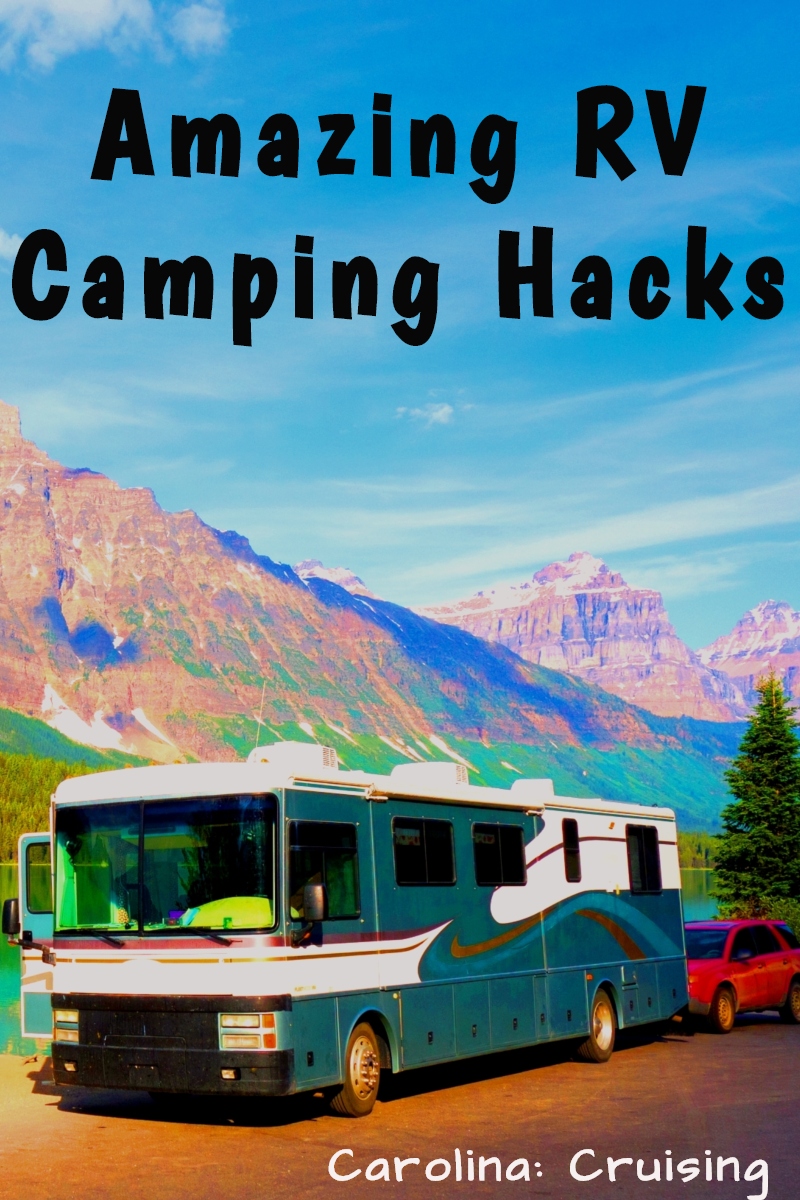
Amazing RV Camping Hacks to Give You an Unforgettable Camping Experience


This week, I go back to lessons we learned in RV cruising (which we did for eight years, five of them full-time)! This post was written for my blog by Outdoorsy.com. 

"If you are also an RV owner, you know that space in your RV and movement of items when you are traveling are two big problems. Whether you are parking somewhere for an extended stay or hitting the road for multiple destinations, you want ideas to make it a trip to remember. These 5 hacks will blow your mind when it comes to saving your sanity so that you can spend your time enjoying your favorite camping experience.   
     

In the Bathroom


Use a closet organizer or mesh shoe holder to hold your bath products or wet towels. Either option will maximize the amount of space you have in the bathroom. You can also use suction cup holders in the shower for your shampoos, soaps, and conditioners. This makes them easy to access and keeps them from falling when you’re are driving. While the mesh shoe holder will hold more items, the closet organizer will keep them securely in place. Both have little drying time, as well. Choose the option that will work best for your family’s needs.

In the Refrigerator


This hack is one of my favorites when tent camping and works just as well when camping in an RV. Crack all your eggs, ahead of your trip, into a wide mouth water bottle. You can add measured lines on the outside to know how many eggs you are cooking with each use. This will help to minimize the amount of space you use in your fridge, keep your eggs from cracking in transport and make just the right amount of eggs for each meal with a quick pour. 

In the Pantry


Canned foods take up a lot of space. One hack that you can use to minimize the amount of shelf space your canned goods take up is to use a magazine holder for storing your cans. A magazine holder can keep over a half dozen cans in the same amount of space that just a few would take standing up. The holder will also keep the cans from falling over when you are driving and keep them organized.

In the Cabinets


Unless you want to use all plastic cups and paper plates, you will need a way to keep your glasses from clanking together and breaking when you are driving. One good bump and you could have an entire set of wine glasses shatter. By using a can koozie on each glass, it will cushion them from cracking and breaking making them easy to store safely. While glass is not the best space saver, a glass of wine just tastes better than drinking it out of a plastic cup.

All Over the RV


Anywhere you have extra space, placing a rack or organizer can help you to maximize space. Don’t get caught up on the name of the device. Just because an item is called a desk organizer, does not mean it can only be used on a desk. The same goes for bathroom carriers and shoe organizers. Hang an organizer on the inside of cabinet doors, use suction cups to put them on your windows, and attach a shoe organizer along any blank space (like around a bed frame) to utilize every inch of your RV. The amount of storage space you gain will be mind-blowing and will help to ensure you have everything you need on your road trip.

Whether you are taking a short RV road trip or if you plan on cruising all winter, set your self up for an amazing adventure that will keep you traveling in comfort and convenience. A little advance planning following these amazing camping hacks and you will find every RV experience is more relaxing and stress-free."

See this post for more RV cruising tips. (10 Commandments of RV Cruising)


Thursday, April 26, 2018

There Are No Hidden Costs, Only Hidden Benefits, in Full-time RVing


In my previous post, I talked about the three kinds of RV cruising one might choose as part of his lifestyle.  The common feedback I got was “We want to RV but it’s too expensive.” I wrote a piece about the subject of The Economics of the RV Cruising Lifestyle in 2011 but it was mainly to justify our upgrade to a Class A from our Class C. Fortunately, it also compared full-time RV cruising to living in a home base and using a car for road trips. Here’s my update on the topic to see if, in hindsight, we still arrive at the same conclusion-that RVing full-time is cheaper! 

Fuel Expenses

It was shocking to see that our fuel expenses were so high when we galloped around the country every three or four days using our Class C motorhome. Clearly, we had to stay at a campground longer, like two or three weeks at a time. This is logical because we were covering a lot more miles in shorter periods of time. Besides, driving around an area using the smaller RV costs a lot. This eased a little when we got the scooter but I found it a very inconvenient way to go for longer trips. I was surprised to find out that a bigger RV, with an even lower mpg, plus a car for driving around, was a cheaper way of full-time RVing. And I was ecstatic about the bonanza of a 350-sq.ft. living space! Obviously, keeping a home base and using a car for road trips is the cheapest option, however.

Vehicle Ownership and Maintenance

Unlike houses, RVs do not appreciate in value. They are homes on wheels that are regularly subjected to the rigors of the road.  Like cars, their values take a deep dive in the first year or two. Buying a brand-new RV, therefore, does not make sense. Bill thought it would be smarter to let other people take that hit. We bought a 10-year old Newmar Mountain Aire, one of the better quality brands. Besides, owning an RV at late in life also made perfect sense because investing in properties was, and still is, no longer high on our agenda.

All in all, our monthly cost of ownership (depreciation + maintenance) for a used home on wheels was around $500 per month, computing the life of our motorhome to be ten years. Not bad for a space of about 350 square feet, translating to less than $1.50 per month per square feet, just slightly above the cost of rented living space in Kent, Washington, from where we came, at the time. However, the condos that we own and are rented out will be there even after we pass on while the rig will most probably last only as long as we live or even shorter (we actually sold it after 8 years).

Campsite Fees/Utilities

When we started RVing, we joined groups that gave 50 percent off for camping fees, which ranged anywhere from $10 a night for parks to $70 for resorts. Camping this way, we averaged $450 a month. When we committed more to the fulltime RV cruising lifestyle and bought the Class A, we also bought a Thousand Trails membership. This allowed us to use their network of campgrounds around the US.  The membership resulted in camping expenses of a little over $6 a day or $200 per month over the more than four years we used it. It was a smart move. We saved on campground fees. 

Furthermore, included in the membership were power, water, and sewer. Sometimes even cable and wifi were included. Thus, the major expense for utilities turned out to be just for mobile phones. You may also need to maintain lawns when you own homes, stuff nonexistent with RVs. Plus association dues can be as high as $350 a month for homes. These are all included in campground fees.

Taxes and Insurance

An RV is a second home, or if you are full-timing, it is the primary home. Sales/excise tax on the purchase of the RV and interest on future payments are just like those on a traditional home or second home. However, since an RV is not real property, property tax is nil. Insurance on the trailer/fifth wheel is lower than on home insurance; but, since a motorhome is a motorized vehicle, insurance expense is higher and may equal that of a home.

Recreation and Entertainment

Entertainment and recreational expenses are not huge while RV cruising because cruising takes you to new places and new things to do all the time. Thus, this type of expenses while living in a home would be a lot more. There would be more out-of-town trips which would mean fuel costs for the car (or even airfare), lodging costs, and other charges associated with the place.

Food and Household Supplies

Food and household supplies can be considered the same for all the columns. Although, of course, food may be more for living in a home base because you may tend to eat out more often. In an RV, you actually feel like you are eating out all the time because grilling outdoors is so much fun and picture windows create a great ambiance. Household supplies may be less in an RV if it is compared to a larger footprint for a home base.

Health Maintenance

Although costs can be considered the same for health maintenance, it is definitely better, however, if you are at home, and more preventive in nature. You tend to postpone visits to doctors, dentists, or ophthalmologists when you travel so costs may be higher when serious health issues arise. This is the main reason we shifted to snow birding first, then getting back to a home base.

If cost were not an option, the best is to have a home base and escape with an RV. But, for most people, the cost is a major consideration. If you do not gallop around the country every three or four days, use a second-hand RV, and join a network of campgrounds, then full-time RV cruising is cheaper than living in a home and using a car for road trips. We have arrived at the same conclusion. We carved out several years from our life to cruising fulltime in an RV. We ended up having a home (the RV), financing our adventure with the rental of our condos, and getting to discover all of North America as a bonus. 

Here's a pinnable image: