Cruising Past Seventy: The Inner Journeys: RVing
Showing posts with label RVing. Show all posts

Tuesday, November 21, 2023

How to Choose the Best RV and Campground for How You Want to RV


This article was first published in TravelAwaits on March 25, 2020, and has been updated here.

We RVed full-time for eight years and thoroughly enjoyed every minute of it. We experienced three ways of RVing and I learned about two basic types of RVs you can use, and four kinds of campgrounds where you can stay. This will introduce you to all of them and help you match the best RV and campground for the way you want to RV.

3 WAYS TO RV

The first way is what people tied to a home base need. You want to take a short trip to be renewed and get the benefits of RVing: the open road, the outdoors, and no unpacking. It’s escaping from everyday life. I was not able to do this when I was younger for the obvious reason that there was no RVing infrastructure in the Philippines. America, however, has the best RVing infrastructure, and Bill, my husband, took weekend RV trips with his family regularly before we met.

We RVed the second way for the eight months right after our wedding. We tried it out for our honeymoon. We wanted a longer trip, but we still thought of returning home at the end of it. This is snowbirding — for three to six months — to move away from the cold (or heat) of their home base. They seek a warmer (or cooler) place and stay there until the weather back home eases. It is what farmers (mostly from the northern U.S.) do when their farms are idle in the winter. It’s what educators do during long summer breaks. Some people do this while working at seasonal jobs, using their RV as a temporary home away from home.  The goal is to be in the north during summer and in the south during winter.

The third and final way is what Bill and I eventually chose to do. After our first eight months on the road, we wanted to extend our honeymoon, so we bought a bigger RV and became members of a nationwide campground network. We shifted into full-time RVing. We made the RV our home and drove all over North America for five years. Then we went back to the second way for three years. We stayed in Arizona during the winters; the rest of the time we traveled the world and visited our children. Now we are back to the first way

2 GENERAL RV TYPES

There are two general classifications of recreational vehicles (RVs): motorized and non-motorized. Motorized RVs combine the living area and the engine and drivetrain in one vehicular unit. Non-motorized RVs are complete housing units that can be pulled or towed by a motor vehicle (like a truck) powerful enough to do just that. We chose a motorized RV because it was easier to set up and we planned on staying weeks, not months in a given place.

There are four kinds of motorized RVs, from the smallest camper vans to the biggest Class As. Camper vans are vans retrofitted to create a small, walkable area in the back that houses a sleeping area at a minimum, popular in Europe where the roads are very narrow. Class B and C motor homes are bigger and can be up to almost 30 feet in length. In Class C, the sleeping area is on top of the driver’s compartment while for Class B, it is at the back. Both are typically complete with a kitchen, a dinette, and a bathroom. We chose a 24-foot Class B for snowbirding. When we went full-time RVing, we traded it in for a Class A. These are usually upward of 30 feet long (ours was 37.5 feet long). They are also usually fitted with slide-outs — as many as five, but we had only one — that make the living areas much bigger when parked. They can tow a dinghy — ours was a Saturn compact car. With our Class B, we were limited to a scooter.

Then there are two kinds of non-motorized RVs: travel trailers and fifth wheels. . They must be towed by vehicles with enough power for their size. Travel trailers are towable housing units of various sizes, from the lighter pop-ups and teardrop campers to the bigger Airstreams and even larger units On the other hand, fifth wheels are usually larger and feature big noses that house the bedroom. Those noses are attached to the beds of pick-up trucks, making the attachment more secure and stable. They are usually as big as Class A motor homes and can also have slide-outs that expand the living areas.

Like camper vans, small pop-ups or teardrop campers are ideal for shorter weekend escapes. Like Class B and C motor homes, medium-size travel trailers are great for longer seasonal stays. And like Class A motor homes, large travel trailers and fifth wheels make the best full-time homes, especially if you’re planning to stay in one place for several months or longer. You do not have to buy any of these RVs. Many RV rental companies have all these types of RVs available at reasonable prices. But it is best to buy your RV if you plan to use it as your home.

4 KINDS OF CAMPGROUNDS

There are four kinds of campgrounds. They can best be illustrated by imagining a grid divided into four quadrants. As you go higher vertically, you go from urban to rural; as you move from left to right, you go from absolutely no amenities/activities to those with a ton of them. Those with many amenities/activities I call resorts and those with few, parks. Those that are in rural areas I call nature campgrounds and in urban areas, city campgrounds. Here’s more on each of the kinds of RV campgrounds you’ll have to choose from.

We chose a nature RV resort in North Carolina when we explored the Blue Ridge Parkway. It was a great place to go home to each day. Each space had a sizable deck looking out over a fresh spring, and we were surrounded by large trees. The campground had hiking trails, a lake for fishing and boating, a clubhouse with billiards and table tennis, and tennis, volleyball, and a golf course.

What immediately comes to mind as a city RV resort is just six miles from Disney World and within walking distance of a strip mall and a big grocery chain. The large clubhouse was filled with game tables, billiards, table tennis, a large TV room, a gift shop, and even a diner. Guests also had access to a fitness center, hot tubs, pools, tennis courts, horseshoe pits, volleyball courts, and a mini-golf course. The resort hosted dances with live bands, concerts, and craft/hobby events.

You’ll check into a city RV park primarily to be near family or friends or as a base from which to explore a city. We found one on the outskirts of Boston, which we explored daily by taking the train and subway.

My favorite example of a nature RV park is the National Forest Service’s Kirk Creek Campground on Highway 1 through Big Sur, considered to be one of the most scenic driving routes in the U.S. It is in the sparsely populated area where the Santa Lucia Mountains rise sharply out of the Pacific Ocean. We loved the trail that led down to the largest sand beach in the area.

To escape, go to a nature resort or nature park. A city resort could also be good if you want the RV experience and additional recreation options. For longer vacations, you can go to faraway nature resorts or nature parks. City parks are best for visiting family and friends or exploring an urban destination while staying in your RV. For full-time RVers, nature or city resorts are best as bases. 

PREVIOUS POST

The Best Gifts of Travel: Lessons Learned, Changes Made, Insights Gained

Friday, March 11, 2022

TRAVEL AWAITS: 10 Reasons this Oscar-Winning Town is Perfect for RVers


This article, with complete narrative, links, and photos, was published in Travel Awaits on May 19, 2021

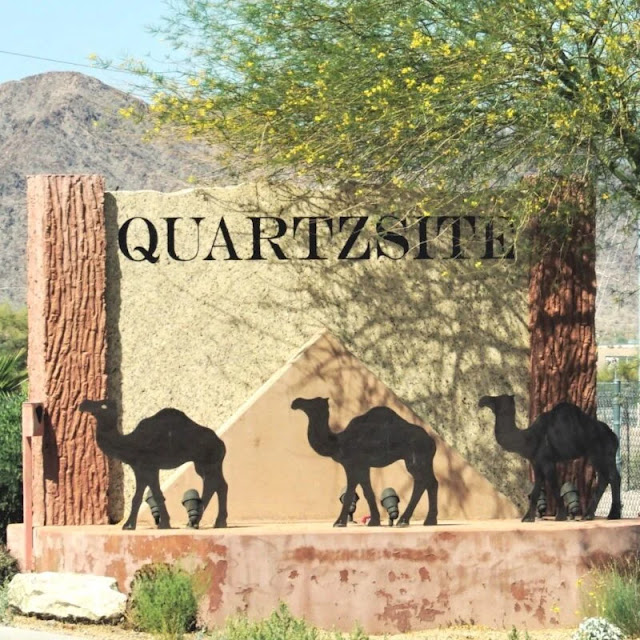
Last year at the Oscars, another Frances McDormand movie, Nomadland, won Best Picture. Having RVed across North America with my husband for eight years, we both identified with the story set in the small town of Quartzsite in Arizona. Here are ten reasons why the town is perfect for RVers and more.

Quartzsite Has that Mystique for RVers

1. There Are Unbelievably Wide Open Spaces to Camp for a Song


"The Bureau of Land Management Long-Term Visitor Areas (La Posa and Midland) surround the town. Primarily established to help preserve the desert, these public lands provide minimal facilities
—vault toilets, dump station, and water faucets, but not power— for itinerant migrants with self-contained vehicles who seek to shelter in the area’s winter temperatures in the 70s and 80s." An annual pass costs $180 or just $25 a month from September 15 to April 15. Stays of up to 14 days in any 28-day period are free at five designated campsites but campers must move to a new site outside of a 25-mile radius after 14 days before returning after 14 days for another stay.

2. There Are Other Ways to Camp in Quartzsite

There are about 70 RV campgrounds with full-service hookups. They are there for those who can afford them or who have opted to stay year-round. 

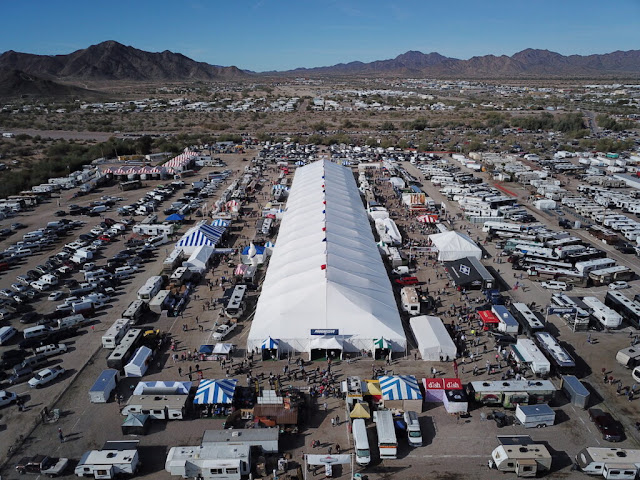
3. There’s Fun to Be Had with Fellow RVers


"In the months of January and February, there are more than a dozen swap meets and a Prospectors’ Panorama plus nine gem and mineral shows, craft shows, and the largest gathering of RVers, the Quartzsite Sports, Vacation & RV Show...The 
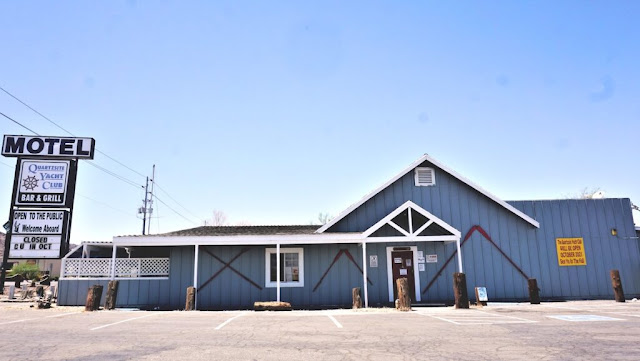
Rubber Tramp Rendezvous sessions assimilate newcomers to the community, For nighttime fun, there are the Quartzsite Yacht Club and the very popular Desert Bar in nearby Parker."

4. The Desert Has a Lot of Outdoor Experiences to Offer


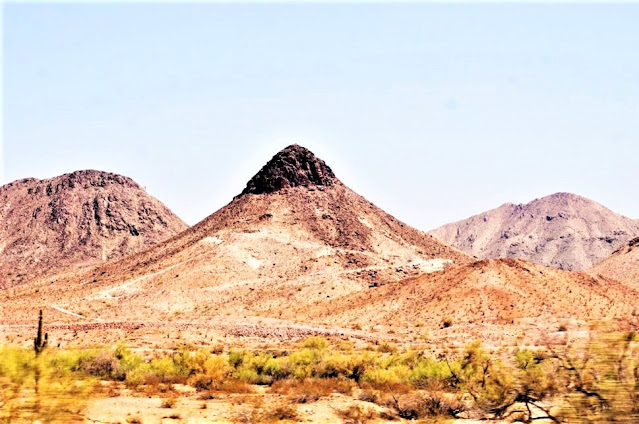
The rugged land around Quartzsite is ideal for outdoor activities and land sports in winter. Water sports are also available at Alamo Lake and on the Colorado River. 

Quartzsite Is a Destination in Itself

From 1863 to the 1880s, when the Arizona Territory was still newly created, Quartzsite was the site of a waterhole and later a stage station called Tysons Well. At one time, 39 mines were operating served by two landing stations on the Colorado River. 

5. This History Is Preserved at the Quartzsite Historical Museum


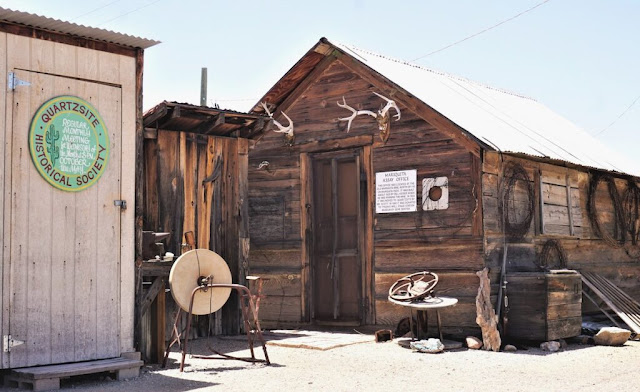
"Unfortunately, the Quartzsite Historical Museum, also known as the Tysons Well Stage Station Museum and housed in the Oasis Hotel of mining boom times, was closed when we were there. It was great that the outside exhibits were also interesting. We got to see mining equipment, the Assay Office from the Margarita Mine, and Barrett’s Miniature Village, created to scale with small rocks painstakingly glued together, and the skeleton of the Giant Saguaro with 47 arms."

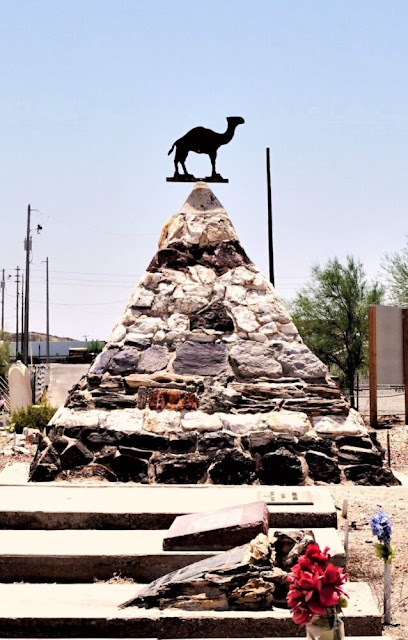
6. Hi Jolly Tomb and Cemetery Is the Most Visited Place in Quartzsite

"Hi (Hadji) Ali was an Ottoman citizen of Greek-Syrian parentage who became one of the very first lead camel drivers in the U.S. Camel Corps when it aimed to use camels as a major means of cargo transportation across the American Southwest." The efforts failed because they panicked the horses, burros, etc. But Hi Jolly stayed and prospered and, when he died, the town erected a Hi Jolly Tomb around which the Jolly Cemetery grew.

7. Celia’s Rainbow Garden Is the Largest Free Botanical Garden in the State

"Celia was a miracle baby, born 12 inches long weighing only 1.25 pounds, to a couple who was told they could not have a child." Celia grew to be loved by everyone for her ultra-positive outlook on life. But she caught a viral infection at eight and a half. She died, the whole town mourned, and the city gave a plot of land for a garden in her memory. Volunteers built and maintain the garden for everyone to enjoy.


Quartzsite Is a Great Stop for the Weary Traveler

Quartzsite is at the crossroads of I-10 and I-95, midway between Phoenix and Palm Springs. It is also three and a half hours from either Los Angeles or Las Vegas. 

8. Stopping for a Bite Will Leave No One Disappointed


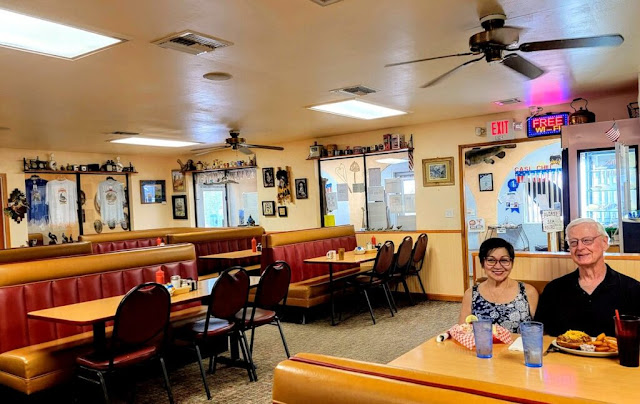
"Silly Al’s Pizza is the town’s watering hole. Be sure to order Al’s Special House Combo. Try lunch at the Mountain Quail Cafe, where Frances McDormand and the "Nomadland" crew had meals while on the shoot. 

9. Shopping Is a Must in this, the “Rock Capital Of The World”

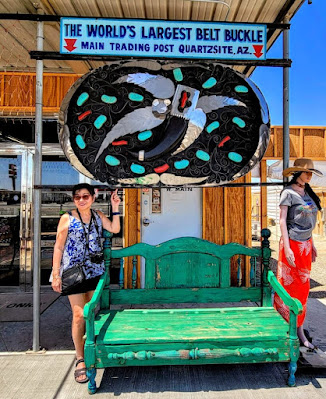
"The name Quartzsite comes from the quartz that abounds in the area. Other rocks and gems are common, too...The Main Trading Post and other shops with tons of jewelry and artwork remain open year-round. You will love the Trading Post’s “World’s Biggest Buckle,” which measures several feet in height and width."

10. Having a Talk with Town Legends Is a Thrill

We met Joanne Winer, wife of Paul, the Naked Bookseller (he wore just thongs). He performed his own composition “Next to the Track Blues” in the movie, now part of the soundtrack and the Nomandland CD. Sadly, he died after filming 'Nomadland.' Joanne received the $1,000 for his role. Their Reader’s Oasis Books also serves as Paul’s Music Hall, and the piano that he played in the movie is still there.


FOR THOSE ON MOBILE, SHARE BUTTONS APPEAR WHEN YOU CLICK WEB VERSION AT THE VERY END AFTER COMMENTS.

PREVIOUS POST

Friday, November 6, 2020

A Handy Booklet on the Basics You Need to Know about RVing


When coronavirus hit the US, traveling by recreational vehicles (RVs) became a preferred mode of travel. It was not surprising since with RVs you can have more control over what happens on your trip. You can keep an RV as sanitized as you want and not let anyone inside except for those in your safe bubble. Depending on the places you choose to go, you can minimize your exposure to just filling up at a gas station. And that may be a small risk compared to the benefits of the open road, the great outdoors, and absolutely no unpacking.

You must have wanted to get started right away. And you must have been looking for a short, sweet, and simple source of information to help you do just that. Well, I hope I have come to the rescue. We RVed for eight years across North America and reached forty-nine American states, nine Canadian provinces, and six Mexican states.  Carolina: Cruising to an American Dream is the book I published in 2015 about the RV odyssey. This year, I have put together a little booklet that is meant to show you that there are an RV and a campground suited for the way you want to go. This little book comes in five easy-to-read short chapters: Cruising in an RV: the basics you need to know.


Chapter 1 outlines the three ways to RV:  escaping for short periods, making longer seasonal travels, and making it your home on wheels. We have done the second and third. Now that we are settled in a base, we can do the first. The chapter then goes to describe two general classifications of RVs: motorized, with A, B, C, and smaller models, and non-motorized that are either trailers or fifth-wheels. The chapter ends with recommendations on the RVs best suited for a particular way of RVing.


Chapter 2 lists the four types of campgrounds that arise based on two factors. The first is where it is located, whether it is near a city or is actually out there in more rural places. The second is whether a campground has a lot or few or even no amenities or activities. So I have listed the Nature Resort or Nature Park, those that are out there in the boondocks where a Resort means many amenities and Park means few or none. The other two types are City Resort or City Park, those that are in a city or just on the outskirts. We hope you make sure that the campground you choose is the right one for what you want to do.


In Chapter 3, I have outlined the different resources one can find around a locale. When we stayed long in a place, we found public, educational, or religious institutions as excellent resources for things we can borrow or activities we can tap into. There are also the commercial establishments that are unique to places outside city centers, places that have, in fact, become more popular during these times. And we had been amazed at the many things government and non-government organizations offer. Lastly, I have mapped out creative campground substitutes.


Chapter 4 compares the costs we experienced among the seasonal RV travel we had in the first eight months, living at our condo in Seattle, and making the RV our home. You would be surprised to find that the last one, full-time RVing, was the least costly. Imagine being able to visit all the beautiful places America has to offer and saving dollars at the same time!


And the last Chapter asserts the “Ten Commandments of Fulltime RVing.” These are the ten big recommendations we have put together for an RV life that is well spent and better managed. It goes from where to go to, how to go, how to buy, where to get services, how to take care of health, when and how to use technology, how to cut costs, and when and how to work or volunteer, etc. As a matter of fact, it adds two other tips that did not rise to the level of a commandment.

Even if you don’t RV or go but only part-time, you may find principles in these chapters that will be useful for any way you want to travel. If you are already RVing, gift this to a friend. Otherwise, it may inform your preparation and enrich your forthcoming RV trips. After you finish reading this booklet, you will know how to start RVing. And pretty soon you will be enjoying the open road, the great outdoors, and travel without having to unpack in the safety of your own “home

HOW TO BUY THIS BOOK (AND TWO OTHER BOOKS OF MINE) :


Middle: This ebook is now available for $0.99 and the paperback, $3.99. Just click Cruising in an RV. the basics you need to know 

Left:  My first book that is all about RVing is also still available on Amazon for $3.99.  Simply click Carolina: Cruising to an American Dream

Right: Another book is now available for preorder at $1.99.  Please click Cruising Past Seventy. It's Not Only about Outer Journeys. It's Also about Inner Ones, 

FOR THOSE ON MOBILE, SHARE BUTTONS APPEAR WHEN YOU CLICK WEB VERSION AT THE VERY END AFTER COMMENTS.

PREVIOUS POST

The Sequel to My First Travel Book is Now Available for Preorder 


CLICK THIS TO PIN THE IMAGE BELOW             


CLICK THIS TO PIN THE IMAGE BELOW