Cruising Past Seventy: The Inner Journeys: seasons
Showing posts with label seasons. Show all posts

Tuesday, September 12, 2023

TRAVEL AWAITS: The Mexican Riviera’s Best-Kept Secret, Puerto Morelos


Sometimes we take great pains to find great places, but sometimes luck has more to do with it. Like how we discovered this best-kept secret of the Mexican Riviera. The whole area is known for its low 80s weather and white sand beaches, great for vacations year-round, but especially during winter.

In 2018 our timeshare called to tell us that we would lose a bunch of points if we did not use them by year-end. We chose to spend that Christmas in El Cid’s La Ceiba in Cozumel. They wanted us to extend our membership to include their sister resort in a town called Puerto Morelos near Cancun so they gave us a day there to try. And there has been every reason to go back, including the fabulous sunrises!

The town is 25 minutes southeast of the international airport, 45 minutes south of Cancun, and 35 minutes north of Playa del Carmen. It may not have Cancun’s glitz, nor Playa del Carmen’s vibe, certainly not Tulum’s (25 minutes south of Playa) coastal archeological ruins. But if you love nature and prefer a laid-back experience, this is where you want to be. It has become our second home for three months every winter.

The Jungle Meets The Sea

Puerto Morelos is still relatively small, so there is no concrete jungle; it is still au naturelle. There are four ways to experience this lush tropical rainforest.

Right At The Resort


In the El Cid Marina Spa and Beach Resort, swamp, mangrove, and jungle creatures are around you constantly. Carved from the natural environment, pockets of it are double-fenced to protect guests while keeping the wildlife encounters up close and personal. Every day we visit two special ponds outside the two buildings where we usually stay.

We call those that make the ponds home “Our Pets:” turtles, fishes, birds (anhingas, kiskadees, egrets, grackos, and herons), and the babies, mamas, and papa cocodrilos. Daily on display is a perfect ecology that we dare not disturb. We just whisper, “How are you today?”

Pro-Tip: Hundreds of iguanas roam around, looking fierce but totally harmless, contributors to the ecological balance. But don’t leave used room service plates outside the door, or you will have raccoons and coatis hovering around. 

Croco Cun


Just a couple of miles away is Croco Cun, best experienced through a one-hour interactive tour with a guide familiar with the animals. He is helped by Lorenzo, the talking parrot who cannot stop introducing himself, getting your attention with his “Ola!”

Besides the Burmese python, other deadly snakes, and tons of crocodiles, there are hairless dogs to pet, deer to feed, turtles to throw crumbs to, baby crocodiles to touch, and a boa imperator to hold. Yes, we even walked inside a crocodile den (the crocodiles had just been fed)! And wild spider monkeys swung from tree to tree.

Pro-Tip. The interactive tour is US$35 pp exclusive of tips.

Jardin Botanico

This is Mexico’s largest botanical garden, with 65 hectares of cacti, ornamental palms, medicinal plants, and other jungle flora and fauna. There are some boardwalks but it is the last jungle remaining between Cancun and Playa del Carmen. It also boasts a chicle camp, reading cottage, small archaeological site, waterfall, and suspension bridge.

Pro-Tip: Only US$ 6 pp!

Cenotes Kin-Ha


Twelve cenotes are grouped together: open, cave, and open cave, all in one place. Called virgin cenotes, they have not been fully developed for tourists, so you will need to walk through thick Mayan jungle trails, drive ATVs or ride on horses to get to them.

Pro-Tip: When my daughter visited us, she and her husband opted to go to swim at a developed cenote.

A Host of Water Activities

The Mexican Riviera has an enviable 150 miles of shoreline on the Caribbean Sea. Aside from the jungle, the water is the playground.

Fishing


Puerto Morelos is known for big game fishing through charter companies, including one at El Cid. But the town is also a quaint fishing village. Very early in the morning rows of colorful boats go out into the sea and later come back with their catch to sell at the local market.

Pro-Tip: You can ask any chef around to cook your catch or package it to ship back home.

Swimming


Swimming remains the best activity, even if the pesky sargassum has hit the beaches with brownness and, if left too long, even smell.  Many work together to shovel it off the shores, haul in trucks to work sites, and dump truckloads of sand to reclaim the beachfront. At El Cid, two rows of air-blown tarp barriers that parallel the beach have succeeded in sifting the invasion, leaving more manageable chunks. Yes, they are finding ways to deal with it.

Besides, large swimming pool/hot tub complexes complement the ocean. Infinity pools that blur the line between sea and pool have, in fact, become the norm. Your swimwear may never get dry!

Pro-Tip: But, avoid the sargassum peaks. Mid-February to mid-March was a peak last winter. Summer will have another one.   

Snorkeling and Scuba-Diving


The Mexican Riviera also boasts The Great Mayan Reef, the second-largest coral reef in the world, beginning just 400 meters offshore. Snorkeling is great like everywhere on the Riviera. And so is scuba-diving. When my husband’s daughter visited us, she went diving.

Pro-Tip: There are many diving shops and centers in town, including one in El Cid.

Provisions from Downtown  


Puerto Morales is divided into two sections. The downtown, the Plaza, and the Parroquia (church) are on the beachfront; this is where the ex-pats stay, where the shops and resorts are located, and where the restaurants thrive. Across Highway 307, the Mexican Riviera’s main corridor, is Colonia, the residential area for 9,000 locals.  

Pro-Tip: You can take a collectiva to reach any part of town for only MXN $10 (about 50 cents). The terminal is on the northwestern corner of the Plaza.

Shopping

The big supermarket chain Chedraui serves Colonia; recently downtown also got a smaller branch. The latter is where we go for supplies. There are souvenir shops, clothing stores, pharmacies, and service outlets. It’s where we go for medicines, facials and massages, nail and hair services, and even medical and dental care.

Pro-Tip: The prices are much cheaper than back home, but more so in Colonia.

Dining


Two streets branch north and south of the Plaza. You can find a wide variety of options, from holes-in-the-wall to fine dining places and everything in between.

Pro-Tip: The main restaurants on the Plaza are Pelicanos and Café Amancia.

Other Activities


At the Plaza, you can enjoy the idyllic scenes during the day, especially the Leaning Lighthouse and the Broken Boardwalk, symbols of resilience from the day a strong hurricane hit them. And the best swimming in town is just north and south of where the boats are moored.

Puerto Morelos is also known for hosting the only Mexican floating fiesta on the Mexican Riviera. Xoximilco gives you three hours of culinary feasting on a festive boat; with well-curated stops at places that showcase the vibrant and colorful Mexican culture.

Pro-Tip: Every Friday night there is a flea market; every Wednesday, a farmer’s market.

Our Winter Home


El Cid has almost 900 of the now 7,000 rooms available in Puerto Morelos. Together with Dreams, Fives, and Dreams Jade, they comprise the top four in town. There are lower-cost options like Hacienda Morelos just beside Pelicanos and across from Chedraui.

Our resort, a complex of about 22 buildings, brings an all-inclusive luxury Cancun-style lifestyle to the little town and jungle. There are three lobbies, three bars, eight restaurants, a food court, a café, four Platinum Clubs, and many drink kiosks.

Two variety shows (tributes, cultural shows, or talent exhibitions) entertain guests nightly. The three bars also each have a nightly feature. Special events are staged for many special occasions (like Superbowl). Many activities are hosted around the two fitness centers or the six pools (three of them infinity). One pool even turns into a soap bubble wonderland!

This winter, I did not gain weight (even with all the food), spending a lot of time at the Wellness Center for exercises or Coco Cay for hydrotherapy. Although there are golf carts that ply you around, we opted to walk and managed an average of 45,000 steps a week each.

There is also a Teen Center, a Kids Club, and a Family Fun Center (being built). Giant chess boards occupy strategic places. You can borrow equipment for different sports, or simply lounge around in chairs, hammocks, gazebos, or sofas, all around water.  

Day Trips Are Easy


It is also more central to the tourist landmarks, much like Playa del Carmen. We have rented a car to go to Chichen Itza and the Ik Kill Cenote. But to visit Cancun, Playa del Carmen, or Tulum, we used a combination of collectivas, taxis, and/or buses. When the Maya Train is completed, all the day trips will be much easier, even to Merida.

Viva Morelos!

Pro-Tip: We also went to Isla Mujeres via a ferry (15 minutes) from Cancun. And the ferry to Cozumel is 45 minutes from Playa del Carmen. 

FOR THOSE ON MOBILE, THE SHARE BUTTONS APPEAR WHEN YOU CLICK WEB VERSION AT THE VERY END AFTER COMMENTS.

PREVIOUS POST 

My 7 Favorite US Mountain Towns To Visit In Summer

Thursday, June 13, 2019

Visiting Family and Making More Discoveries


Living in this big beautiful country allows us to settle where there are opportunities. Bill’s children live in Idaho, Colorado, and Alaska. My eldest daughter lives in California and a sister used to make Alaska her home. Actually, another daughter lives in Canada and the youngest lives in Australia. After all, it is also a big beautiful world! Having family all over allows us to visit many places and make more discoveries.

Denver, Colorado

Recently, we went to the high school graduation of Bill’s granddaughter Cassie in Denver, Colorado. It was an inspiring ceremony, there were joyous photo-ops, and lots of celebratory meals afterward. This granddaughter loves to visit different places, ever expanding her view of the world. We had cold May days with showers, however, so we went to the Butterfly Pavilion instead of the Wild Animal Sanctuary.

Rosie, the tarantula


my first ever butterfly photos
After registering, I found out I had the opportunity to hold a tarantula on my palm! Her name is Rosie and we learned how gentle these arachnids really are. Then we were led to the Pavilion. I was at first not sure if I would enjoy the trip. I thought butterflies, fleeting from one flower to the next, would be very difficult to photograph. Judge for yourselves how much fun I actually had. I was engrossed following them on their flights. Soon I became selective about the backgrounds, the flower, the leaf, or the ground, where they chose to settle, to provide great contrasts in colors.

This was a short trip since we had to go to the next family obligation. But, the surprise of surprises, the night before we left, it snowed…in late May! So we woke up to beautiful winter scenes right at the home of Bill’s daughter. The scenes at the backyard and in front were so wintry wonderful. And all throughout our trip down Colorado and even part of New Mexico, I could not put my camera down and even braved opening the windows to chilly air so I could capture the winter scenes better.

winter scene in May

Show Low, Arizona

When we reached Show Low, Arizona (to where my sister had transferred from Anchorage, Alaska), we found out that it also snowed there the day before. The town’s elevation is close to 6,500 feet…even higher than Denver at 5.280 feet. We were there for the housewarming of her home, now only three hours from our Phoenix home. It has natural wood siding, high vaulted wood beam ceiling, and huge windows all around with a large deck looking out to the Apache-Sitgreaves National Forest.

the forest from the deck

When all the cooking and entertaining was done, we set out for a pretty little hike around the Woodland Water Reservoir of the towns of Show Low,-Pinetop, and Lakeside. With an area of 18 acres and a depth of 20 feet, it was not even a mile of a trail but it was an easy and comfortable hike as the temperature had climbed up to the low 60s. There was even a covered bridge, there were people doing trout fishing with friends and family and children were frolicking in the playgrounds.

Woodland Water Reservois

We stopped at the Saturday Farmer's Market on the way home. And there we all went our individual ways to taste the food that was offered: Schreiner’s (Phoenix’s favorite and ours) sausages, spicy lasagna, and hearty crunchy tacos. But what I was surprised about was that there was a kiosk selling CBD oil-infused soaps (very expensive though). I was surprised because I thought marijuana use is illegal in Arizona. Upon further research, I found out that medical marijuana has been legal in the state since 2018. Bill brought home bottles of green chile pepper jam, blackberry jam, and Asian sweet-hot dipping sauce. They are all yummy!

at Show Low's Saturday Market

The next day, we were already going back to Phoenix when my sister mentioned that Show Low has a Trump Store! Of course, we wanted to go…Trump is quite a character. It was the former headquarters of the Trump campaign in Navajo County. The enthusiastic owners converted it into the “only Trump Store in the country.” I bought this Adorable Deplorable tank top for a party and Bill bought a Trump Inaugural Mug for a friend. Also on display are four personal letters from the WH.

The Trump Store

Having the family all over the country (and the world) gives us lots of perks. Since we visit them, not just once but many times, we explore deep in the areas where they live. Each time we make new and exciting discoveries.

For mobiles, please click "View Web Version" at the end of the post, past the comments, and share buttons will appear.

Click this if you want to pin this image


Click this if you want to Pin this image 


Click here if you want to share this image

Thursday, May 9, 2019

10 Reasons to See the Desert in Bloom


When I saw the Northeast in autumn for the very first time, I fell madly in love. From that time on, I couldn’t stop dreaming about living with those trees that paint the skies when they turn to golds, reds, yellows, and oranges. But being originally from the tropics, I knew it would be foolish. I would not be able to survive the height of winter in those places. Therein lies the quandary.

Fortunately, RVing full time for eight years brought us to the Arizona desert. Deserts are described as barren, desolate, waterless, and without vegetation. It is considered dull and uninteresting, unlivable due to extreme heat or cold. People, therefore, wonder how many can stand to live in Phoenix, Arizona,  Well, let me tell you that if spring and fall are the best seasons to visit (or live) in the Northeast, they are also in the Southwest. And, if the winter is the bane of the former, summer is it in the latter. That leads me to the crux of this post: Springtime is the best time to experience the desert. The following are the 10 reasons why.

If the trees turn multi-hued in the New England fall, trees turn yellow in the desert spring. (Disclosure: yellow is my favorite color) The Palo Verdes bloom with abandon and their tiny blossoms are yellow. The name Palo Verde literally translated means “green stick” in Spanish. All parts of the tree from the leaves to the branches, limbs, and trunk are green. There are two native Arizona Palo Verdes: the Foothills Palo Verde and the Blue Palo Verde. April is the blooming period for both. The first to bloom in April is the Blue Palo Verdes. Two weeks later, the Foothills follow.  The Mexican Palo Verdes bloom till August.

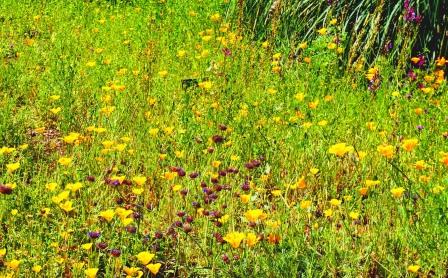
Flowers carpet the valleys and hillsides in the desert spring. Winter has been especially wet and cold this year. As a matter of fact, some snow collected in the desert valleys, more at the hill and mountain tops. Larger snow melts are now watering the landscapes. Yes, water abounds at this time in the desert, especially this year when winter produced so much melts. It is time to see the desert in bloom!


Because of the trees and the flowers, color reigns in the desert in spring. It is truly the best time to visit. Besides, temperatures in the desert are ideal at this time. Highs are in the 80-90s, lows in the 45-75s. It is fresh, chilly air to wake up to in the mornings, perfect for your hot coffee, chocolate or tea. And the nights of 60s-70s are cozy for indoor family activities or for night outs in style and comfort.

Daytime, on the other hand, is in the perfectly enjoyable 70-80s, except for June when it gets to the balmy ’90s later in the month. For this reason, markets come alive at this time in the desert. There will always be a farmers’ market to go to, every day of the week. Festivals also sprout, from art and music to film and everything in between. Even sports teams choose springtime in the desert to train. Come to see your favorite ballplayers from the Arizona Diamondbacks, Chicago Cubs, Chicago White Sox, Cincinnati Reds, Cleveland Indians, Colorado Rockies, Kansas City Royals, LA Angels, LA Dodgers, Milwaukee Brewers, Oakland Athletics, San Diego Padres, San Francisco Giants, Seattle Mariners, and Texas Rangers. What a bonus!

The Phoenix Metropolitan Area is such a paradise in spring for all these reasons. In fact, it is also good in the fall. Winter can be a little bit chilly so we go farther south to Mexico. And the heat of summer, though no worse than the humid heat of the Midwest drives us to visit our children who all live in great summer places. As you can see, we have even decided to settle in the Phoenix area. But this spring, come and see the desert in magnificent bloom and enjoy the other bonuses.

Thursday, October 18, 2018

Which Season Do You Like to Travel to More: Desert Spring or Northeast Fall?


Fall has come!  Media, mainstream or social, is now flooded with pictures and videos of trees and shrubs that have turned bright red, orange, yellow, and gold. You are probably all saying your Oooohs and Aaaahs, whether you are in a place where you can see them in person or not. Sometimes I wish I could live in such a place if only I don’t have to face the winters that come after. Fall used to be my favorite season of all, hands down. I had a maple tree behind my townhome in Seattle that I have missed so.

Japanese red maple

The Red Maple is a deciduous tree common in the Northeast. The leaves turn bright yellow or orange or brilliant scarlet or maroon. I love those trees whose leaves become different colors but individual trees in single color leaves can also dazzle especially if they are beside trees of contrasting colors.  The sugar maple is the best one of all. It forms a complete color wheel, in several shades of green, then in the fall turning from yellow to orange to red. Sadly, all these beautiful leaves fall when winter comes.

Autumnal Aspens in Alaska 

Farther north of the Northern Hemisphere, fall foliage is completely yellow. Aspens are a regular feature in those more northern areas. They also appear farther up in the southern hemisphere at high-altitude areas such as mountains or high plains. Aspen leaves are monochromatic and they all turn yellow. That is I why I love fall in Alaska and the Rockies even more. You see, I am a true xanthophile!

wildflowers in bloom during springtime

paloverdes in Phoenix
When we settled in the Phoenix area, I thought I would only be seeing drab colors; until I saw the wildflowers that painted the desert floor in the whole spectrum when springtime comes. But that is not what really surprised me. I reasoned that I still prefer Fall in the Northeast because the color swatches are huge because they are splashed on to trees! Well, imagine my delight when I saw that the desert trees called paloverdes, which means green wood or stick in Spanish, are green most of the year. But when spring comes around, little yellow blossoms sprout, many times even covering the whole tree crown.

There are two varieties and they bloom at separate times so the golden blaze stays around for two months, from mid-March to mid-May, The Foothill paloverde has more yellowish bark and duller yellow flowers. Blue paloverdes have twigs, young branches, and leaves that are bluish-green and flowers that are bordering on orange. In our neck of the woods, both species are everywhere: parking places, freeway banks, public and private gardens, and other public places.

blue paloverde blossoms

The first to bloom are the Blue paloverdes, with the Foothills following after about two to three weeks later. Their flowers are both five-petalled with the banner petal standing out above the plane of the other four. In Blues, the banner petal is yellow, sometimes with orange spots. The Foothills’ banner petal is white. Once these flowers are pollinated, they will produce edible beans. 

foothill paloverdes bloom

And that is the main difference between Spring and Fall. Spring signals the beginning of new life.  Fall, on the other hand, signals the end; the leaves fall and the tree goes to sleep. I think I now love desert spring more. So I make it a point to be home from my travels in April. It’s as if the sun unloads ts energy, lends its rays on everything it touches, and the color yellow permeates the whole scene. I chose the right place to be home. So my favorite place to travel to is wherever Fall blazes. Right now I am in Bavarian Germany which is in the middle of the season.

PINNABLE IMAGE